
Pests
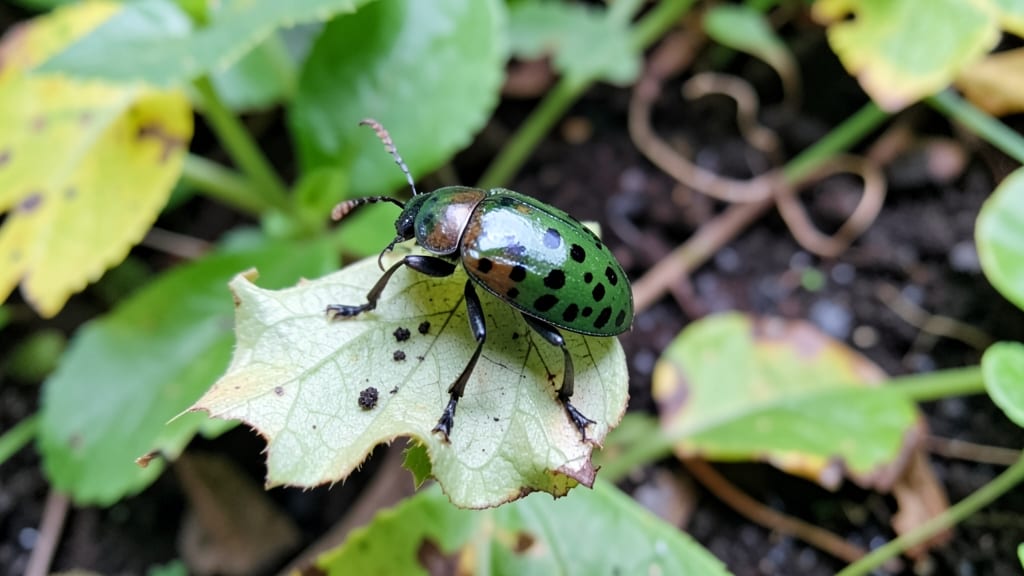
The identification of garden beetles begins with spotting their strange habits—some turn leaves to lace, others carve glossy tunnels in stems, and a few even shimmer under blacklights. ✨ I’ve spent years watching these critters turn my garden from lush to lacy. and the key to stopping them is knowing who’s who before they strike.
The first step is checking their size, color, and body shape: Japanese beetles are metallic green with copper wings, while squash bugs are flat and shield-shaped. Beneficial beetles like ladybugs have spotted backs and eat pests, so don’t squash them!
Most damage comes from Japanese beetles, Colorado potato beetles, and cucumber beetles—all with distinct markings that give them away once you know what to look for.
Once you spot the culprits, you’ll act fast—neem oil for soft-bodied beetles, row covers for squash bugs, or handpicking at dawn when they’re sluggish.
The goal isn’t just to react but to prevent: healthy soil, companion plants like marigolds, and regular scouting keep these invaders from throwing your garden into chaos.
This works for any garden—vegetable patches, flower beds, or even houseplants—because beetles don’t discriminate. The difference between a thriving garden and a skeletonized one often comes down to recognizing the early signs and knowing exactly which beetle is behind them.
📚 In This Guide
- What you need
- Instructions
- Tips and common mistakes
- Wrapping up and next steps
What you need
- ● Hand Lens or Magnifying Glass (10x magnification recommended) – For spotting tiny details like leg segments or antennae structure.
- ● Field Guide or Smartphone App (e.g., iNaturalist, BugGuide, or a printed Garden Insect ID Guide) – Digital or physical references for quick comparisons.
- ● Notebook & Pen – To jot down observations like size, color, location, and behavior.
- ● Measuring Ruler or Scale – A small ruler (preferably with mm markings) to record beetle size accurately.
- ● Clear Plastic Container with Lid (small, like a mason jar or critter keeper) – For temporarily holding beetles for closer inspection (release them afterward!).
- ● Flashlight or Headlamp – Essential for nighttime beetle hunting (many species are nocturnal!).
- ● Tweezers or Soft Paintbrush – Gently handle beetles without harming them.
- ● Camera with Macro Mode – Capture high-resolution photos for later analysis (include a coin for scale!).
- ● UV Light (Blacklight) – Some beetles fluoresce under UV, making identification easier.
- ● Garden Journal with Maps – Track beetle sightings by plant type or location in your yard.
- ● Pesticide or Organic Spray (if needed) – Only use after identification to avoid harming beneficial species.
- ● Gloves – Protect your hands from prickly beetles (like Japanese beetles) or irritating sap.
How to identify common garden beetles by key traits
Skip the guesswork—learn these telltale signs to tell friend from foe in your yard.
🪲 Step 1: Observe Body Shape and Size
Start by noting the beetle's overall shape—some are rounded like tiny armadillos, while others are elongated like tiny tanks. Japanese beetles, for example, measure about ½ inch long with a shiny, coppery-green head and bronze wings. Compare this to the ⅜ inch size of a June beetle, which looks more robust and has a smoother, less metallic body.
Look at the underside too—many garden beetles have distinctive patterns there. Lady beetles (ladybugs) often have spots, while Colorado potato beetles have bright orange-yellow legs and a striped thorax. If the beetle is smaller than a dime, it’s likely a beneficial species like a ground beetle or rove beetle.
🌿 Step 2: Examine Wing and Shell Patterns
Wing covers (elytra) reveal a lot. Japanese beetles have irregular, wavy edges on their wings, while Mexican bean beetles sport 12 yellow spots in neat rows. The color and texture matter too—some beetles are smooth and shiny (like the Asian longhorned beetle), while others are dull and hairy (like the bumblebee beetle).
Check for stripes or spots—these are dead giveaways. The striped cucumber beetle has three yellow stripes down its back, while the spotted cucumber beetle has black and yellow spots. If you see metallic sheen, it’s often a sign of a destructive species like the emerald ash borer.
💧 Step 3: Look for Damage and Behavior Clues
Beetles leave behind visual evidence of their presence. Japanese beetles skeletonize leaves, leaving a lacy pattern, while Colorado potato beetles chew large, irregular holes in foliage. If you spot frass (chewed leaf debris), it’s a sure sign beetles are feeding nearby.
Observe their behavior too—some beetles are active during the day (like Japanese beetles), while others hide under leaves or bark by day and emerge at dusk or night (like June beetles). If you see beetles clinging to stems or flowers, they’re likely pollinators or predators, not pests.
✂️ Step 4: Check for Larval Signs in Soil or Mulch
Many garden beetles have larval stages that cause just as much damage. Grubs (larvae) of Japanese beetles are white, C-shaped, and found in lawn roots, while Colorado potato beetle larvae are striped and spiny. If you flip over mulch or dig in the soil and find fat, worm-like creatures, that’s a larval beetle.
Look for wilting or dying plants—this often means grubs are feeding on roots. If you see holes in leaves paired with grubs, you’ve likely got a root-feeding beetle like a chafer or June beetle. Collect a few larvae to compare with online guides or take a photo for identification.
⏰ Step 5: Time Your Observations
Some beetles are seasonal, so timing matters. Japanese beetles peak in late June through August, while Colorado potato beetles appear in May and June. If you’re seeing beetles in early spring, they’re more likely beneficial species like ground beetles or soldier beetles.
Note when beetles are most active—morning or evening is prime time for spotting them. Use a white sheet or flashlight at night to attract and identify beetles after dark. Keep a field journal with dates, locations, and beetle traits to track patterns in your garden.
Tips & tricks for spotting garden beetles like a pro
These field-tested tips will help you become a beetle identification expert in no time—no bug guide required.
Use a Magnifying Glass: In Step 1, when examining body shape and size, a 10x magnifying glass makes all the difference. Those tiny details like the ⅜ inch size of a June beetle or the ½ inch length of a Japanese beetle become crystal clear. I keep one in my gardening toolkit—it's worth every penny for accurate ID.
Check Both Sides: Never judge a beetle by its back alone! In Step 2, flip it over to examine the underside—this is where many identifying features hide. Colorado potato beetles have those distinctive orange-yellow legs visible from below, while lady beetles often reveal their spots more clearly when viewed from underneath. This extra step prevents misidentification.
Take Photos in Good Light: For Step 3's damage clues, photograph suspicious beetles under natural light (not flash) against a white background. The contrast makes those 12 yellow spots on Mexican bean beetles or the irregular wavy edges on Japanese beetles pop. I use my phone camera with a macro setting—no fancy equipment needed!
Time Your Searches: In Step 5, remember that timing is everything. Japanese beetles are most active between 10 AM and 4 PM during their peak months (late June through August), while June beetles prefer dusk and night. I set a timer for my morning garden walks—it's amazing how many more beetles appear when you're looking at exactly the right time.
Pro Tips for Garden Beetles Identification
- These field-tested tips will help you become a beetle identification expert in no time—no bug guide required.
- Use a Magnifying Glass: In Step 1, when examining body shape and size, a 10x magnifying glass makes all the difference.
- Check Both Sides: Never judge a beetle by its back alone!
Frequently asked questions
Got questions about those creepy-crawly visitors in your garden? You’re not alone! Here are some of the most common questions—and answers—to help you identify and manage beetles like a pro.
How do I tell if a beetle is harmful to my garden?
Not all beetles are pests! Japanese beetles and colorado potato beetles chew leaves, while ladybugs (yes, really!) and ground beetles are beneficial. Look for damage: skeletonized leaves or holes? Likely a bad actor. Check our traits guide to confirm.
When is beetle season, and how long do they stick around?
Timing varies by species. Japanese beetles peak in July–August, while fireflies (harmless!) appear in warm evenings from May–September. Most adult beetles live 4–6 weeks, but larvae (like Colorado potato beetle grubs) may overwinter in soil. Monitor your garden spring through fall for activity.
What’s the best way to get rid of beetles without chemicals?
Try these eco-friendly tricks:
- Handpick adults into soapy water (especially early morning when they’re sluggish).
- Use neem oil or kaolin clay as a barrier—spray on plants to deter feeding.
- Attract predatory beetles (like ground beetles) with mulch or water sources.
- Remove larval hiding spots (e.g., till soil to disrupt Colorado potato beetle eggs).
For severe infestations, consult our organic pest control tips.
Can beetles damage my plants even if I don’t see them?
Root weevils and grubs (larvae) chew underground, weakening plants before you notice. Signs include yellowing leaves, stunted growth, or wilting. Dig near the base of affected plants—if you find white grubs or chewed roots, act fast with targeted soil treatments.
How can I take a good photo to identify a beetle?
For accurate ID, snap clear shots of:
- The beetle’s entire body (top and side views).
- Key features: antennae, wing covers (elytra), and legs.
- A reference object (like a coin) for scale.
Use natural light and avoid zooming in too close. Upload to apps like iNaturalist or PictureThis, or email our team for a pro opinion!
Wrapping up and next steps
Identifying garden beetles doesn’t have to be a daunting task—just a few key traits like size, color, and behavior can help you spot common backyard invaders with confidence! 🐞 Whether you’re dealing with Japanese beetles, ladybugs, or ground beetles, understanding their unique features empowers you to take action—whether that’s protecting your plants or simply appreciating nature’s helpers.
Now that you’re armed with knowledge, why not put it into practice? Grab a magnifying glass, head outside, and observe your garden’s tiny residents. You might just uncover a whole new world of fascinating (and sometimes helpful!) beetle neighbors! 🌿