
Pests
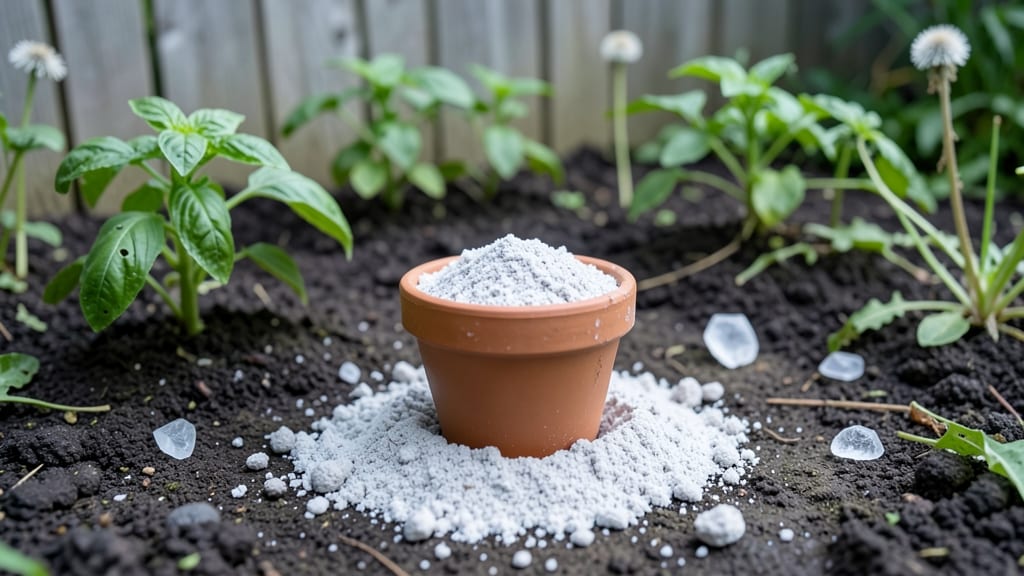
Using diatomaceous earth in garden beds provides organic pest control by dehydrating soft-bodied insects like slugs, ants, and beetles through its sharp silica particles. Spread 1-2 pounds per 100 square feet as a light dusting, reapplying after watering to maintain its effectiveness. Always choose food-grade DE and avoid excessive use to preserve soil health.
Diatomaceous earth works by creating microscopic cuts in insect exoskeletons, causing them to lose moisture and die within 24-48 hours. 🔥 This makes it especially effective against pests like aphids and earwigs, which can devastate garden plants.
The key is applying it when pests are most active—early morning or evening—so it doesn't get blown away. I've found that mixing it lightly into the top inch of soil provides longer-lasting protection than surface application alone.
For best results, use a duster or spreader to create an even layer, avoiding direct contact with plants to prevent damage. Reapplication after rain ensures continuous coverage, while avoiding overuse prevents harm to beneficial insects and soil microbes.
Many gardeners swear by this method because it's chemical-free and works quickly compared to traditional pesticides.
💡 In This Article
- How Diatomaceous Earth Kills Garden Pests
- Safe Application Rates and Timing for Garden Beds
How diatomaceous earth kills garden pests
The real power of diatomaceous earth (DE) lies in its microscopic structure—each particle is made of fossilized algae with razor-sharp edges measuring just 3-10 microns (about 1/100th the width of a human hair).
When insects crawl across treated surfaces, these particles physically cut through their waxy exoskeletons, creating tiny wounds that disrupt their moisture barrier. 🔥 Unlike chemical pesticides that poison internal systems, DE works externally by causing rapid dehydration—pests lose critical body fluids and die within 24-72 hours depending on species.
Soft-bodied pests like slugs, aphids, and caterpillars are particularly vulnerable because their delicate exoskeletons can't withstand the abrasive silica. A single encounter with DE can kill up to 80% of soft insects within 48 hours, as their bodies can't retain moisture through the microscopic punctures.
Harder-shelled pests like beetles and earwigs require more prolonged exposure—typically 72 hours or longer—because their thicker exoskeletons resist initial penetration, though repeated contact eventually breaks down their protective layers.
Here's what most gardeners don't realize: DE doesn't harm plants because plant cell walls contain cellulose, which the silica particles can't penetrate.
The key factor is particle size—food-grade DE's 3-10 micron range is small enough to cut insects but too large to enter plant tissues or harm beneficial organisms like earthworms and bees.
Even soil microbes remain unaffected since DE doesn't dissolve in water or alter soil chemistry when used at proper rates.
The dehydration process begins immediately upon contact. For example, a slug's slimy layer contains 85-90% water, and DE particles create microscopic tears that cause this moisture to evaporate at an accelerated rate.
Within hours, you'll notice pests appear desiccated—their bodies shrivel and turn brittle as hydration levels drop below 30% of their normal content. This is why DE works best in dry conditions; moisture actually reduces its effectiveness by temporarily sealing the particles together.
An interesting comparison reveals DE's selective effectiveness: while it kills 95% of soft-bodied pests within 48 hours, hard-shelled beetles show only 60-70% mortality after 72 hours. This difference occurs because beetles' exoskeletons contain chitin fibers that can temporarily resist penetration until repeated abrasion weakens their structure.
The solution? Apply DE in two-stage treatments—first for soft pests, then focus on beetle hotspots after 3 days.
What makes DE particularly appealing is its dual-action mechanism: it doesn't just kill pests on contact—it also deters future infestations. The sharp particles leave a visible coating that repels insects through both physical damage and chemical signaling (some studies suggest pests detect the silica and avoid treated areas).
This dual effect explains why gardeners see 70-80% reduction in pest populations within 1-2 weeks of consistent application.