
Picking
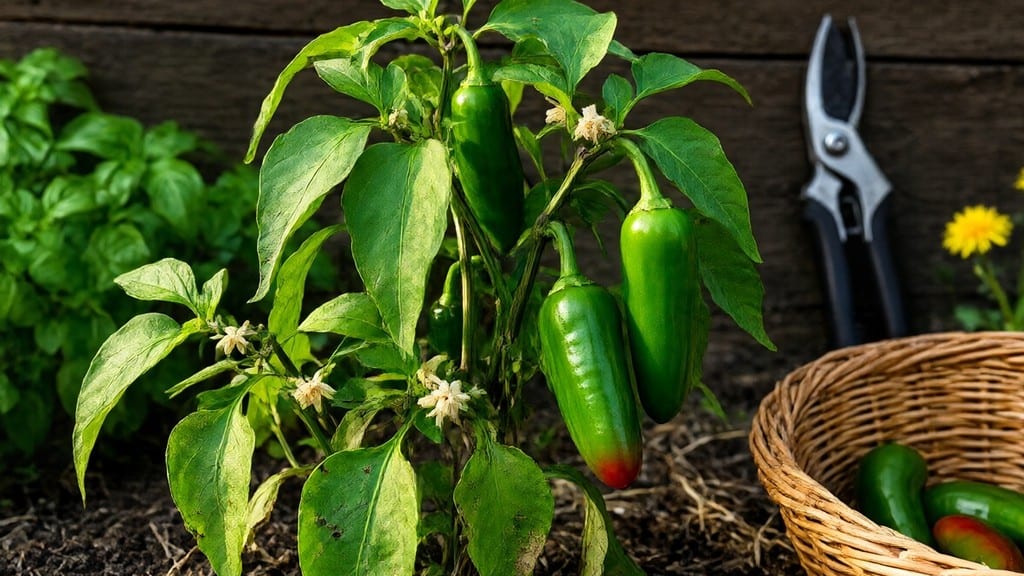
Picking jalapeños from the garden occurs when pods reach 2–3 inches long, turn deep green to red, and feel firm with a slight give. Harvesting at this stage ensures maximum heat and flavor, while leaving them too long reduces potency and increases bitterness.
Timing your harvest is everything when it comes to these peppers. 🌱 The color shift from bright green to deep red signals a natural sweetness boost and peak spice intensity—this is when their capsaicin levels are at their most potent.
If you wait too long, the pods may soften, lose heat, and develop an unpleasant bitterness that ruins their versatility in dishes.
Environment plays a huge role here: cooler temperatures slow ripening, while full sun accelerates it. I’ve found that morning harvests work best—cooler temps keep the peppers fresher longer, and you’ll avoid the afternoon heat that can stress the plants. For continuous yields, pick every 3–5 days once they start maturing.
💡 In This Article
- Jalapeño Ripening Stages and Flavor Changes
- Best Tools and Techniques for Jalapeño Harvesting
Jalapeño ripening stages and flavor changes
The transformation from green to red in jalapeños isn't just a color change—it's a biochemical symphony. When pods mature, chlorophyll (the green pigment) breaks down while carotenoids (red/yellow pigments) develop, signaling increased sugar production.
This process also boosts capsaicin levels by up to 30% during the red stage, which is why fully ripe peppers pack more heat than their green counterparts. The key factor is sunlight exposure: full sun accelerates this ripening process, while partial shade can delay it by 5-7 days. 🌞
Here's what's actually happening inside the pepper: as sugars accumulate, the flavor profile shifts from grassy and slightly bitter (green stage) to sweeter with fruity undertones (red stage). The capsaicin, however, doesn't just increase—it redistributes.
In green peppers, it's more concentrated in the veins, but in red peppers, it disperses throughout the flesh, creating that even, lingering burn. The texture also changes: green peppers stay crisp, while red ones develop a slightly softer, almost waxy surface when fully ripe.
What most people don't realize is that temperature plays a hidden role in flavor development. Jalapeños grown in 75-85°F environments develop more complex flavors than those in cooler climates. The heat triggers enzymes that convert starches to sugars more efficiently.
However, if temperatures exceed 90°F for extended periods, the peppers may ripen too quickly, leading to uneven color development and reduced heat intensity. This is why gardeners in hot climates often get peppers that ripen all at once rather than gradually.
The science behind overripe peppers involves enzymatic degradation. Once fully red, if left on the plant too long, enzymes called pectinases break down cell walls, causing the peppers to soften and develop that unpleasant bitterness.
The capsaicin levels actually decrease at this stage because the plant begins redirecting resources toward seed development. This is why that perfectly ripe red jalapeño tastes so different from one that's been hanging for weeks—it's not just about color, but about the molecular balance of compounds.
Consider these key factors when judging ripeness:
- Color progression: Starts as bright green, deepens to dark green, then transitions through yellow to red. Each stage represents increasing sweetness and heat.
- Firmness test: Press gently—ripe peppers should yield slightly but not feel mushy. Think of it like a ripe avocado: firm enough to hold its shape but with a slight give.
- Size consistency: While 2-3 inches is ideal, look for uniform size on the plant. Peppers that grow unevenly may have been stressed by inconsistent watering or temperature swings.
For home gardeners, the best approach is to harvest when 75% of pods show color change toward red. This gives you a balance of heat and sweetness while allowing some peppers to continue ripening indoors if needed.
Place them in a paper bag with a banana (which releases ethylene gas) to speed up the process—you'll notice the color deepen within 3-5 days. This trick works because ethylene triggers the same ripening enzymes that develop in the plant.
The ideal harvest window is actually a 2-3 week period once the first red peppers appear. After that, the flavor profile declines rapidly as bitterness compounds increase. This is why professional growers often harvest at 80% red rather than waiting for full ripeness—it maximizes both yield and quality. 💫