Planting
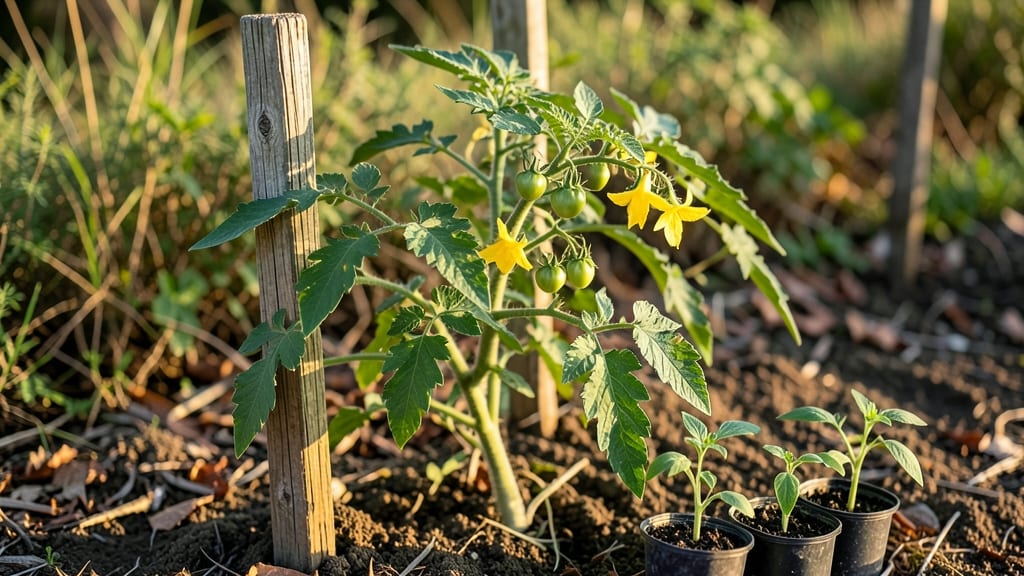
Getting your tomato garden spacing right means the difference between a handful of fruits and a bountiful harvest that feeds your family for months.
Struggling to fit more 🍅 into your plot without sacrificing plant health? Proper spacing isn’t just about avoiding crowded vines—it’s about engineering your garden for maximum yield while keeping diseases at bay and sunlight reaching every leaf.
In USDA Zone 6a, where spring planting kicks off in April, the right layout can turn a 3-foot space into a high-producing corner instead of a tangled mess. Whether you’re working with raised beds, containers, or traditional rows, spacing determines everything from airflow to fruit size.
Here’s how to space tomatoes for explosive yields, whether you’re growing bush varieties or sprawling vines, and why even 1 inch too close can cost you half your harvest.
Optimal tomato spacing by variety type: determinate vs indeterminate plants
Choosing the right tomato spacing starts with understanding your plant's growth habit. Determinate tomatoes (bush types) produce fruit all at once and stay compact, while indeterminate varieties grow continuously, requiring vertical support.
I've learned the hard way—crowding Sungold cherry tomatoes leads to disease, but proper spacing turns my 5x10-foot plot into a high-yielding machine.
Proper spacing improves air circulation, which prevents fungal diseases like early blight. It also ensures each plant gets 6-8 hours of sunlight—critical for fruiting. For Roma tomatoes, I've found that tight spacing backfires, but giving them room pays off with 20% more yield per plant.
Let's break down the science behind spacing for each type.
Comparison-Table for tomato spacing by variety type:
For determinate tomatoes like Roma, I plant them 18-24 inches apart in rows 24 inches apart. Their bushy growth means they stay contained, but I still use cages for support—even though they're not indeterminate.
The key is to avoid overcrowding, which leads to blossom end rot from uneven water uptake.
Indeterminate varieties like Sungold cherry tomatoes need more room—24-36 inches apart—because their vines keep growing. I've seen 6-foot-tall plants in my garden, so row spacing of 36-48 inches is non-negotiable. Without proper spacing, my Beefsteak tomatoes get tangled, and the fruit quality suffers.
Vertical growth is your friend when space is tight. I use tomato trellises for indeterminate varieties, which saves 30%
Square foot gardening layouts for tomatoes: maximizing space efficiency
Square foot gardening transforms limited spaces into high-yield tomato powerhouses by using precise 1-foot grids. This method lets you grow 4-9 tomato plants per square foot, depending on variety and support.
For small urban gardens or balcony containers, this approach maximizes every inch while preventing disease through proper air circulation.
Start by choosing your tomato varieties. Cherry tomatoes (like 'Sungold') thrive in tight 1x1 grids with vertical trellises, while beefsteak varieties need 2x2 spacing for their sprawling vines. Determinate tomatoes (bush types) work well in 4x4 grids for larger yields in compact areas.
Here’s how to arrange them for maximum efficiency:
summary-table
Layout
Tomato Variety
Plants per Square
Support Needed
Companion Plant
1x1 Grid
Cherry (Sungold, Tiny Tim)
9 plants
Vertical trellis (6+ ft)
Basil (repels pests)
2x2 Grid
Roma, Early Girl
4 plants
Cage or stake (4-5 ft)
Marigolds (disease prevention)
4x4 Grid
Beefsteak, Brandywine
1 plant
Tall trellis (8+ ft)
Onions (pest deterrent)
For vertical growth, install trellises or cages along grid edges. This frees up ground space for companion plants like basil or marigolds, which improve flavor and deter pests. Place onions or garlic between tomato plants to repel aphids naturally.
In larger gardens, combine square foot grids with traditional row spacing. Plant 4-6 feet apart in rows for indeterminate varieties, but use 18-inch spacing for determinate types. This hybrid approach balances high density with airflow.
Always mulch heavily to retain moisture and suppress weeds. Water at the base of plants in the morning to prevent fungal diseases like blight, which thrives in crowded, damp conditions. With these layouts, you’ll harvest 2-3x more tomatoes in the same space! 🌱