
Pests and Diseases
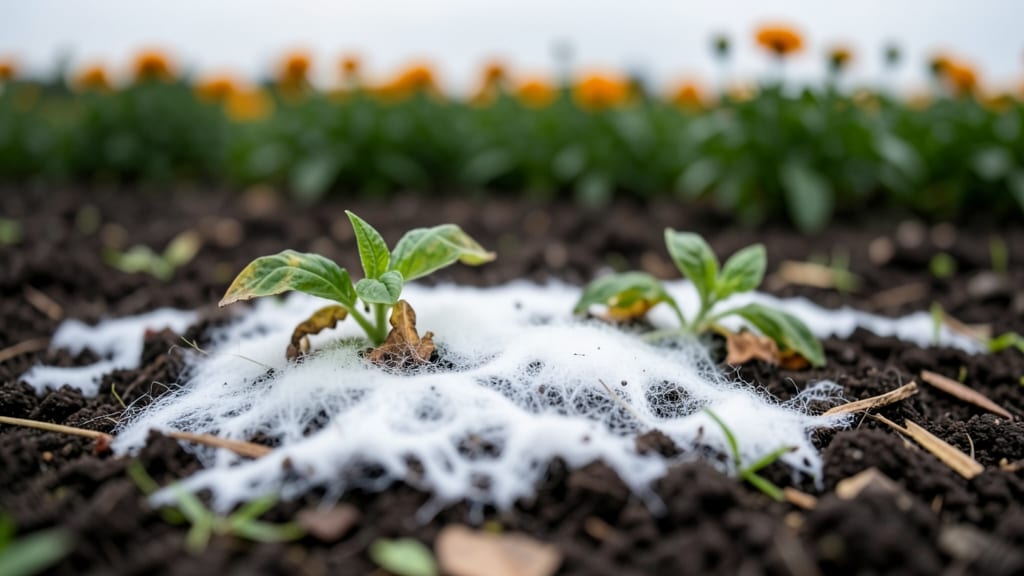
When your garden soil has white fungus, it’s usually harmless mold or beneficial mycelium—but it can also warn of overwatering or rotting organic matter. First, identify whether it’s powdery mildew (harmful), mold (neutral), or mycelium (helpful) before acting. If needed, remove contaminated soil, improve drainage, or use organic fungicides to protect your plants.
White fungal growth in garden soil isn’t always a red flag—some varieties, like mycelium, actually boost soil health by breaking down organic matter. 🌱 However, persistent white patches (especially fuzzy or powdery) often mean your soil is too damp or lacks airflow.
Before grabbing fungicides, test moisture levels: stick your finger in the soil—if it’s soggy, you’re overwatering. For stubborn cases, mix 1 tablespoon baking soda with 1 quart water and lightly spray the surface (repeat weekly if needed).
Remember, not all fungi are created equal—some are nature’s recyclers, while others can smother plant roots. The key is balance: healthy soil has a mix of microbes, but when white growth spreads aggressively, it’s time to intervene.
Start with simple fixes like improving airflow or adjusting watering habits before reaching for chemicals.
💡 In This Article
- Types of White Fungus in Garden Soil
- Safe Removal and Soil Restoration Methods
Types of white fungus in garden soil
Here's what's actually happening when you spot white fungal growth: you're likely looking at one of three main players. Beneficial mycelium appears as fine, cottony threads and acts like nature's recycling system, breaking down dead plant matter.
Then there's harmless mold (like Penicillium), which thrives in damp conditions but rarely harms plants. Finally, powdery mildew shows up as chalky white patches and can weaken plants by clogging pores. The key difference? Mycelium has a web-like structure while mildew looks more like dusted sugar.
The science behind these variations lies in soil conditions. Mycelium networks prefer slightly acidic soil (pH 6.0-7.0) with moderate moisture, while powdery mildew flourishes in alkaline conditions (pH 7.5+) and high humidity.
Moisture levels matter most - soil that stays damp for more than 24 hours creates perfect conditions for fungal growth. 🌱 What most people don't realize is that mycelium actually improves soil structure by creating tiny channels that help water and air move through compacted dirt.
Visual identification is your first tool. Hold a magnifying glass over the growth - mycelium will show branching threads while mildew appears as loose powder. Touch it gently: mycelium feels slightly fuzzy, while mold is more velvety.
The location matters too - mycelium often appears near plant roots or decaying matter, while mildew spreads across leaf surfaces and soil. For accurate identification, collect a small sample in a sealed bag and compare it to reference photos from your local extension office.
Soil pH plays a surprising role in fungal behavior. Acid-loving fungi (like mycorrhizal species) thrive in pH 5.5-6.5, while alkaline conditions favor mildew. Test your soil's pH using a simple kit - if it's above 7.0, you're more likely to see harmful fungal growth.
Organic matter levels also matter: too much fresh compost can create anaerobic pockets where mold thrives. The solution? Mix in coarse sand or perlite to improve aeration while maintaining organic content.
Don't be fooled by appearance alone - some beneficial fungi look identical to harmful ones. For example, white rot fungi break down tough plant materials but can also cause surface decay. The key is observing plant health: if your plants look vigorous despite fungal growth, you likely have beneficial species.
However, if you notice yellowing leaves or stunted growth, you're probably dealing with pathogenic fungi that need immediate attention.
What most gardeners overlook is seasonal variation. White fungal growth often spikes during spring and fall when temperatures hover around 60-75°F and humidity remains high. During these periods, increase airflow around plants by pruning dense foliage and watering at soil level rather than overhead.
This simple adjustment can reduce fungal pressure by up to 40% without chemicals.
Remember this rule of thumb: if the white growth is spreading rapidly or covering more than 10% of visible soil, it's time to act. Start with simple fixes like improving drainage or adjusting watering habits before reaching for fungicides.
Healthy soil should have some fungal activity - the goal is balance, not elimination. 💫