
Tools
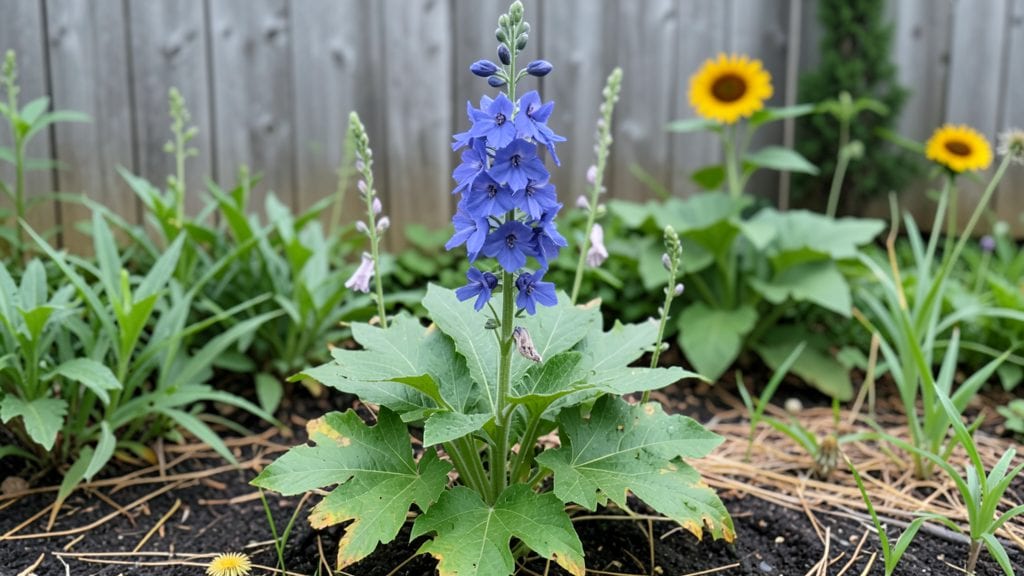
Delphiniums in garden design are the blue spires that turn heads every spring. 🌿 I planted my first batch after seeing them in a cottage garden photo—those towering, sky-blue blooms looked like something out of a storybook.
The secret isn’t just their height (up to 5 feet tall) but how they make other plants look better by their side.
Pair them with lavender, roses, or catmint for a classic English border, or mix in salvias and grasses for a modern, airy look. Delphiniums thrive in full sun and well-drained soil, so they’re perfect for back borders, cottage-style gardens, or even as dramatic focal points in small spaces.
Their blooms last for weeks if you deadhead regularly.
You’ll love how they add vertical drama without overwhelming your space. The deep blue spikes contrast beautifully with silver foliage, creamy white blooms, or warm yellows, creating a garden that feels both polished and effortless.
Just be sure to stake them—those tall stems need support to avoid flopping in summer rains.
Works in formal gardens, wildflower meadows, or even container arrangements (dwarf varieties). Once they’re established, they’ll come back year after year with less care. Here’s how to make them the star of your design!
📚 In This Guide
- What you need
- Instructions
- Tips and common mistakes
- Wrapping up and next steps
What you need
- ● Delphinium plants: Choose between potted seedlings (3–6 plants) or bare-root tubers (5–10 tubers for full coverage). Opt for cultivars like 'Pacific Giant,' 'Black Knight,' or 'Blue Bird' for show-stopping color.
- ● Well-draining soil: Mix 1 part garden soil with 1 part compost and 1 part perlite or coarse sand (5–10 gallons per planting area). Delphiniums hate soggy roots!
- ● Fertilizer: Use a balanced, slow-release granular fertilizer (10-10-10 or 5-10-10, 1–2 lbs per 10 sq ft) or a low-phosphorus option (e.g., 5-3-3) to prevent leggy growth.
- ● Support stakes: 6–8 ft bamboo stakes or metal garden rings (1–2 per plant). Delphiniums are top-heavy—stability is key!
- ● Mulch: 2–3 inches of organic mulch (straw, shredded bark, or pine needles) to retain moisture and suppress weeds.
- ● Garden trowel (for planting tubers/seedlings).
- ● Pruning shears (for deadheading and shaping).
- ● Garden gloves (to protect from thorns and soil).
- ● Watering can or hose with a gentle spray nozzle (delphiniums dislike wet foliage).
- ● String or twine (to secure stakes to plants).
- ● Epsom salt (1 tbsp per gallon of water, monthly) for magnesium boosts.
- ● Slow-release stakes (like flexible wire cages) for easier support.
- ● Drip irrigation kit to automate watering (delphiniums need consistent moisture).
- ● Fungicide (e.g., neem oil) to preempt powdery mildew in humid climates.
How to plant and care for stunning delphiniums in your garden
These dramatic blooms thrive with the right approach—here’s how to grow them into showstopping centerpieces.
🌱 Step 1: Choose the Perfect Planting Spot
Delphiniums demand full sun—at least 6 hours daily—to produce their signature towering spikes. I always pick the sunniest, most protected corner of my garden, where they won’t get battered by wind. The soil must drain well, too—these plants rot quickly if their roots sit in soggy conditions.
Before planting, loosen the soil to a depth of 12 inches with a garden fork. Delphiniums love rich, slightly alkaline soil with a pH between 6.5 and 7.5. If your soil is heavy clay, mix in 2-3 inches of compost to improve drainage and fertility. You’ll see the difference in stronger stems and bigger blooms.
🌿 Step 2: Plant Delphiniums at the Right Depth and Spacing
Dig holes twice as wide as the root ball but only as deep as the container—planting too deep suffocates the crown. Gently remove the plant from its pot and tease apart any circling roots with your fingers. This encourages outward growth instead of girdling the stem.
Space delphiniums 18-24 inches apart in rows, giving them room to mature into their full, dramatic height. I always plant them in groups of three or five for a natural, clustered look. Water deeply right after planting to settle the soil and eliminate air pockets around the roots.
💧 Step 3: Water Deeply and Mulch for Retention
Delphiniums need consistent moisture, especially during their first growing season. Water 1-2 inches per week, aiming for the base of the plant rather than overhead. This prevents fungal diseases like powdery mildew, which loves damp foliage. You’ll know you’re watering correctly when the top 2 inches of soil feel dry before the next watering.
Apply a 2-3 inch layer of organic mulch around each plant, keeping it 3 inches away from the stem to prevent rot. I use shredded bark or straw—both help retain moisture and keep weeds at bay. Replenish the mulch as it breaks down, and you’ll see fewer watering sessions and healthier roots.
☀️ Step 4: Support Stems and Deadhead for Longer Blooms
As delphiniums grow, their tall, slender stems need support. Install sturdy garden stakes or rings around each plant before they reach 18 inches tall. Gently tie the stems to the stakes with soft plant ties or old fabric strips—never wire, which can cut into the delicate stems. You’ll thank yourself when a summer storm doesn’t flatten your prized blooms.
Deadhead spent blooms regularly to encourage more flowers. Snip off the faded flower heads just above the first set of healthy leaves with clean pruners. This redirects the plant’s energy into producing new buds. I also cut back the entire plant by one-third after the first flush of blooms to promote a second round of flowers later in the season.
✂️ Step 5: Winter Care for Next Year’s Blooms
Delphiniums are perennial in USDA zones 3-8, but they need protection in colder climates. After the first frost blackens the foliage, cut back the stems to 4-6 inches above the ground. This prevents snow from breaking the stems and keeps pests out of the crown.
Mulch heavily with 4-6 inches of straw or leaves before the ground freezes. In zones 3-5, I also mound extra soil or mulch around the base for added insulation. With proper winter care, your delphiniums will return stronger and more vigorous each spring, ready to steal the show again.
Tips & tricks for perfect delphinium planting and care
Here's what I've learned after years of growing these showstopping blooms—simple secrets that make all the difference.
Sunlight Strategy: The 6 hours of daily sun is non-negotiable for those towering spikes. I've planted mine in the western part of my garden where they get afternoon sun—they bloom bigger and stay healthier than those in eastern spots. If your garden doesn't have full sun areas, consider growing them in large containers where you can move them to follow the sun's path.
Soil Preparation: That 12-inch soil loosening isn't just about roots—it's about creating an oxygen-rich environment. I always add a handful of lime to adjust the pH to that 6.5-7.5 range if my soil tests acidic. For heavy clay soils, mix in that 2-3 inches of compost right when you're loosening the soil, not as an afterthought. The difference in stem strength is dramatic.
Planting Depth Secret: When you're planting at the same depth as the container, press the soil gently but firmly around the roots to eliminate air pockets. I use my fingers to create tiny grooves in the soil that guide the roots downward naturally. This simple step prevents the plant from sitting at an angle, which can cause uneven growth and weaker stems.
Watering Wisdom: The 1-2 inches per week guideline works best when you water deeply but infrequently. I use a rain gauge to track my watering—when it hasn't rained and the top 2 inches of soil feel dry, that's my cue. Watering at the base with a soaker hose prevents those pesky fungal diseases that love damp foliage. And remember, mulch isn't just decoration—it's your moisture insurance policy.
Pro Tips for Delphinium In Garden
- Here's what I've learned after years of growing these showstopping blooms—simple secrets that make all the difference.
- Sunlight Strategy: The 6 hours of daily sun is non-negotiable for those towering spikes.
- Soil Preparation: That 12-inch soil loosening isn't just about roots—it's about creating an oxygen-rich environment.
Frequently asked questions
Got questions about growing delphiniums? You’re not alone!
These striking blooms are stunning but can be tricky for beginners. Here are answers to the most common queries—so you can grow delphiniums with confidence and zero stress.
When is the best time to plant delphiniums?
Plant delphiniums in early spring or early fall for the best results. Avoid planting in late summer or winter, as they need time to establish roots before cold weather sets in. If using seedlings, wait until after the last frost when soil temperatures are consistently above 50°F (10°C).
How long do delphiniums take to bloom?
With proper care, delphiniums typically bloom 60–90 days after planting. Early spring plantings often flower in mid-to-late summer, while fall plantings may bloom the following year. Patience pays off—these beauties are worth the wait!
Why are my delphiniums wilting or not blooming?
Wilting or poor blooming often stems from overwatering, poor drainage, or nutrient deficiencies. Ensure they’re in well-draining soil and water only at the base (avoid wetting leaves). Feed with a low-nitrogen, high-phosphorus fertilizer (like 5-10-10) in early spring to encourage blooms. Pro tip: Deadhead spent flowers to prolong the blooming season!
Can I grow delphiniums in containers?
Yes! Delphiniums thrive in large containers (at least 12–18 inches deep) with fast-draining potting mix. Choose a pot with drainage holes and place it in a sheltered, sunny spot. Dwarf varieties (like ‘Blue Bird’) are ideal for containers, while tall types may need staking. Rotate pots occasionally for even growth.
What are some great delphinium alternatives for smaller gardens?
If delphiniums feel too dramatic, try these compact, equally stunning options:
- Larkspur – Similar spikes, annual variety, great for cut flowers.
- Foxglove – Tall but slightly less fussy; loves partial shade.
- Hollyhock – Rustic charm, drought-tolerant once established.
- Salvia – Drought-resistant, comes in vibrant blues/purples.
How do I overwinter delphiniums in cold climates?
Cut back foliage to 4–6 inches after the first frost, then mulch heavily (4–6 inches) with straw or shredded leaves. In Zone 5 or colder, add a thick layer of burlap or a cloche for extra protection. Uncover in early spring once soil thaws—delphiniums are perennial with proper winter care!
Wrapping up and next steps
Adding delphiniums to your garden is like inviting a burst of color and drama into your outdoor space! 🌸 Their striking spikes and vibrant hues—from deep purples to sky blues—create a showstopping focal point that’s both low-maintenance and rewarding.
Whether you’re a seasoned gardener or just starting out, these beauties are a fantastic choice for height, texture, and seasonal interest.
Ready to dive in? Start small—plant a few delphiniums in a sunny spot, experiment with companion plants, and enjoy the transformation. Your garden (and future visitors) will thank you!