
Tools
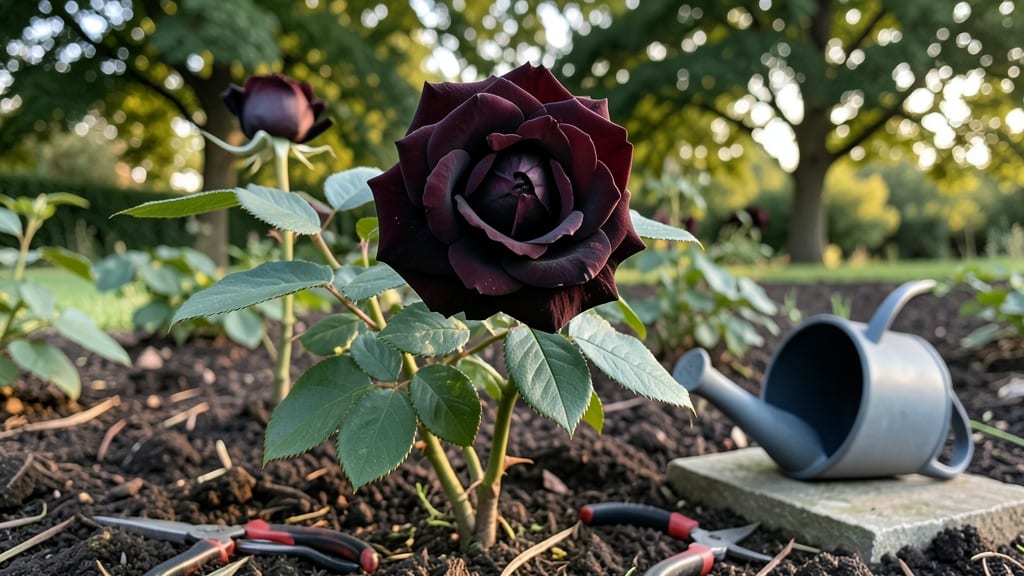
A black roses garden isn’t just a design—it’s a statement. ✨ These velvety blooms transform any yard into a moody masterpiece, whether you lean gothic, romantic, or modern. The key lies in pairing their deep drama with the right companions and lighting to make them truly pop.
Start with three core elements: rich foliage like purple smoke bush or black mondo grass to deepen the color palette, silvery foliage like lamb’s ear for contrast, and white blooms like gardenias or lilies to create striking visual tension.
Add strategic lighting—spotlights or solar-powered path lights highlight the roses after dark, turning them into nighttime focal points.
You’ll end up with a garden that feels like a living painting—dark, lush, and impossible to ignore. The black roses steal the show, but the supporting cast (foliage, textures, and lighting) ensures they’re never just another flower in the crowd.
Think velvet petals against crisp white or deep green, all framed by soft lighting that makes them glow.
This design works for small urban courtyards or sprawling estates—just adjust the scale. The secret? Less is more. A few well-placed black roses with the right companions create drama without overwhelming the space. Ready to make your garden unforgettable?
📚 In This Guide
- What you need
- Instructions
- Tips and common mistakes
- Wrapping up and next steps
What you need
- ● Black roses (or deep burgundy/velvet varieties): 12–20 plants (e.g., Baccara, Queen Elizabeth, or Black Baccarat)
- ● Well-draining potting mix: 5–10 bags (blend of peat moss, perlite, and compost)
- ● Organic fertilizer: 1–2 bottles (balanced 10-10-10 or rose-specific formula)
- ● Mulch: 1 bag (dark bark or cocoa hulls for contrast)
- ● Stakes or trellises: 10–15 units (for support, 4–6 ft tall)
- ● Black or dark-colored garden decor: 2–4 pieces (e.g., pots, statues, or gravel)
- ● Garden trowel: 1 (for planting)
- ● Pruning shears: 1 (sharp, for trimming)
- ● Watering can or hose: 1 (with adjustable nozzle)
- ● Gloves: 1 pair (gardening-grade, for protection)
- ○ pH test kit: 1 (optional but helpful for soil prep)
- ● Black fabric or landscape paint: 1 roll (for dramatic borders or accents)
- ● Moonlight-white or silver foliage plants (e.g., Heuchera or Lamium) for contrast
- ● LED solar lights (black or red) for evening ambiance
- ● Drip irrigation system for consistent moisture
- ● Black rose seeds (for future propagation)
How to create a striking black roses garden
Here’s the method I’ve used to cultivate deep, velvety blooms that command attention—no black magic, just precise technique.
🌱 Step 1: Select the Right Varieties for Dark Drama
True black roses don’t exist—what we call "black" are actually deep burgundy, maroon, or near-black hybrids like 'Black Baccara,' 'Black Magic,' or 'Black Pearl.' These thrive in full sun and well-drained soil. I always choose disease-resistant varieties (look for labels mentioning black spot resistance) to avoid fungal issues that plague dark roses.
Start with 4-6 plants spaced 3-4 feet apart to allow airflow and prevent crowding. Overpacking leads to mildew and weak stems. If your garden has heavy clay soil, amend it with 2-3 inches of compost and a handful of perlite per planting hole to improve drainage—black roses hate soggy roots.
🪴 Step 2: Plant in Well-Drained Soil with Proper Support
Dig holes twice as wide as the root ball but no deeper. Black roses need 6-8 hours of direct sun daily, so choose a south- or west-facing spot. Before placing the plant, loosen the roots gently if they’re circling—this encourages outward growth. Mix the excavated soil with 1 cup of bone meal (for phosphorus) and 1 tablespoon of mycorrhizal fungi to boost root health.
Stake each plant immediately with 5-foot bamboo stakes tied loosely with soft plant ties. Black roses grow 4-6 feet tall and need support to prevent flopping. Water deeply right after planting to settle the soil, but avoid saturating it—you’ll see the soil surface slightly damp but not glistening.
☀️ Step 3: Maintain Soil Moisture and Fertility
Black roses demand consistent moisture—never let the soil dry out completely, but avoid waterlogging. I water deeply 2-3 times per week in summer, aiming for 1 gallon per plant each time. Mulch with 2-3 inches of shredded bark to retain moisture and suppress weeds. Refresh the mulch annually in early spring.
Fertilize every 4-6 weeks during the growing season with a balanced rose fertilizer (10-10-10 ratio). I pause fertilizing in late summer to encourage hardier fall blooms. Watch for yellowing leaves—this usually means overwatering or nutrient deficiency. Adjust accordingly: less water if leaves yellow and wilt, or add a chelated iron supplement if they’re pale.
✂️ Step 4: Prune for Health and Abundant Blooms
Prune black roses in early spring (just as new growth begins) and again after each flush of blooms. Cut back one-third of the oldest canes to the ground to encourage new growth. Remove dead, diseased, or crossing branches with clean, sharp pruners—dull blades tear stems and invite infections.
Deadhead spent blooms weekly to redirect energy into new flowers. I also trim back any leggy growth that’s lost its dark color—these stems rarely rebloom well. After pruning, apply a copper fungicide spray as a preventative measure against black spot, which dark roses are particularly susceptible to.
🌿 Step 5: Protect and Extend the Season
Black roses bloom best in moderate climates (USDA Zones 5-9). In colder regions, mound 4-6 inches of mulch around the base in late fall to insulate roots. In hot summers, provide afternoon shade with a sheer fabric screen if your area exceeds 90°F—intense heat fades their dramatic color.
Watch for aphids or spider mites, which thrive on stressed plants. Spray with neem oil at the first sign of pests—black roses’ velvety petals attract insects, so early intervention is key. With proper care, your garden will burst with deep, velvety blooms that steal every show.
Tips & tricks for perfect black roses garden
A few subtle techniques make all the difference when cultivating those velvety dark blooms—here's what I've learned after years of dramatic garden experiments.
Variety Selection: While 'Black Baccara' and 'Black Magic' are stunning, don't overlook 'Black Pearl' for its exceptional disease resistance. These deep burgundy varieties actually thrive better in cooler climates (USDA Zones 5-7) where their color remains most intense. I've found that planting a mix of these three creates a layered visual effect that's truly show-stopping.
Planting Depth and Support: The "twice as wide" hole specification in Step 2 is critical—this prevents root circling which can strangle your plants. For the 5-foot bamboo stakes, I recommend using two stakes per plant at a 45-degree angle for maximum stability. This triangular support system prevents the dramatic canes from bending under their own weight during storms.
Watering Strategy: The 2-3 times per week guideline works for most climates, but adjust based on rainfall. I test soil moisture by sticking my finger 2 inches deep—if it's dry, water; if damp, wait. Overwatering is the #1 killer of black roses, causing those stunning petals to yellow and drop prematurely. A drip irrigation system set on a timer solves this problem perfectly.
Pruning Precision: When cutting back one-third of oldest canes in Step 4, make your cuts just above an outward-facing bud. This creates stronger growth patterns and prevents the leggy stems that ruin the dramatic silhouette. I also prune at a slight angle to keep water from pooling on the cut, which prevents fungal infections.
Pro Tips for Black Roses Garden
- A few subtle techniques make all the difference when cultivating those velvety dark blooms—here's what I've learned after years of dramatic garden experiments.
- Variety Selection: While 'Black Baccara' and 'Black Magic' are stunning, don't overlook 'Black Pearl' for its exceptional disease resistance.
- Planting Depth and Support: The "twice as wide" hole specification in Step 2 is critical—this prevents root circling which can strangle your plants.
Frequently asked questions
Why do black roses look dark red or purple instead of true black?
True black roses don’t exist in nature—they’re deep, velvety hybrids bred to appear nearly black under sunlight. Their rich hue comes from intense pigmentation (anthocyanins) that reflects light differently. For the deepest effect, plant them in full sun and pair with contrasting foliage like heuchera or hostas to enhance their drama.
How long does it take for black roses to bloom after planting?
Patience is key! Most black rose varieties (like ‘Black Baccara’ or ‘Black Magic’) take 1–2 years to establish roots and bloom. First-year plants focus on growth, while mature bushes reward you with summer-to-fall blooms. Pro tip: Prune lightly in early spring to encourage stronger stems for future flowers.
Can I grow black roses in containers, or do they need a garden bed?
Black roses thrive in containers if you choose the right size (at least 18–24 inches deep) and use well-draining soil. Opt for dwarf varieties like ‘Little Black Dress’ for space-saving elegance. Just remember: Containers dry out faster, so water deeply 2–3 times weekly in hot weather.
What pests or diseases should I watch for with black roses?
Black roses are tough but can fall prey to Japanese beetles, aphids, or black spot fungus. Preventative care: Spray neem oil early in the season, ensure airflow by pruning crowded branches, and avoid overhead watering. If you spot yellow leaves or powdery mildew, act fast with a fungicide. Warning: Remove infected leaves immediately to stop spread.
What flowers pair best with black roses for a moody garden vibe?
Embrace the gothic romance! Pair black roses with:
- White hydrangeas (for stark contrast)
- Deep purple salvias (like ‘May Night’)
- Silver foliage (e.g., lamb’s ear or artemisia)
- Crimson dahlias (for a bold, layered look)
Wrapping up and next steps
Creating a black roses garden is all about embracing drama, mystery, and bold beauty—while keeping care simple! Whether you’re drawn to the deep allure of Helleborus niger or the striking Rosa ‘Black Baccara’, these dark blooms add a touch of elegance that’s hard to resist. 🌹✨
Now that you’re armed with the right materials and answers to common questions, it’s time to roll up your sleeves and get planting!
Start small—maybe a single dramatic focal point or a mixed border—and watch your garden transform into a captivating masterpiece. What’s your vision for your black roses garden? Share your ideas or tag us in your progress—we can’t wait to see your stunning results!