
Picking
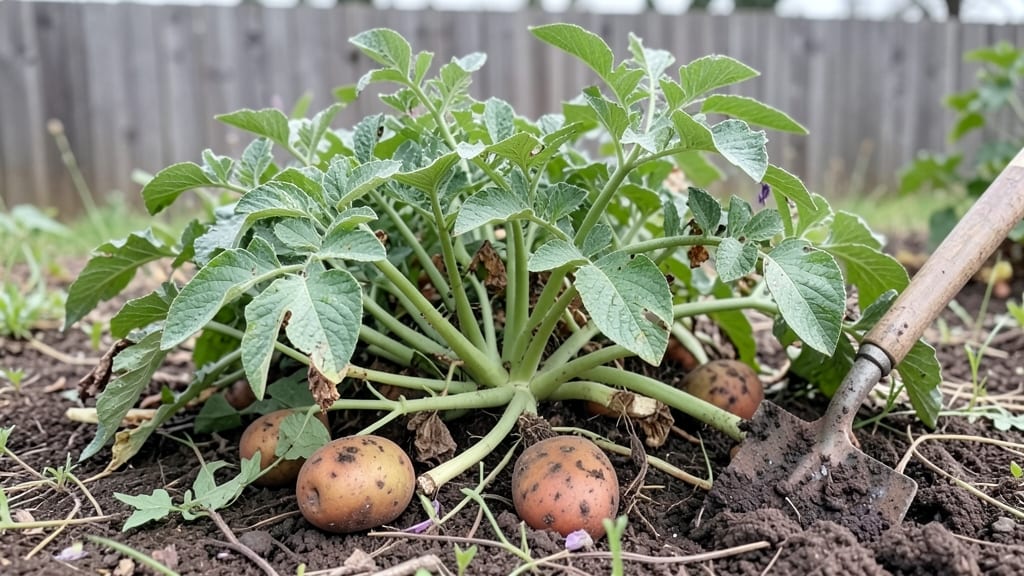
Harvesting potatoes from your garden at the right time means the difference between crisp, flavorful tubers and a pile of shriveled scraps.
Digging up those 🥔 too early leaves you with small, underdeveloped potatoes, while waiting too long turns them into mealy, rotting messes. I’ve lost entire harvests to this timing game—and you don’t have to.
Here’s how to read your plants and soil for the perfect harvest window, from the first signs of readiness to the best tricks for testing tubers without damaging them.
By the end, you’ll know exactly when to pull the spuds for baby potatoes, when to let them mature fully, and how to store them for months of crisp eating.


How to check soil for the perfect potato harvest time
Harvesting potatoes at the wrong time can mean the difference between crisp, flavorful tubers and mealy, shriveled disappointments. The secret lies in reading your soil conditions and plant signals—both work together to tell you when it's time to dig.
Unlike other crops, potatoes grow underground, so you can't judge ripeness by color or size alone. Instead, focus on foliage changes, tuber firmness, and soil moisture to pinpoint the perfect moment.
Most gardeners wait until the plant's foliage starts yellowing, but that's just the beginning. The real magic happens in the soil—where tuber development peaks just before the plant fully dies back.
If you harvest too early, you'll get small, underdeveloped tubers (perfect for "new potatoes" but not ideal for storage). Wait too long, and your spuds will sprout in the ground or develop a green skin (which contains toxic solanine). Mastering these cues ensures you harvest at peak flavor and texture.
Step-by-Step Soil & Plant Check for Potato Harvest
-
Step 1: Check for Flowers (Flowering Varieties Only)
If your potato variety produces white or purple flowers, harvest 1-2 weeks after blooming for mature tubers. For non-flowering varieties (like some red potatoes), skip this step.
-
Step 2: Observe Foliage Changes
When 50-70% of leaves turn yellow or brown, tubers are nearing peak maturity. This is your first visual harvest signal—but don't dig yet!
-
Step 3: Test Tuber Firmness
Gently dig up 1-2 test tubers (use a trowel). If they're 2-3 inches in diameter and the skin resists your thumbnail, they're ready. If they're still small or soft, wait 1-2 weeks.
-
Step 4: Assess Soil Moisture
Harvest when soil is slightly dry but not bone-dry. Stick your finger 6 inches deep—if it feels damp but not soggy, conditions are ideal. Avoid harvesting after heavy rain, as wet soil can damage tubers.
-
Step 5: Check Stem End Color
The stem end (where the tuber attaches to the plant) should be yellow or brown. If it's still green, the tuber isn't fully mature. Green stem ends mean toxic solanine—avoid eating these!
-
Step 6: Time Your Harvest Window
For storage potatoes, harvest 2-3 weeks after foliage yellowing. For immediate use, you can dig when tubers are 1-2 inches in diameter (even if leaves are still green).
🌱 Pro Tip: Early-maturing varieties (like 'Red Pontiac') can be harvested in 60-70 days, while late varieties (like 'Russet Burbank') need 90-120 days.
One of the most common mistakes is waiting until the plant is completely dead before harvesting. By then, tubers may have sprouted in the ground or developed hollow centers. Instead, aim to harvest when the plant is 70% yellowed—this gives you the best balance of size and flavor.
For baby potatoes, you can harvest as early as 50 days (when tubers are golf-ball sized), but these won't store well.
Soil type also plays a role in harvest timing. In sandy soil, tubers dry out faster, so check for readiness 1-2 weeks earlier than in loamy or clay soil. If your garden has heavy clay, tubers may stay moist longer, delaying harvest by a week or more.
Always prioritize firm, dry soil over a rigid timeline—your spuds will thank you with perfect texture.
For organic gardeners, avoid using fresh manure or high-nitrogen fertilizers close to harvest time. These can cause green skin or bitter flavors. Stick to balanced fertilizer (like 10-10-10) applied 6-8 weeks before harvest
If you're growing in containers, tubers mature faster due to limited soil volume—monitor them weekly after 60 days. Once you've confirmed the perfect harvest window, use a fork or spade to gently loosen soil around the plant. Avoid piercing tubers! Let them cure in the sun for 1-2 hours before storing. This hardens the skin and prevents bruising. Store in a cool, dark place (like a basement) with high humidity to keep them fresh for months. Remember: Every potato variety has its own timeline. Early varieties like 'New Potatoes' are ready in 60-70 days, while late varieties like 'Idaho Russet' need 100-120 days. Always check seed packets for days to maturity and adjust your soil checks accordingly. With practice, you'll develop an eye for the perfect moment—turning your garden into a potato harvest goldmine every season. 🥔
New vs. mature potatoes: when to dig for each type
Harvesting potatoes at the wrong time can mean the difference between crisp, flavorful tubers and shriveled, inedible messes. The key lies in understanding when to dig for new potatoes versus fully mature potatoes. Each type requires different timing based on plant development and soil conditions.
For new potatoes, you'll harvest early when tubers are small but tender, while mature potatoes need more time to develop thick skins and full flavor.
Timing your harvest depends on variety type, growth stage, and soil moisture. New potatoes can be harvested as early as 50-60 days after planting, while mature potatoes typically need 90-120 days.
The challenge is balancing these factors to avoid digging too soon (resulting in tiny tubers) or too late (leading to rot or shriveling). Pay attention to foliage changes and flower development—both are critical clues for when to dig.
🌱 comparison table:
| Factor | New Potatoes | Mature Potatoes |
|---|---|---|
| Harvest Time | 50-60 days after planting | 90-120 days after planting |
| Tuber Size | 1-2 inches in diameter | 2-4 inches in diameter |
| Plant Signals | Young leaves, no flowers | Flowers appear, leaves yellow |
| Soil Condition | Moist but not waterlogged | Dry soil (1-2 inches deep) |
| Storage Needs | Use immediately or refrigerate | Cool, dark, well-ventilated |
For new potatoes, focus on harvesting when the plants are still vigorous and green. Look for tubers that are about 1-2 inches in diameter—these are perfect for salads or roasting. The soil should be moist but not soggy when you dig.
If you wait too long, the tubers will grow larger but lose their tender texture. I like to check for new potatoes every 2 weeks starting around day 50 after planting.
Mature potatoes, on the other hand, require patience. Wait until the foliage begins to yellow and die back, but before it completely withers. This usually happens around 90-120 days after planting, depending on the variety.
The soil should be dry at least 1-2 inches deep—this prevents the tubers from absorbing too much moisture and becoming waterlogged. Mature potatoes develop thicker skins, making them ideal for long-term storage or baking.
One common mistake is harvesting mature potatoes too late, which can lead to shriveled or rotting tubers. If the foliage has already died back completely, the potatoes may have already started to rot underground. Always dig a few test tubers to check for readiness.
Store mature potatoes in a cool, dark, and well-ventilated place to preserve their quality for months. For new potatoes, use them within a few days or refrigerate to maintain freshness.
Understanding these differences ensures you’ll always harvest potatoes at their peak. Whether you’re after tender new potatoes or hearty mature tubers, timing is everything. Pay attention to your plants, and you’ll never dig too early or too late again! 🥔