
Planting
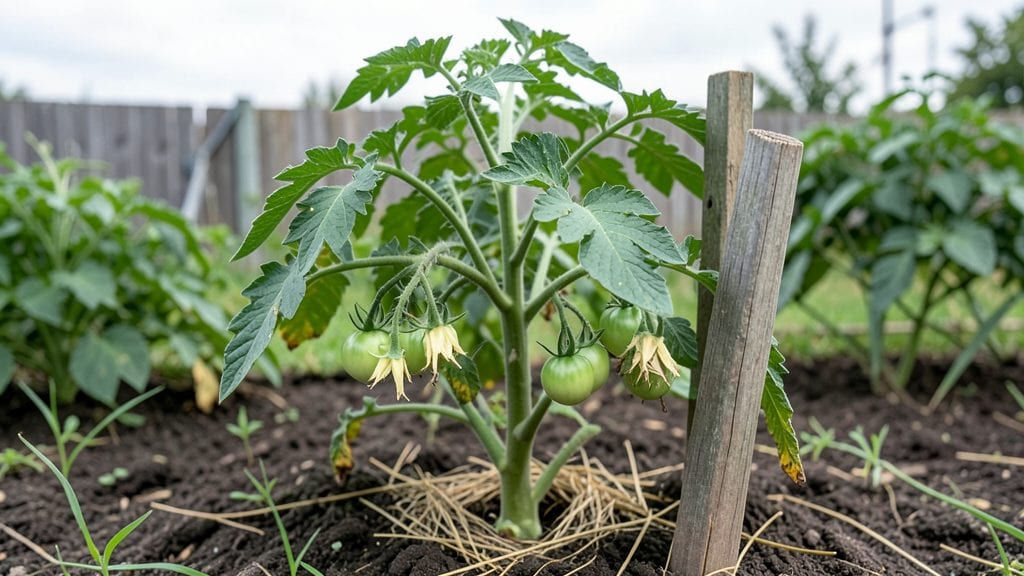
Vegetable garden spacing determines whether your tomatoes smother each other or your carrots grow crooked from crowding. 🌱 I’ve learned that cramming plants too close wastes sunlight, spreads disease, and shrinks your harvest—while proper spacing turns a good garden into an embarrassment-of-wealths yield.
The difference between a 5-bushel tomato haul and a 2-bushel one often comes down to inches between plants.
Most gardeners overlook how spacing affects airflow, which is why powdery mildew turns your zucchini yellow by July. My 3-foot rule for indeterminate tomatoes and 12-inch rule for bush beans cuts down on fungal issues while maximizing space.
Even herbs like basil and cilantro need their own real estate—pack them too tight, and you’ll be fighting for every leaf instead of snipping fresh clippings all season.
When you get it right, you’ll see plants reaching for the sky instead of each other, roots spreading into nutrient-rich soil, and fewer pests hiding in crowded foliage. A well-spaced garden also makes harvesting easier—no more wrestling with tangled vines or digging through crowded rows.
The payoff? More produce, less work, and a layout that actually makes sense for your space.
Small gardens? Use square-foot grids. Large plots? Try wide rows with pathways. The same principles apply—just adjust the math. Let’s map out a layout that works for your yard, whether it’s a 4x8-foot raised bed or a half-acre backyard.
📚 In This Guide
- What you need
- Instructions
- Tips and common mistakes
- Wrapping up and next steps
What you need
- ● Measuring tape or ruler – A 10-25 ft tape for larger gardens, or a 12-inch ruler for precision spacing.
- ● Stakes or markers – Wooden dowels, bamboo stakes, or labeled popsicle sticks (1 per plant or row).
- ● Graph paper or garden planner – Grid paper (1/4" or 1/2" squares) or a digital tool like blank">GrowVeg Garden Planner.
- ● Notebook or app – For recording plant names, spacing, and growth stages (e.g., blank">Gardenate or a simple spiral-bound notebook).
- ● Garden twine or string – 100+ ft for marking rows or creating grids.
- ● Soil pH test kit – Ensures optimal growing conditions (e.g., blank">Luster Leaf Rapitest).
- ● Compost or organic fertilizer – 2-3 bags (e.g., blank">Miracle-Gro Garden Soil or homemade compost).
- ● Watering can or hose with adjustable nozzle – For gentle, even watering.
- ● Laser level – For perfectly straight rows in larger gardens.
- ● Wheelbarrow or garden cart – For hauling soil, mulch, or tools.
- ● Plant labels with QR codes – Scanable labels (e.g., blank">Gardeners.com) for instant care tips.
- ● Row covers or shade cloth – 3-5 ft wide rolls to protect young plants or regulate sunlight.
- ● Kneeling pad or stool – For comfort during planting and maintenance.
- ● Digital calipers – For measuring mature plant sizes (e.g., blank">Amazon Basics).
How to plan vegetable garden spacing for maximum yield
Here's the method I use to design gardens that produce more without crowding—tested across multiple seasons.
🌱 Step 1: Group Plants by Family and Sunlight Needs
Start by organizing your vegetables into three categories: full sun lovers, partial shade plants, and those that need consistent moisture. I always place tomatoes, peppers, and squash together—they all thrive in 6+ hours of direct sun and similar soil conditions. Separate these from leafy greens like lettuce and spinach, which prefer 4-6 hours of sun and stay cooler.
This grouping prevents competition for resources. For example, root vegetables like carrots and beets need loose soil, while heavy feeders like corn and potatoes require nutrient-rich ground. I sketch a rough layout first, labeling each section with its sun exposure and soil needs. This ensures every plant gets exactly what it requires without fighting for space.
☀️ Step 2: Follow Spacing Guidelines for Each Vegetable Type
Spacing isn't one-size-fits-all—each vegetable has its own needs. For instance, tomatoes need 18-24 inches apart in rows spaced 3 feet apart, while carrots can squeeze into 2-3 inches apart in rows 12 inches apart. I keep a printed chart nearby with recommended spacing for each plant I grow, adjusting slightly based on variety.
Here's the thing—if you crowd plants, they compete for sunlight, water, and nutrients, leading to smaller yields and more pests. For example, cucumbers need 12-24 inches apart to avoid powdery mildew, which thrives in tight, humid conditions. I always err on the side of more space, especially for vining plants like beans or peas, which spread quickly.
🪴 Step 3: Use Companion Planting to Optimize Space
Companion planting isn’t just about pest control—it’s a smart way to maximize space. For example, I plant bush beans between rows of corn, where the beans fix nitrogen in the soil, benefiting the corn. Meanwhile, radishes grow quickly and can be harvested before larger plants like cabbage need the space. This layered approach ensures no square inch goes to waste.
I also pair onion family plants (onions, garlic, leeks) with carrots to deter carrot flies, while marigolds planted around the perimeter keep pests away from the entire garden. This method not only saves space but also reduces the need for chemical interventions. Just be mindful of plants that don’t mix—like beans and onions, which stunt each other’s growth.
✂️ Step 4: Plan for Vertical and Successional Growth
Vertical space is your best friend when it comes to spacing. I use trellises for cucumbers, beans, and peas, saving ground space while improving airflow and reducing disease risk. A 6-foot trellis can support 10-12 feet of vine growth, turning a small corner into a productive area. Even tomatoes benefit from staking or caging, allowing you to space them closer together (about 12-18 inches apart) without sacrificing yield.
Successional planting is another game-changer. Instead of planting everything at once, I stagger leafy greens, radishes, and fast-growing crops every 2-3 weeks. This keeps the garden productive year-round and ensures you’re always harvesting something. For example, after harvesting early bush beans, I replant the space with spinach or kale, which thrive in cooler weather.
💧 Step 5: Adjust for Your Climate and Soil Type
Climate plays a huge role in spacing. In hot, dry regions, plants like peppers and tomatoes need more space (up to 24 inches apart) to reduce water competition and improve airflow. In cooler, wetter climates, you can space them closer together (around 18 inches) because the soil stays moister longer. I always check local gardening guides or talk to neighbors to fine-tune my spacing.
Soil type matters too. Sandy soil drains quickly, so I space plants slightly wider to prevent overwatering, while clay soil holds moisture longer, allowing for tighter spacing. I do a simple test by digging a hole and filling it with water—if it drains within 10 minutes, it’s sandy; if it takes hours, it’s clay. Adjusting spacing based on this ensures your plants thrive without stress.
Tips & tricks for perfect vegetable garden layouts
These science-backed strategies will help you maximize your garden's potential without overcrowding—trust me, it makes all the difference!
Visualize Your Garden First: Before planting, sketch a rough layout on graph paper where each square represents a foot. This helps you visualize how different plants will interact. I always mark sun exposure patterns (morning sun vs. afternoon shade) and note wind direction—this prevents shading issues and helps with airflow. The key is to arrange plants so taller varieties don't block sunlight from shorter ones over time.
Soil Test Before You Plant: Don't assume your soil meets all needs! I learned this the hard way after planting nutrient-heavy crops like tomatoes in soil that needed compost. Test your soil's pH and nutrient levels before planting—most extension offices offer affordable tests. For example, tomatoes thrive in slightly acidic soil (pH 6.0-6.8), while carrots prefer neutral soil (pH 6.0-7.0). Adjusting spacing based on soil health prevents nutrient competition between plants.
Use the "Square Foot Gardening" Method: This technique divides your garden into 1-foot squares, each containing a specific plant layout. For instance, a 1-foot square can hold 16 carrots (2-3 inches apart) or 4 tomatoes (18-24 inches apart). It's perfect for small spaces and makes it easy to rotate crops yearly. I've found this method reduces water usage by 50% since plants are closer together but properly spaced within their own zones.
Plan for Future Growth: Check each plant's mature size before spacing—what looks small now can become a 6-foot spread! For example, pumpkins need 5-10 feet in all directions, while bush beans stay compact at 1-2 feet. I always measure my garden beds and mark mature plant sizes with stakes before planting. This prevents the "oops, my zucchini took over" scenario that ruins layouts.
Pro Tips for Vegetable Garden Spacing
- These science-backed strategies will help you maximize your garden's potential without overcrowding—trust me, it makes all the difference!
- Visualize Your Garden First: Before planting, sketch a rough layout on graph paper where each square represents a foot.
- Soil Test Before You Plant: Don't assume your soil meets all needs!
Frequently asked questions
Got questions about spacing your vegetable garden like a pro? You’re not alone! Here are some of the most common concerns—plus science-backed answers to help you grow a thriving, high-yield plot.
Why does proper spacing matter for vegetable gardens?
Proper spacing is the backbone of a healthy garden. Crowding plants leads to competition for sunlight, water, and nutrients, which stunts growth and invites pests and diseases. Science shows that well-spaced veggies produce bigger, healthier harvests by allowing airflow and reducing stress. Think of it like giving each plant its own personal bubble!
When is the best time to adjust spacing if my plants are already growing?
If you’ve already planted and notice overcrowding, act fast! For leafy greens (like lettuce or spinach), thin seedlings to the recommended spacing as soon as they’re 2–3 inches tall. For root crops (carrots, beets), thin when tops are 1–2 inches wide. Tomatoes and peppers can be pruned or transplanted to give them room—just handle them gently to avoid shock.
Can I use square-foot gardening for all vegetables?
Square-foot gardening is a fantastic method, but not all veggies thrive in its grid system. Root crops (like potatoes or onions) need deeper soil and may struggle in tight squares. Instead, opt for trellising (cucumbers, peas) or wide-row planting (squash, corn). Check spacing charts for each plant—some, like corn, need 12+ inches between rows to prevent shading.
My plants are touching, and pests are moving in. What should I do?
When plants crowd, they create a perfect hideout for pests like aphids, slugs, and fungal spores. Start by pruning or thinning immediately to improve airflow. Add organic mulch (straw or grass clippings) to deter slugs and reduce soil-borne diseases. For severe infestations, neem oil or companion planting (like marigolds) can help break the pest cycle.
How do I calculate spacing for heirloom or unusual varieties?
If you’re growing heirloom or hybrid varieties with vague spacing guidelines, start with the smallest recommended spacing for the plant family. For example, if a tomato variety says “18–24 inches,” plant them at 18 inches first. Monitor growth for 2–3 weeks—if leaves touch, gradually widen the spacing. Pro tip: Label your plants to track which varieties need adjustments!
Wrapping up and next steps
Mastering vegetable garden spacing is your secret weapon for a thriving, high-yield harvest! 🌱 By following science-backed layouts—whether it’s the square foot gardening method or companion planting—you’ll maximize sunlight, airflow, and growth potential while minimizing pests and disease.
Start small, experiment with spacing, and soon you’ll be reaping the rewards of a lush, productive garden.
Ready to take the next step? Sketch your garden plan today, grab your seeds, and get planting! 🌿 Whether you’re a beginner or a seasoned gardener, every well-spaced plant brings you closer to a bountiful harvest.