
Planting
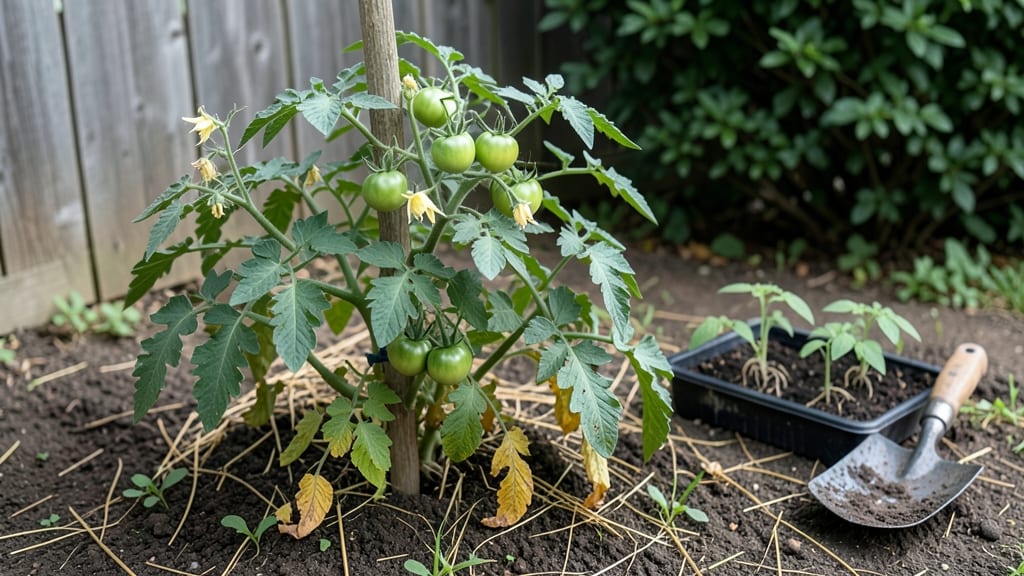
Square foot gardening turns tomatoes into a space-efficient powerhouse—one plant per square foot, no wasted soil. I learned the hard way that crowding leads to blight and poor fruit, but this method guarantees strong stems, better air circulation, and more tomatoes per square foot than traditional rows.
The key is spacing them 12-18 inches apart in a grid, not clumped together like most gardeners do.
You’ll need a 4’x4’ raised bed (16 square feet) for four plants, basic compost, and stakes or cages. The grid system keeps everything organized—no guessing where to plant next.
I’ve grown heirloom beefsteaks this way, and they ripen faster because the roots get exactly what they need without competing for space. The first harvest comes in 70 days, and the plants stay healthy all season.
This layout also makes companion planting a breeze—tuck basil or marigolds between tomatoes to repel pests naturally. The square foot system works for cherry tomatoes too, just reduce spacing to 9 inches for those compact varieties.
You’ll end up with more fruit per square foot than a traditional row garden, and the plants look tidier too.
Perfect for small spaces, urban gardens, or anyone tired of losing tomatoes to disease. The method scales too—double the bed size for double the harvest. Ready to try it? Let’s get those plants spaced just right.
📚 In This Guide
- What you need
- Instructions
- Tips and common mistakes
- Wrapping up and next steps
What you need
- ● Square Foot Garden Grid: 4’ x 4’ raised bed frame (wood, cedar, or composite) with 16-inch grid lines.
- ● Tomato Plants: 1 plant per square foot (use determinate varieties for bushier growth or indeterminate for vining types). Start with 4–9 plants per 4’x4’ bed, depending on variety.
- ● Quality Soil Mix: 1 part compost, 1 part peat moss or coconut coir, and 1 part vermiculite or perlite (sterilized). Aim for 1 cubic foot per square foot.
- ● Organic Fertilizer: Slow-release granular fertilizer (e.g., 5-10-10 or tomato-specific blend) or compost tea.
- ● Mulch: Straw, grass clippings, or shredded leaves (2–3 inches thick) to retain moisture.
- ● Support Structures: Cages (5’ tall) or stakes (6’ long) for indeterminate tomatoes.
- ○ Trellis or tomato towers for vertical growth (optional but space-saving!).
- ● Hand Trowel: For transplanting and soil adjustments.
- ● Watering Can or Drip Irrigation: Gentle watering to avoid disturbing roots.
- ● Pruning Shears: For trimming suckers and shaping plants.
- ● Companion Plants: Basil, marigolds, or onions to deter pests and improve flavor.
- ● Plant Markers: Labels or sticks to track varieties and spacing.
- ● Shade Cloth: For hot climates to protect seedlings from scorching.
- ● Soil pH Test Kit: Ensure pH is between 6.0–6.8 (tomatoes thrive in slightly acidic soil!).
Instructions: square foot tomato spacing for optimal growth
Square foot gardening transforms tight spaces into high-yield tomato havens. Here's how to arrange your plants for maximum production without overcrowding.
Plan Your Grid Layout for Tomato Varieties
Square foot gardening divides your bed into 1-foot squares, each dedicated to a single plant type. For tomatoes, use the 4-plant-per-square rule—this ensures each plant gets enough air circulation and sunlight. Start by sketching your bed layout, labeling each square with the tomato variety you'll plant there. Dwarf varieties like 'Tiny Tim' or 'Patio Princess' can share a square, but larger indeterminate types like 'Sungold' or 'Brandywine' need their own dedicated space.
I always plant the tallest varieties along the north side of the bed to prevent shading smaller plants. Place your grid paper over the bed to visualize spacing before digging. This prevents the common mistake of cramming too many plants into a square, which leads to crowded foliage, increased disease risk, and poor fruit production. Remember, 4 plants per square is the golden rule for tomatoes in square foot gardening.
Mark Planting Locations with Stakes or Twine
Before planting, use the wooden stakes or twine to mark each planting location within the square. For indeterminate tomatoes, drive a 6-foot stake into the ground at the center of the square—this gives you a reference point for where the main stem should grow. For determinate varieties, a 4-foot stake suffices. If you're using twine, tie it at 12-inch intervals vertically to represent the spacing between plants.
This step is critical for maintaining proper spacing as the plants grow. I've seen beginners skip this and end up with plants too close together, leading to tangled vines and poor air flow. Once marked, you'll know exactly where to place each transplant, ensuring they're spaced 12 inches apart within the square. This spacing allows for adequate airflow, reducing humidity and preventing fungal diseases like early blight.
Plant Transplants at the Correct Depth and Angle
Dig a hole in the center of each marked square deep enough to bury one-third of the transplant's stem. For indeterminate tomatoes, this means burying about 4-6 inches of the main stem. Gently loosen the roots and place the plant in the hole, ensuring the soil line is level with the surrounding bed. Press the soil firmly around the base to eliminate air pockets, but avoid compacting it too tightly.
Here's the thing—angle matters. For indeterminate varieties, I tilt the transplant slightly away from the center stake at a 45-degree angle. This encourages the plant to grow upright along the stake while still allowing the roots to spread outward. Water deeply after planting to settle the soil and remove any air gaps. This step ensures the plant establishes strong root anchorage and grows straight, maximizing space efficiency within the square.
Prune and Train Vines Early for Optimal Spacing
Once your tomatoes reach 12-18 inches tall, begin pruning suckers—the small shoots that form in the leaf axils where the stem meets a branch. Remove these suckers by pinching them off with your thumb and forefinger, ensuring you leave only one main stem for indeterminate varieties. For determinate tomatoes, allow 2-3 main stems to develop. This pruning technique keeps the plant's energy focused on fruit production rather than excessive foliage.
As the plants grow, gently weave the main stem around the stake or trellis. I like to use soft plant ties to secure the stem without constricting it. This vertical training maximizes the 12-inch spacing within the square, allowing the plant to grow upward rather than sprawling outward. Prune regularly—every 2-3 weeks—to maintain the desired structure and prevent overcrowding. This step is non-negotiable for square foot gardening; without it, your tomatoes will quickly outgrow their allocated space.
Monitor Growth and Adjust Spacing as Needed
Throughout the growing season, keep an eye on how your tomatoes fill their designated squares. If you notice leaves touching between plants, it's time to prune or thin. For indeterminate varieties, remove any lateral branches that encroach on neighboring plants' space. For determinate tomatoes, you may need to thin out some fruit if the plant becomes overloaded, ensuring the remaining tomatoes have room to grow.
Square foot gardening relies on balance—too much space wastes potential yield, but too little invites disease. I check my plants weekly and adjust as needed. If a plant outgrows its square, consider harvesting early or transplanting it to another area of the garden. This proactive approach keeps your tomato plants healthy, productive, and perfectly spaced for maximum yield. With this method, you'll harvest dozens of tomatoes per square foot—far more than traditional row planting allows.
Tips & tricks for perfect square foot tomato spacing
Square foot gardening maximizes your harvest while preventing common pitfalls. Here are the essential techniques that make all the difference in your tomato garden's success.
Variety Placement Strategy: In Step 1, when planning your grid layout, remember that indeterminate varieties like 'Sungold' need their own dedicated square to prevent overcrowding. I've found that placing these vigorous growers on the north side of your bed creates a natural windbreak for smaller varieties while preventing them from shading their neighbors. This strategic arrangement ensures each plant receives optimal sunlight throughout the day, which directly translates to higher yields. The 4-plant-per-square rule works perfectly for dwarf varieties, but don't be tempted to squeeze in extra plants—this is where most gardeners go wrong.
Staking System Optimization: For Step 2, when marking planting locations, consider using a combination of stakes and twine for indeterminate varieties. I've had success with 6-foot bamboo stakes for main support, supplemented with twine tied at 12-inch intervals to create a mini trellis within each square. This system gives you the flexibility to adjust plant positioning as they grow while maintaining that critical 12-inch spacing. The vertical training starts immediately, preventing the sprawling habit that leads to crowded foliage and disease issues. This approach also makes pruning in Step 4 significantly easier throughout the season.
Root Development Technique: The planting depth in Step 3 is more important than most gardeners realize. When burying one-third of the stem (about 4-6 inches for indeterminate varieties), you're actually encouraging root development along the buried portion. I've seen plants develop additional root systems from these buried stems, creating a stronger, more resilient plant. The 45-degree angle you plant at isn't just about aesthetics—it creates a natural curve that helps direct the plant's growth upward along your stake while allowing roots to spread outward for stability. This technique maximizes the square foot's potential by utilizing both vertical and horizontal space efficiently.
Pruning Schedule Insight: While Step 4 mentions pruning suckers every 2-3 weeks, I've found that maintaining a consistent schedule is just as important as the technique itself. Set a reminder for your phone or mark it on your garden calendar—missing even one pruning session can lead to unchecked growth that quickly fills your square. I recommend doing this first thing in the morning when the plants are least stressed. The key is to remove suckers while they're still small (about 2 inches long), which prevents them from competing with your main stem for nutrients. This regular maintenance is what transforms square foot gardening from a spacing technique into a high-yield system.
Pro Tips for Tomato Plant Spacing Square Foot Gardening
- Square foot gardening maximizes your harvest while preventing common pitfalls.
- Variety Placement Strategy: In Step 1, when planning your grid layout, remember that indeterminate varieties like 'Sungold' need their own dedicated square to prevent overcrowding.
- Staking System Optimization: For Step 2, when marking planting locations, consider using a combination of stakes and twine for indeterminate varieties.
Frequently asked questions
Got questions about tomato spacing in square foot gardening?
You’re not alone! Here are answers to the most common queries to help you grow a thriving tomato patch with confidence.
How many tomato plants can I fit in a 1-square-foot grid?
For determinate (bush) tomatoes, plant 1 plant per square foot—they stay compact and fruit all at once. For indeterminate (vining) varieties, stick to 1 plant per 4-square-foot section (or 1 per 2 sq ft if using cages/trellises). Overcrowding stresses plants and invites disease!
When is the best time to space tomato plants in square foot gardening?
Space seedlings 2–4 weeks after transplanting (when they’ve developed 2–3 true leaves). Avoid transplanting in extreme heat (wait until soil temps are 60°F+)—stressed plants struggle to establish roots. Early morning or late afternoon planting helps!
Can I adjust spacing if my garden bed isn’t perfectly square?
Use a 4x4-foot grid (16 sq ft) for flexibility—plant 1 indeterminate tomato per 4 sq ft or 4 determinate tomatoes per 4 sq ft. For odd shapes, prioritize airflow and sunlight: leave at least 18–24 inches between plants (even outside the grid). Raised beds or containers work too!
What if my tomatoes look crowded even with proper spacing?
Check for root-bound seedlings (tangled roots) or overwatering (which can stunt growth). Prune lower leaves to improve airflow, and stake/trellis vining varieties early. If plants are still struggling, thin to the strongest stems—one healthy plant per square foot is better than four struggling ones!
Are there spacing alternatives for dwarf or cherry tomatoes?
Dwarf/cherry tomatoes (like ‘Tiny Tim’ or ‘Sweet 100’) thrive with 4 plants per square foot (or 16 per 4 sq ft). Use small cages or stakes to save space. For bush varieties, space 6–8 inches apart; for vining cherries, allow 12–18 inches. Just ensure they get 6+ hours of sun daily!
Wrapping up and next steps
Mastering tomato plant spacing in square foot gardening is your ticket to a bountiful harvest—no overcrowding, no wasted space! By following these guidelines, you’ll ensure each plant thrives, maximizes sunlight, and delivers juicy, flavorful tomatoes all season long. 🌱✨
Now that you’re armed with the perfect blueprint, roll up your sleeves and get planting! Start small with a single square foot, track your progress, and soon you’ll be expanding your garden like a pro. Happy growing—your future tomato feasts are waiting! 🍅🎉