
Companion Plants
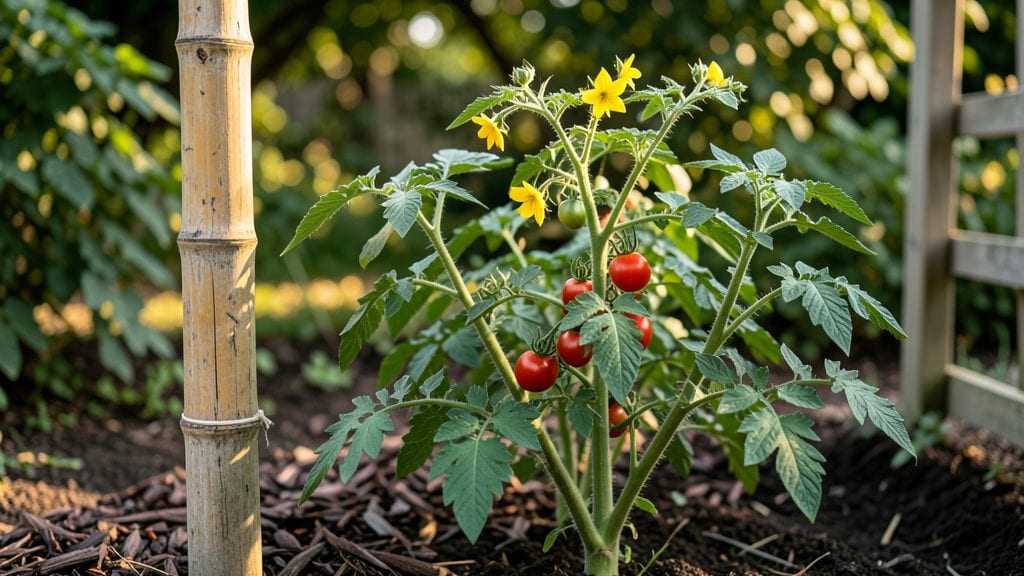
Square foot gardening tomato plants transform your tiny plot into a lush, high-yield powerhouse—packing more fruit into a 4x4-foot grid than my old in-ground garden ever produced. The secret lies in precise spacing, soil prep, and choosing the right tomato varieties for small squares.
You’ll need a raised bed frame (or just string and stakes to mark your 12-inch squares), a mix of compost and potting soil, and tomato plants that thrive in tight quarters—like ‘Tiny Tim’ or ‘Patio Princess.’
Most people overlook soil depth, but tomatoes need at least 12 inches of rich, well-draining mix to support heavy fruit. A single square holds just 1 plant, but the yield per square foot beats traditional rows.
By summer’s end, you’ll be harvesting pound after pound of ripe tomatoes without bending over or fighting weeds. The grid keeps plants healthy, air circulates better, and you avoid the overcrowding that leads to blight.
Plus, the method scales—double the squares, double the harvest. Ready to transform that tiny patch into a tomato powerhouse?
Works for balconies, rooftops, or even a sunny windowsill with containers. The same principles apply whether you’re growing determinate (bush) or indeterminate (vining) types—just adjust stakes and pruning. Let’s get those squares planted!
📚 In This Guide
- What you need
- Instructions
- Tips and common mistakes
- Wrapping up and next steps
What you need
- ● Square foot garden box: 4’x4’ wooden frame (or modular sections) with 6–12" deep sides (minimum 12" for tomatoes).
- ● Garden soil: 1 cubic foot of high-quality, organic mel’s mix or similar (e.g., 1 part peat moss, 1 part vermiculite, 1 part compost).
- ● Tomato plants: 1–4 determinate (bush) or indeterminate (vining) varieties per square foot (check spacing tags!).
- ● Support structures: Cages (5’ tall) or stakes (6’ long) for indeterminate varieties.
- ● Trellis or tomato clips for vining types.
- ● Organic fertilizer: Slow-release granules (e.g., 5-5-5 or tomato-specific blend) or compost tea.
- ● Mulch: Straw, grass clippings, or shredded leaves (2–3" layer).
- ● Hand trowel or small shovel.
- ● Garden gloves (to protect from thorns and soil).
- ● Watering can or hose with gentle nozzle.
- ● Pruners (for trimming suckers and dead leaves).
- ● Measuring tape (to mark 1’x1’ squares).
- ● Companion plants: Basil, marigolds, or onions (plant in adjacent squares to deter pests).
- ● Drip irrigation kit: For consistent watering (tomatoes hate soggy feet!).
- ● Row cover: Lightweight fabric to protect seedlings from pests.
- ● pH test kit: Ensure soil pH is 6.0–6.8 (tomatoes are picky!).
- ● Fish emulsion or seaweed extract: Liquid feed for a mid-season boost.
Step-by-Step instructions for square foot gardening with tomato plants
Here’s how to maximize your tomato harvest in limited space using the square foot method.
Plan Your Square Foot Layout
Tomatoes thrive in 1 square foot per plant when using the square foot method, but you’ll need to account for their mature size. For 4 tomato plants, divide your raised bed or container into a 2x2-foot grid. Each square will hold one plant, but choose compact varieties like 'Patio' or 'Tiny Tim' to avoid overcrowding.
Sketch your layout before planting—place taller indeterminate varieties (like 'Sungold') along the north side to prevent shading smaller plants. I always mark the grid with a 1-foot ruler or string to ensure precision. This prevents root competition and makes maintenance easier.
Prepare the Soil Mix
Square foot gardening relies on a light, nutrient-rich mix to support heavy feeders like tomatoes. Combine 1 part potting soil, 1 part compost, and 1 part perlite in each square. This blend ensures drainage while retaining moisture—critical for tomatoes, which wilt quickly in dry soil.
Fill each square to 1 inch below the top edge to prevent spillage when watering. Press the mix lightly with your fingers to create a firm but not compacted surface. This step is non-negotiable: Poor soil structure leads to weak stems and poor fruit set.
Plant Tomatoes at the Right Depth
Dig a hole in each square twice as deep as the root ball and place the tomato plant so that half the stem is buried. This encourages root development along the buried stem, which stabilizes the plant and improves water uptake. Gently firm the soil around the base to eliminate air pockets.
Water immediately after planting to settle the soil and remove any air gaps. Avoid overwatering—just enough to moisten the root zone. This is where many gardeners fail: Too much water drowns roots, while too little causes transplant shock.
Provide Support and Prune for Airflow
Install 4-foot tomato cages or stakes in each square at planting to prevent bending. Tomatoes grown in square foot gardens need support to avoid sprawling into neighboring squares. I use 3-pronged stakes for indeterminate varieties, securing them with soft ties to avoid stem damage.
Prune suckers (the small shoots that form in the leaf axils) regularly to direct energy into fruit production. Remove any leaves touching the soil to prevent disease. This step keeps airflow optimal and reduces humidity-related issues like blight.
Maintain Water and Fertility
Water deeply 2-3 times per week, aiming for 1 gallon per plant each time. Tomatoes in square foot gardens dry out faster due to limited soil volume. Check soil moisture by sticking your finger 1 inch deep—if it’s dry, water. Overhead watering spreads disease, so use a drip irrigation line or water at the base.
Fertilize every 2-3 weeks with a balanced 10-10-10 formula or compost tea. Tomatoes are heavy feeders, and square foot gardens deplete nutrients quickly. Stop fertilizing 4 weeks before harvest to avoid bitter flavors. Watch for yellowing leaves—a sign of nitrogen deficiency or overwatering.
Tips & tricks for perfect square foot gardening with tomato plants
Square foot gardening transforms limited space into a productive tomato haven—here’s how to maximize every inch and avoid common pitfalls that sabotage yields.
Plant Placement Precision: In Step 1, when sketching your 2x2-foot grid, leave at least 6 inches between indeterminate varieties and the north edge of your garden. I’ve seen Sungold tomatoes shade smaller plants when placed too close—even in full sun. This spacing ensures all plants receive consistent light exposure, which directly impacts fruit set and size. For containers, use reflective surfaces like white paint on the north side to bounce extra light onto your plants.
Soil Mix Secrets: The 1:1:1 ratio of potting soil, compost, and perlite in Step 2 is non-negotiable, but here’s the pro move: Sift your compost through a ¼-inch mesh screen to remove large chunks that can create air pockets. I also add 1 tablespoon of greensand per square foot—this trace mineral boost prevents blossom-end rot, a common square foot garden issue caused by uneven calcium distribution in the limited soil volume.
Stem Burial Technique: When burying half the stem in Step 3, make sure to remove any lower leaves that will end up below soil level. These leaves rot and become disease entry points. I’ve found that gently scoring the buried stem with a sterilized knife (about 1/8-inch deep) every 2 inches encourages more vigorous root growth along the entire stem, not just at the base.
Watering Strategy: The 2-3 times per week guideline in Step 5 works, but timing matters just as much. Water your square foot garden in the early morning so foliage has all day to dry—this prevents fungal diseases like early blight that thrive in damp conditions. I use a moisture meter in each square to confirm the 1-inch deep dryness check; these cost about $20 and save countless plants from over- or underwatering.
Pro Tips for Square Foot Gardening Tomato Plants
- Square foot gardening transforms limited space into a productive tomato haven—here’s how to maximize every inch and avoid common pitfalls that sabotage yields.
- Plant Placement Precision: In Step 1, when sketching your 2x2-foot grid, leave at least 6 inches between indeterminate varieties and the north edge of your garden.
- I also add 1 tablespoon of greensand per square foot—this trace mineral boost prevents blossom-end rot, a common square foot garden issue caused by uneven calcium distribution in the limited soil volume.
Frequently asked questions
Got questions about growing tomatoes in square foot gardens? You're not alone! Here are some of the most common concerns—and their solutions—to help you grow like a pro.
How many tomato plants can I fit in a 1-square-foot space?
A single tomato plant (especially determinate varieties) thrives in a 1-square-foot space. For indeterminate types, you can fit one plant per square foot but may need to prune aggressively or use a trellis to save space. Avoid overcrowding—tomatoes need airflow to prevent disease!
When is the best time to plant tomatoes in a square foot garden?
Wait until after the last frost when soil temps reach 60°F+ (15°C+). In most regions, this is late spring to early summer. For cooler climates, start seeds indoors 6–8 weeks before transplanting. Pro tip: Use black plastic mulch to warm the soil faster!
Can I grow cherry tomatoes in a square foot garden?
Cherry tomatoes are perfect for square foot gardening—they’re compact and prolific. You can fit 4–9 plants per square foot, depending on the variety. Just ensure they get 6+ hours of sunlight daily. Try 'Tiny Tim' or 'Sweet 100' for small-space success!
What should I do if my tomato plants get pests or diseases?
Start with prevention: crop rotation and healthy soil reduce risks. For pests like aphids or hornworms, handpick or use neem oil. Fungal issues (like blight)? Improve airflow, avoid overhead watering, and remove infected leaves. Companion plants like basil or marigolds can help deter pests naturally!
What if I don’t have a square foot garden—can I adapt this method?
Yes! Use raised beds, containers, or even hanging baskets (for trailing varieties). Just mimic the 1-plant-per-square-foot ratio. For example, a 5-gallon bucket works for one determinate plant, while a 10-gallon container can hold 2–3. Just ensure drainage and depth (12+ inches for roots)!
Wrapping up and next steps
Square foot gardening turns tiny spaces into bountiful tomato havens—proving that size doesn’t limit success! By mastering companion plants, spacing, and care, you’ll harvest juicy, flavorful tomatoes even in a 4’x4’ plot. 🍅✨
Ready to dive in? Start small—plant a single square foot this season, refine your approach, and watch your confidence (and yields!) grow. Next up: sketch your layout, pick your tomato varieties, and get digging! 🌱