Planting
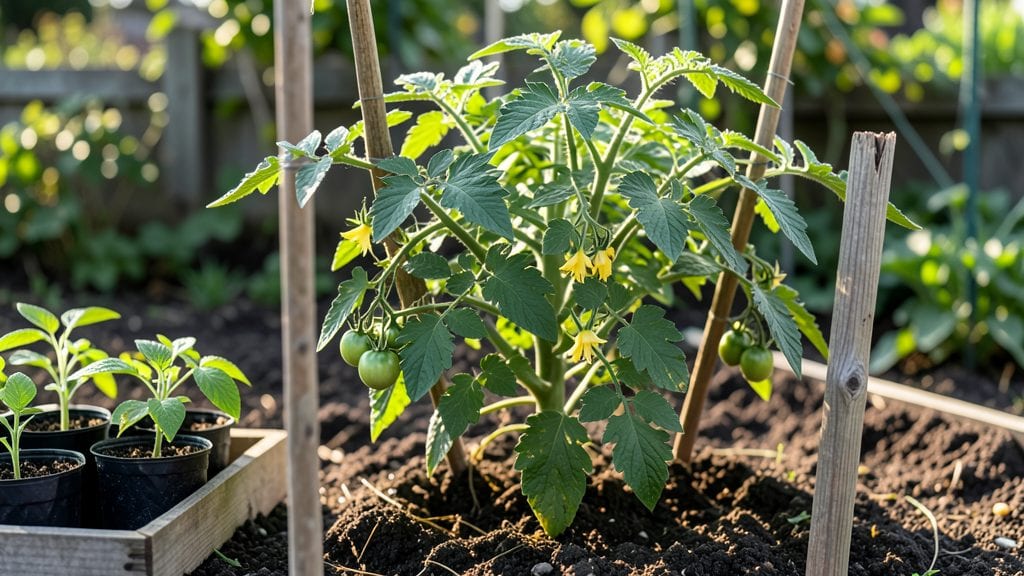
Tomato spacing in square foot gardens requires 1 plant per square foot for determinate varieties and 4 plants per square foot for dwarf or bush types, with 1 plant per 18-inch section for indeterminate vines to ensure proper airflow and sunlight exposure.
Square foot gardening thrives on precision, and tomatoes are no exception.
Determinate varieties—like Roma or Celebrity—stay compact, so they pack perfectly into tight grids, while indeterminate types (such as Cherry or Beefsteak) need wider spacing to sprawl vertically. 🌱 I’ve found that dwarf tomatoes can actually be planted closer together, creating a dense, bushy effect that maximizes yield in small spaces.
The key is matching plant size to your garden’s layout, whether you’re working with 4x4-foot beds or larger plots.
Proper spacing isn’t just about fitting more plants—it’s about preventing disease and boosting fruit production. Crowded tomatoes struggle with airflow, leading to fungal issues like blight, while adequate room lets sunlight reach all leaves.
For indeterminate vines, I recommend trellising to save space and improve harvests, especially in cooler climates where vines grow more slowly.
💡 In This Article
- How Tomato Varieties Affect Square Foot Spacing Needs
- Optimizing Square Foot Tomato Layouts for High-Yield Harvests
How tomato varieties affect square foot spacing needs
Determinate tomato varieties—like Roma or Bush Early Girl—grow to a fixed height of about 3-4 feet and produce fruit all at once, making them perfect for tight square foot gardens.
Their compact growth habit allows gardeners to place 1 plant per square foot, creating a dense canopy that maximizes sunlight capture in small spaces. The key here is their self-contained growth pattern, where energy focuses on fruit production rather than vine elongation. 🌿
Indeterminate varieties, such as Cherry Tomatoes or Brandywine, keep growing and producing fruit until frost, with vines that can reach 6-10 feet or more if unchecked. These need 1 plant per 18-inch section (or 4 plants per square foot if using dwarf indeterminate types) to prevent overcrowding.
Their sprawling nature demands either wide spacing or vertical support like trellises, which can reduce the required footprint by up to 50% while improving airflow and reducing disease risk.
Dwarf or bush tomato types, like Tiny Tim or Patio Princess, strike a middle ground with heights under 2 feet and a more controlled growth pattern. These can handle 4 plants per square foot because their smaller stature allows for tighter packing without sacrificing yield.
The trade-off? They produce fewer fruits per plant compared to indeterminate types, but their compact size makes them ideal for containers or small urban gardens where space is limited. 🌱
Canopy size plays a critical role in spacing decisions. Determinate varieties develop wide, bushy tops that can spread 2-3 feet across, while indeterminate vines spread horizontally unless trained vertically.
This horizontal spread is why indeterminate types need wider spacing—crowding leads to shaded leaves, which reduces photosynthesis and increases humidity, creating prime conditions for fungal diseases like early blight.
Fruiting patterns also influence spacing needs. Determinate tomatoes produce all their fruit at once, so their spacing focuses on maximizing sunlight exposure during the peak harvest window. Indeterminate varieties, however, produce fruit continuously, meaning their spacing must support ongoing vine growth and fruit development without compromising airflow.
This is why trellising indeterminate types can be a game-changer—it not only saves space but also improves fruit quality by reducing soil-borne diseases. 💡
Climate considerations further refine spacing requirements. In warmer regions, indeterminate vines grow more aggressively, potentially requiring even wider spacing (24 inches between plants) to prevent overcrowding. Conversely, in cooler climates, slower growth may allow for slightly tighter spacing (18 inches) without sacrificing yield.
Understanding your local growing conditions helps fine-tune spacing for optimal results.
What most gardeners overlook is how plant placement affects sunlight distribution. Even with proper spacing, arranging plants in a grid pattern can create "shadow zones" where sunlight doesn't reach. Staggering plants or using diagonal layouts can improve light exposure across the entire bed, especially for taller indeterminate varieties.
This small adjustment can boost yields by up to 15-20% in some cases. 🌞