
Vegetables
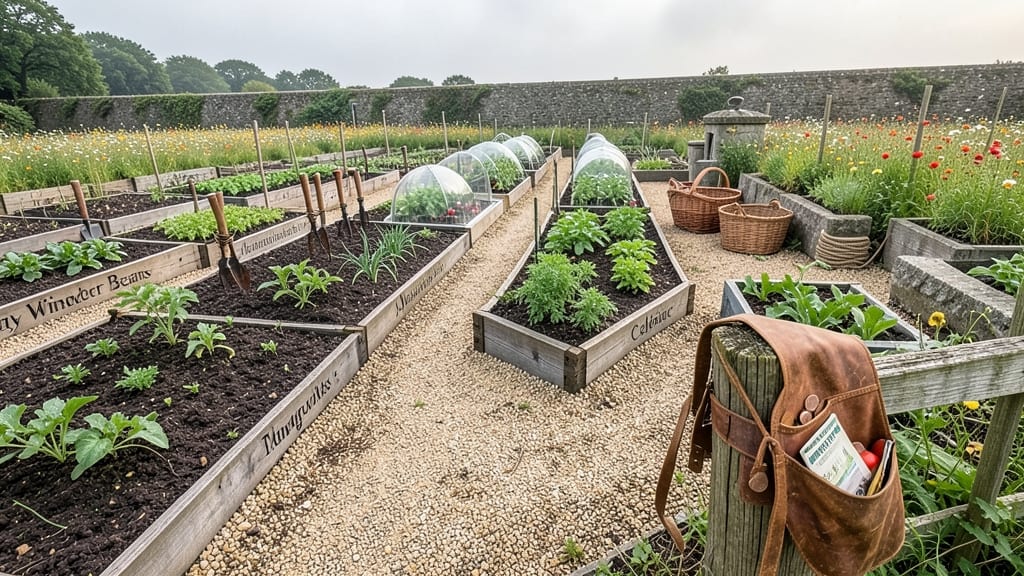
England’s farm-to-table revolution began in these historic vegetable gardens, where centuries-old plots still teach modern growers about sustainable cultivation. Explore 10 iconic UK gardens that shaped organic gardening traditions—and how you can apply their wisdom today.
Kew Gardens’ Victorian Kitchen Garden
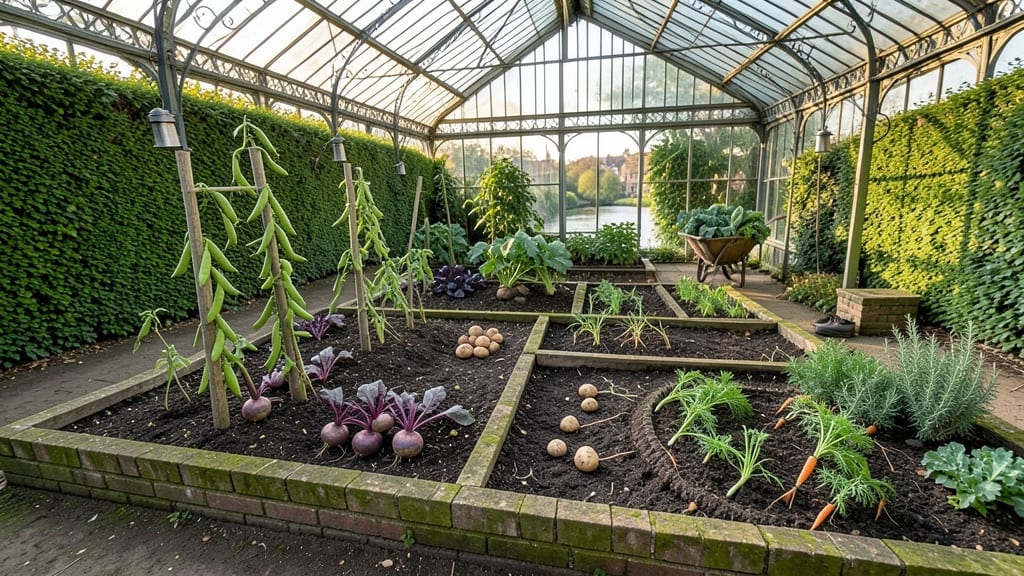
Step back into the 1840s at Kew Gardens’ Victorian Kitchen Garden, where a meticulously restored plot proves that self-sufficiency and crop diversity were already thriving over 180 years ago. This isn’t just a pretty display—it’s a working model of 19th-century rotation techniques that heritage growers still swear by today.
The garden’s design follows a three-year rotation of root crops, legumes, and brassicas, ensuring soil health without synthetic inputs. You’ll spot heirloom varieties like Mammoth Melting tomatoes climbing wrought-iron trellises alongside broad beans and carrots, all grown using period-accurate tools. The plot’s raised beds (a Victorian innovation!) improve drainage in Kew’s clay soil, a lesson modern gardeners can easily replicate.
Perfect for history-loving gardeners or those seeking inspiration for small-scale sustainability, this plot proves that time-tested methods still outperform modern shortcuts. Visit to see how a little planning can yield big harvests—just like the Victorians did. 🌱
Capability Brown’s Stowe Landscape Garden Vegetable Gardens
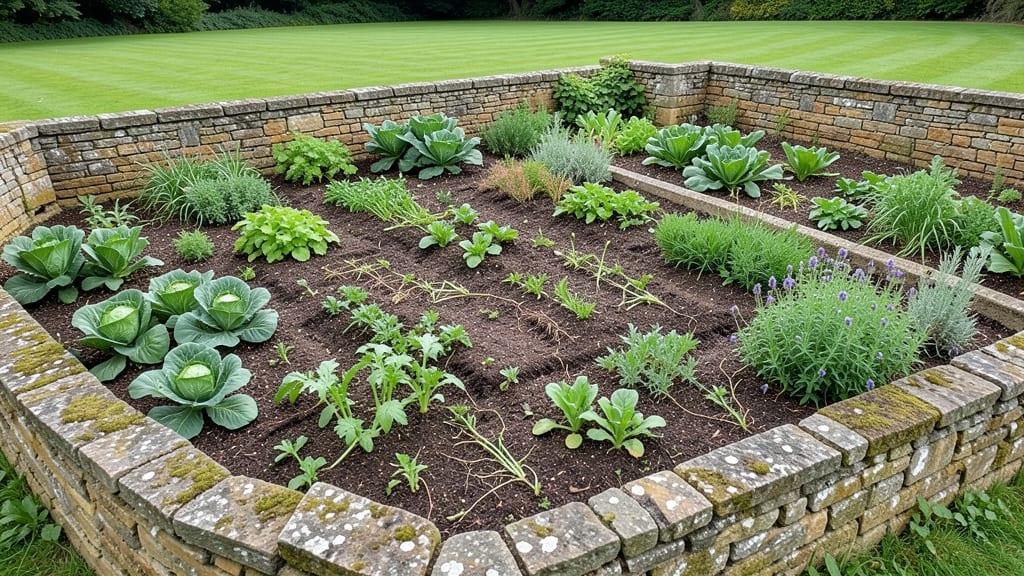
Behind Stowe Landscape Garden’s grand Georgian lawns lie the original 1700s vegetable plots that fed the estate’s staff—proof that even aristocratic gardens grew food sustainably. These walled beds used no-dig methods long before modern permaculture, relying on compost-rich soil and companion planting to maximize yields.
Today, you can replicate their approach by layering perennial vegetables like rhubarb and asparagus with annuals such as potatoes and leeks. The plots avoided tilling, instead adding organic matter annually—a technique that reduces soil erosion and builds fertility naturally. Stowe’s gravel paths between beds also minimized compaction, a lesson for modern gardeners with heavy foot traffic.
Perfect for permaculture beginners, these plots prove that even small spaces can produce abundantly with the right design. 🌱
Wotton House’s Tudor Knot Garden Vegetable Beds
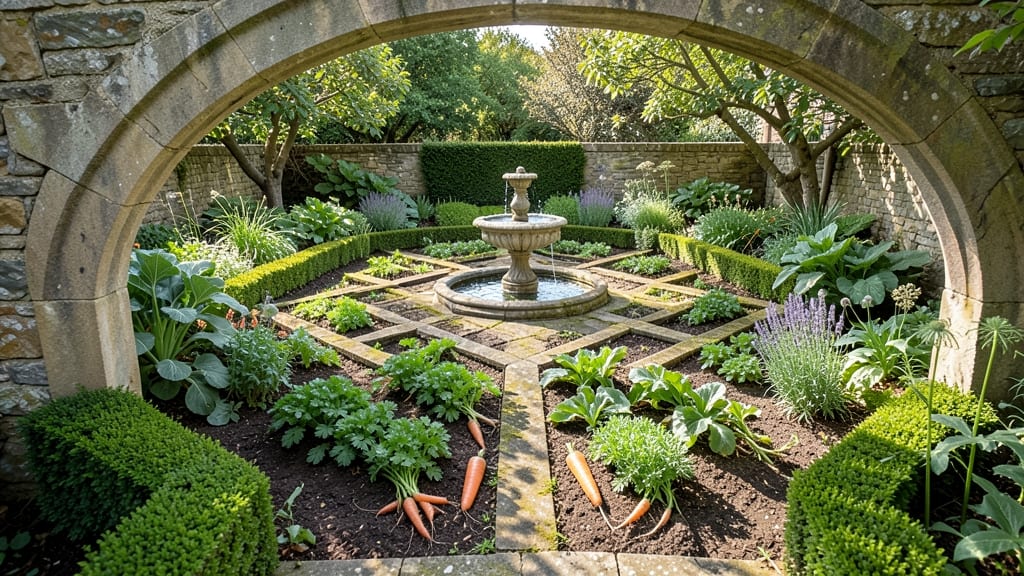
Step into an Elizabethan time capsule where every plant served a purpose—Wotton House’s Tudor Knot Garden blends medicinal herbs and root vegetables in a geometric design that’s as practical as it is beautiful. This isn’t just a vegetable plot; it’s a living apothecary where carrots and parsley grew alongside rosemary and thyme, their roots intertwined to maximize space and benefits.
The knot garden’s symmetry creates microclimates—warmer centers for heat-loving herbs like sage and cooler edges for root crops like parsnips. Plant comfrey at the edges to attract pollinators while its deep roots improve soil structure. For modern gardeners, this means year-round harvests: sow winter savory in autumn for early spring harvests, and let borage self-seed to deter pests naturally.
Perfect for small urban plots or heritage gardeners, this design proves you don’t need acres to grow both food and medicine. The Tudor approach to polyculture—where every plant supports another—is the ultimate space-saving hack. 🌿
Blickling Estate’s WWII Victory Garden
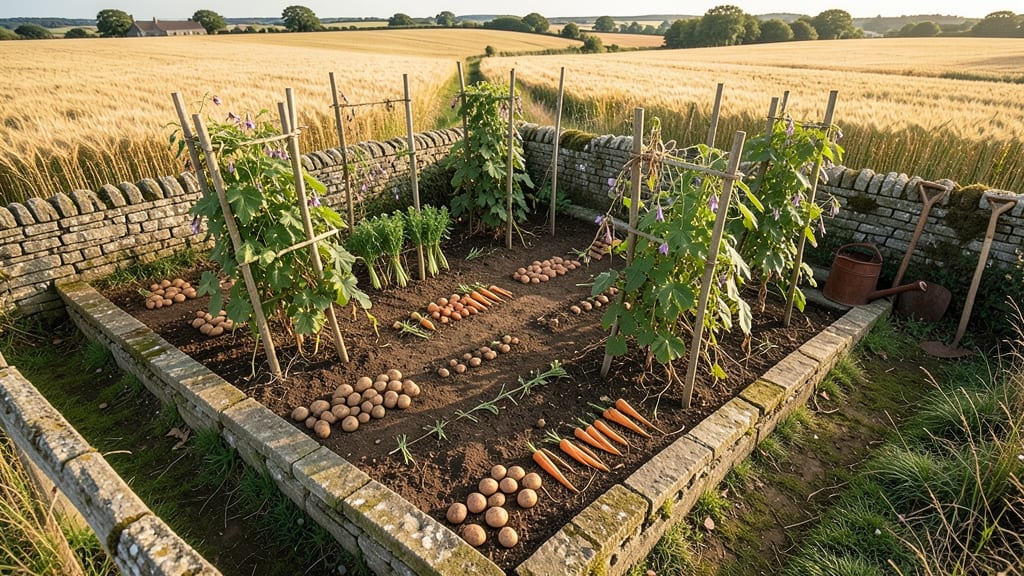
During World War II, when food rations stretched thin, Blickling Estate’s Victory Garden became a lifeline for the village of Blickling, Norfolk. This original 1940s plot—now restored—shows how families grew high-yield crops like potatoes, carrots, and runner beans in tight spaces, proving that even small gardens could feed communities during crises.
The garden’s design relied on intensive planting techniques: crops were sown in tight rows, with fast-maturing varieties prioritized to maximize harvests before winter. Tools like hand forks and simple frames were used to save resources, and every inch of soil was utilized—even vertical space with climbing beans. Today, urban gardeners can replicate this by choosing compact, prolific varieties like ‘King Edward’ potatoes or ‘Scarlet Emperor’ runner beans for balconies or raised beds.
Perfect for modern urban growers, this WWII blueprint teaches that space efficiency and strategic crop selection can turn tiny plots into productive havens—no matter the era. 🌱
Hidcote Manor’s Cottage Garden Vegetable Patch
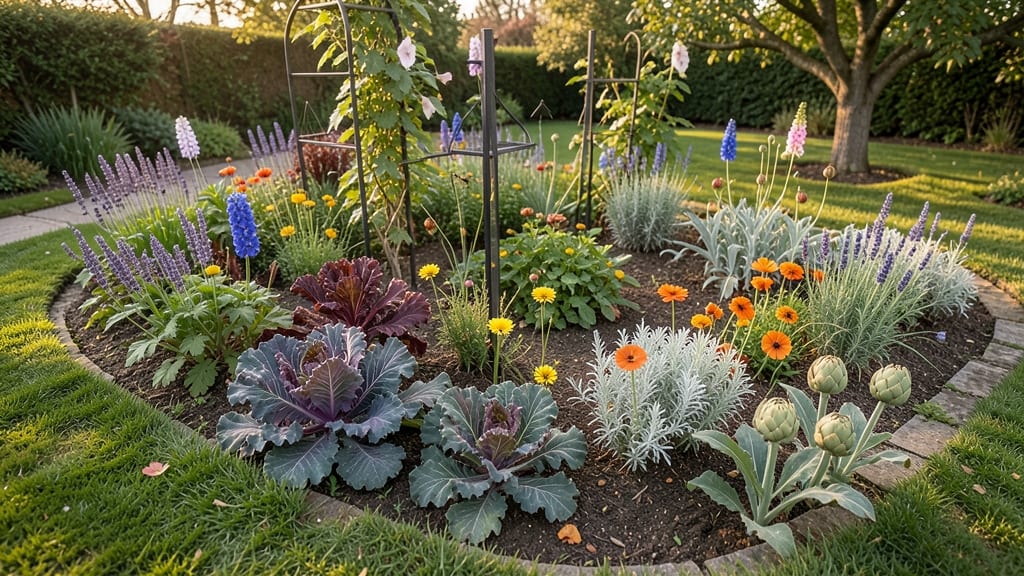
Step into a paintbox of colors and flavors at Hidcote Manor’s Arts-and-Crafts vegetable patch, where flowers and food grew as one. This 1909 garden, designed by garden designer Gertrude Jekyll, blends edible borders with ornamental plants—creating a haven for bees, butterflies, and modern pollinator-friendly gardeners.
Here, broad beans climb trellises beside marigolds, while nasturtiums edge beds of French beans. The secret? Interplanting flowers like calendula and borage to deter pests naturally while attracting beneficial insects. This low-maintenance style thrives in partial shade, making it perfect for UK gardens with mixed light conditions.
Ideal for small-space growers or those wanting to beautify borders with bounty, Hidcote’s approach proves you don’t need separate veg and flower patches. Just plant edible flowers like pansies or sweet peas alongside your crops for a double harvest of food and pollinator support. 🌻
Greenwich Palace’s Tudor Physic Garden
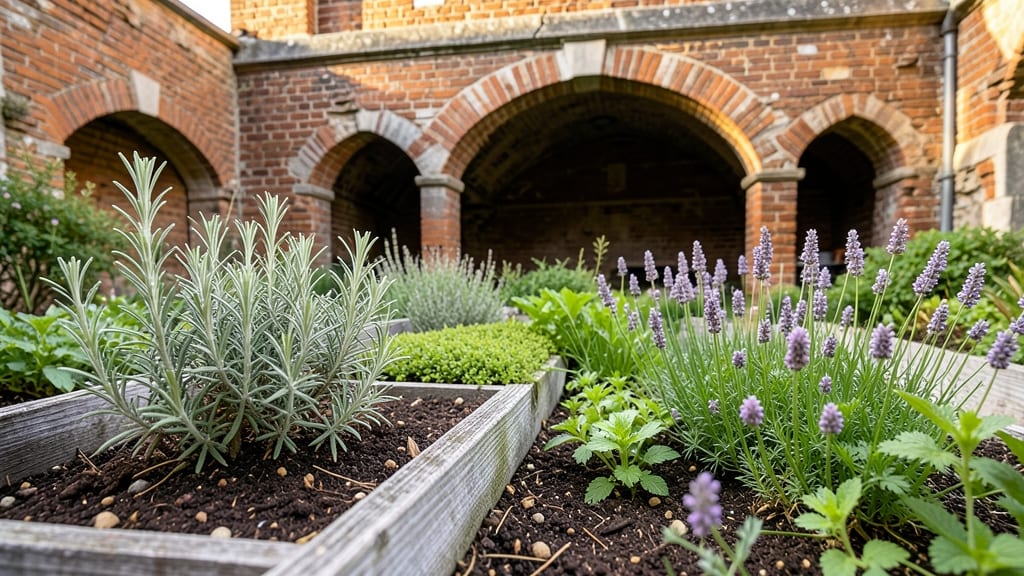
Step into the Tudor Physic Garden at Greenwich Palace, where medicinal herbs and culinary vegetables grew side-by-side for Henry VIII’s royal kitchen—this is the original blueprint for growing culinary-medicinal hybrids we still use today.
Here, sage and lavender weren’t just for healing—they flavored meats and stews, while onions and garlic doubled as remedies. The garden’s raised stone beds (still visible) were arranged by plant function, with taller herbs like rosemary at the back and low-growing chives in the front for easy harvest. You can recreate this by grouping herbs by use: culinary (thyme, parsley) near the kitchen, medicinal (calendula, comfrey) near pathways.
This garden is a must-visit for herbalists and home growers blending food and medicine—its 500-year-old layout proves you don’t need a sprawling plot to grow both. 🌿
Abbotsbury Sub-Tropical Gardens’ Victorian Walled Garden
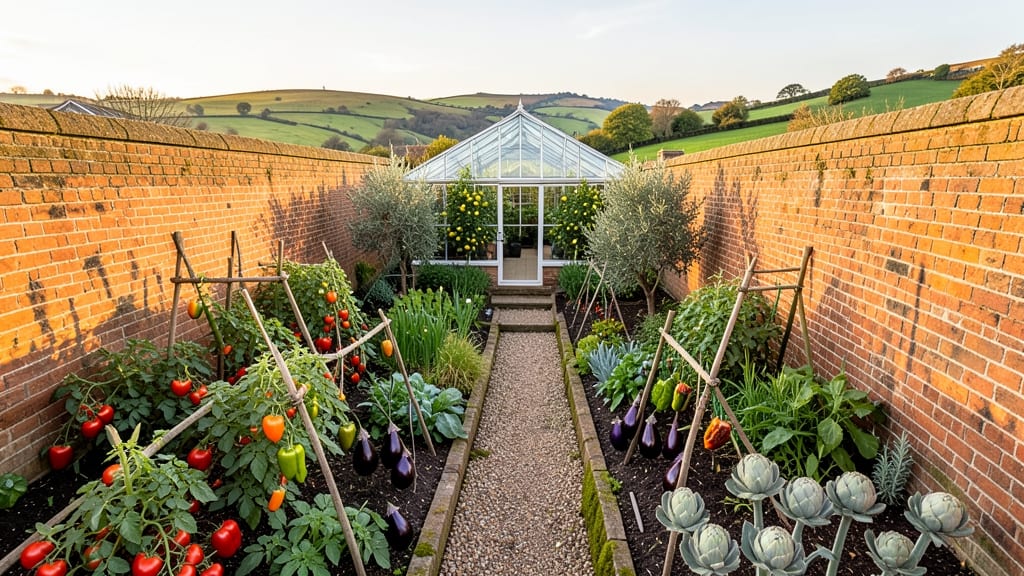
If you’ve ever dreamed of growing Mediterranean vegetables in the UK’s cooler climate, Abbotsbury’s Victorian Walled Garden proves it’s possible—thanks to a clever trick of south-facing walls that create a microclimate warm enough for year-round production. This 19th-century garden, nestled on Dorset’s Jurassic Coast, demonstrates how exotic crops like artichokes, rhubarb, and sweetcorn thrive where they’d normally perish in frost.
The secret lies in the 12-foot-high stone walls, which absorb and radiate heat, raising soil temperatures by up to 10°C (50°F) compared to open ground. Gardeners can plant broad beans in January and harvest tomatoes in November by leveraging this effect. For modern microclimate gardeners, even a small south-facing wall or fence can extend your growing season—try planting spinach or lettuce against a sunny brick wall for a similar boost.
This approach is ideal for urban gardeners with limited space or those in cooler UK regions (like Scotland or Wales) who want to grow warm-season crops. The garden’s mix of traditional English veggies and Mediterranean staples also offers inspiration for diverse, resilient planting schemes that defy seasonal limits. 🌻
Bodnant Garden’s Welsh Mountain Vegetable Plot
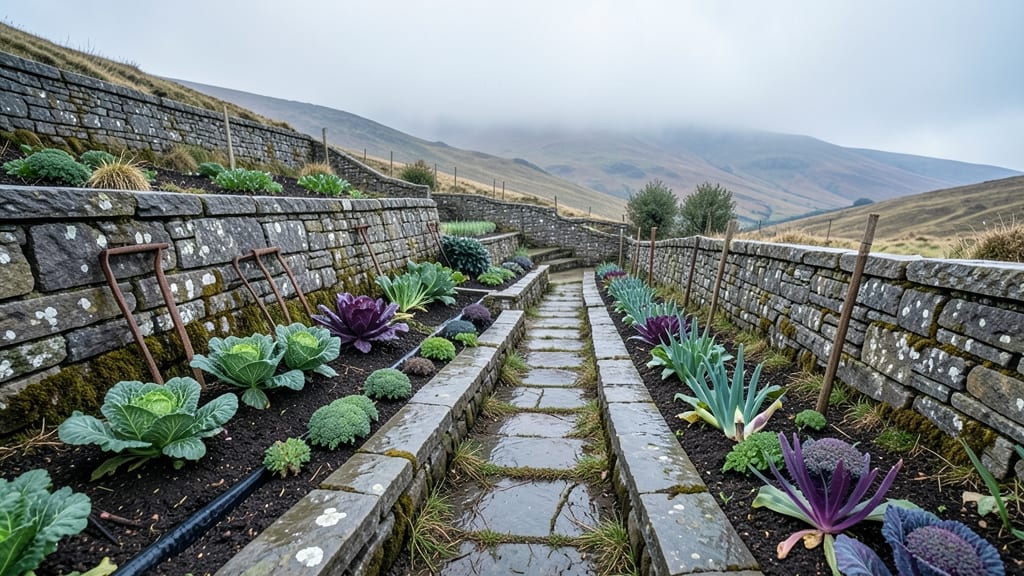
If you live in the UK’s cooler northern regions, Bodnant Garden’s Welsh Mountain Vegetable Plot proves that thriving harvests are possible even with short growing seasons. This 19th-century terraced plot sits at 500 feet elevation, where chilly winds and damp conditions would challenge most gardens—but not this one.
The plot specializes in cold-hardy brassicas like kale, swede, and leeks, which tolerate frost and even light snowfall. Gardeners here use slate walls to create microclimates, trapping heat during sunny spells while protecting plants from wind. Succession planting of turnips and cabbages ensures continuous harvests from May through October, making it ideal for areas with less than 160 frost-free days.
Perfect for northern gardeners, this plot shows how traditional Welsh varieties (like Mam Tor kale) outperform modern hybrids in harsh climates. The terraced design also prevents soil erosion—a clever solution for sloped gardens. 🌿
Hampton Court Palace’s Henry VIII’s Kitchen Garden
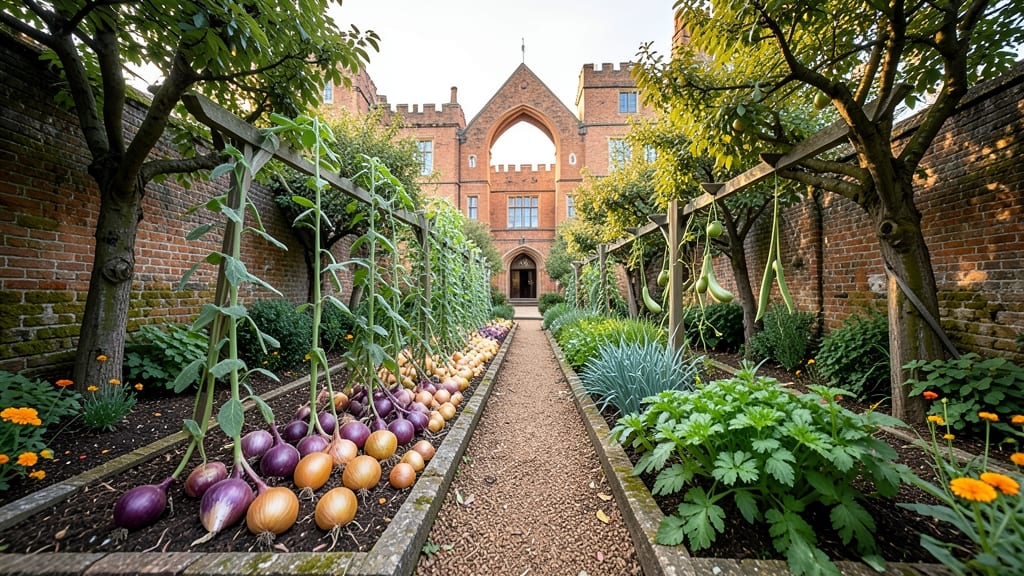
Step into Henry VIII’s royal kitchen garden at Hampton Court Palace, where Tudor-era crop pairings like onions with beans weren’t just practical—they were revolutionary. This historic plot reveals how medieval gardeners maximized space and nutrients, a technique now celebrated in modern agroforestry systems for small-scale growers.
The garden’s brick-paved beds (still visible today) were designed for efficiency, with fast-growing crops like lettuce and radishes interplanted with slower-maturing onions and leeks. This three-dimensional planting—where root crops grew beneath climbing beans—mirrors today’s polyculture methods, boosting yields without synthetic fertilizers. Try planting broad beans alongside shallots in your own plot for a similar nitrogen-fixing benefit.
Perfect for urban gardeners or heritage growers, this system proves that medieval wisdom still thrives in modern gardens. 🌱
Dunham Massey’s Victorian Market Garden

Imagine stepping into a 1850s market garden where every row was cultivated for profit—not just survival. Dunham Massey’s Victorian Market Garden reveals how families scaled up vegetable production for local markets, proving that small-scale farming could be both lucrative and sustainable. The original glasshouses and neatly organized beds show how Victorians maximized space for high-demand crops like carrots, potatoes, and cabbages.
Today’s small-scale farmers can replicate this model by focusing on market-driven crops and efficient layouts. The garden’s rotation system—alternating heavy feeders like brassicas with light feeders like beans—kept soil healthy without synthetic inputs. For modern growers, this means prioritizing quick-turnaround crops (like radishes or lettuce) alongside longer-season staples to ensure year-round sales. The site’s preserved harvesting tools and storage methods also offer practical lessons in reducing waste.
This garden is a must-visit for aspiring farmers' market vendors or urban growers looking to sell surplus produce. Its commercial-scale efficiency proves that even small plots can thrive when designed with market demand in mind. 🌻