
Tools
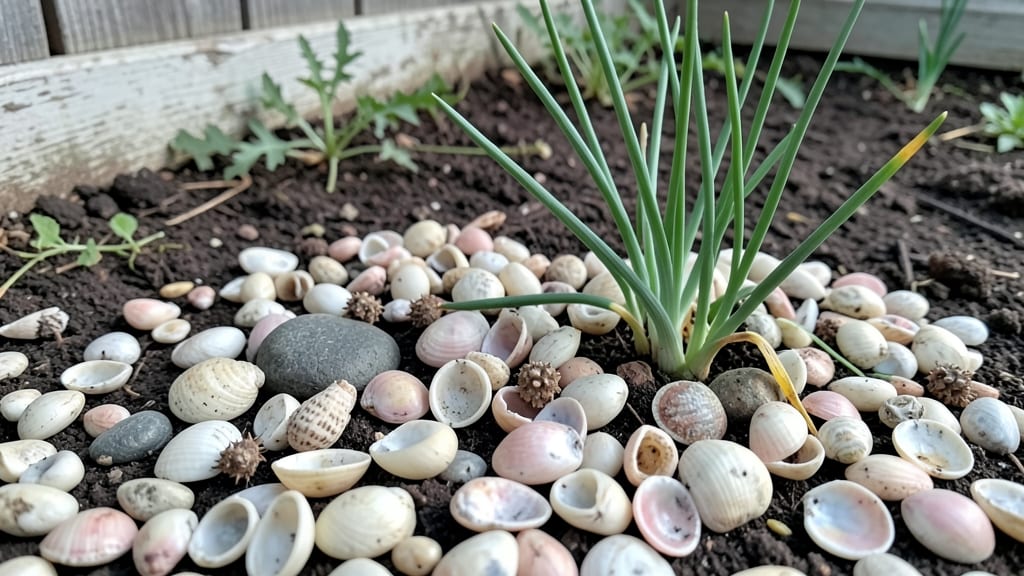
Incorporating seashells into your garden boosts soil health, creates natural pathways, and deters pests while adding coastal charm. Crush them for mulch or use whole for decorative accents.
Seashells aren't just pretty—they're packed with calcium carbonate and magnesium, which naturally improve soil structure and pH balance over time. 🌿 I've seen crushed shells act like a slow-release lime, gradually enriching the soil without harsh chemicals.
Plus, their sharp edges help break up compacted dirt, giving plant roots better access to air and water. For a quick fix, scatter them along garden borders or mix them into compost piles to speed up decomposition.
Beyond soil benefits, shells add texture and movement to any garden design. Whole shells create whimsical pathways, while broken pieces blend seamlessly into mulch beds. I love using them near coastal plants like lavender or rosemary—they create a unified aesthetic that feels intentional.
Just be mindful of their size: larger shells work best for pathways, while smaller fragments are ideal for mulching.
💡 In This Article
- How Seashells Improve Garden Soil Chemistry
- Decorative and Functional Seashell Garden Ideas
How seashells improve garden soil chemistry
Seashells are essentially concentrated deposits of calcium carbonate (CaCO₃), which makes them a natural soil amendment. When crushed, they break down into a fine, chalky texture that resembles limestone.
This mineral works like a slow-release lime, gradually raising soil pH levels—especially helpful in acidic soils where plants struggle to absorb nutrients. The process begins when microbial activity in the soil starts decomposing the shell fragments, releasing calcium ions that neutralize excess acidity over time.
The magnesium content in shells (typically around 1-3% of their composition) plays a crucial role too. Magnesium is essential for chlorophyll production, helping plants convert sunlight into energy. Unlike synthetic fertilizers that provide quick but short-lived nutrient spikes, shells release these minerals steadily, creating a more stable soil environment.
For example, adding 1 cup of crushed shells per square yard can improve calcium levels by 10-20% over a growing season, benefiting calcium-loving plants like tomatoes and broccoli.
Here's what's actually happening chemically: The calcium carbonate reacts with soil acids (like organic acids from decomposing matter) to form calcium bicarbonate, which washes away, leaving behind neutralized soil. This reaction is most effective in slightly acidic to neutral soils (pH 6.0-7.5).
In alkaline soils, shells may not dissolve as quickly, but they still improve soil structure by adding coarse, gritty particles that prevent compaction. The physical texture also enhances drainage, reducing waterlogging that can suffocate plant roots.
What most people don't realize is how shells affect nutrient availability. The calcium improves the soil's cation exchange capacity (CEC), meaning it can hold and release more nutrients like potassium and phosphorus. This is particularly valuable for container gardens where soil volume is limited.
For instance, potted plants like herbs or succulents benefit from the improved aeration and mineral content when shells are mixed into the potting mix at a ratio of 1 part shells to 4 parts soil.
The slow-release nature of shells makes them ideal for long-term soil improvement. Unlike quick-acting lime that can cause pH spikes, shells provide a gentle, sustained correction. This gradual process is especially beneficial for vegetable gardens, where sudden pH changes can stress plants.
For example, adding shells to a compost pile accelerates decomposition by providing calcium, which helps break down tough plant materials like corn stalks or pine needles.
For best results, crush shells into pieces no larger than 1/4 inch to maximize surface area for decomposition. Larger fragments will take years to break down but can still improve soil structure.
The key is consistency—adding shells annually will maintain optimal soil chemistry while creating a self-sustaining ecosystem that benefits both plants and beneficial soil organisms. 🌱