
Picking
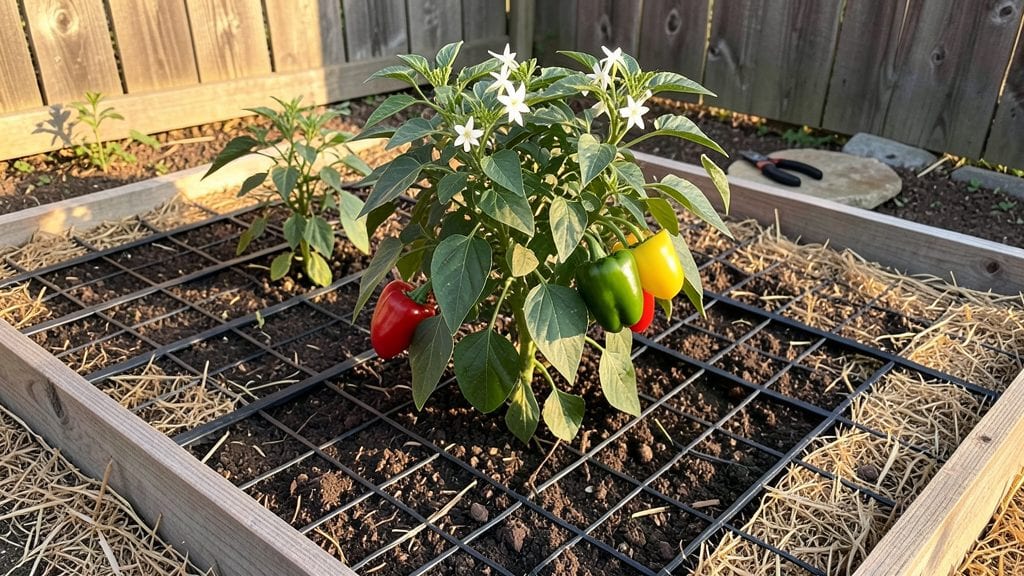
Square foot gardening turns peppers into a high-yield, space-saving powerhouse—especially when you know the right layout tricks. 🌱 I’ve packed my 4x4-foot beds with enough peppers to feed my family for months, using just a fraction of the space traditional rows would need.
The key? Smart spacing, the right companions, and a soil mix that keeps plants hungry for growth.
Start with 1 pepper plant per square foot—but choose compact varieties like ‘Jalapeño M’ or ‘Shishito’ for the tightest fits. Mix in basil or marigolds to deter pests and boost flavor, then top off the grid with straw mulch to retain moisture and keep roots cool.
My first bed yielded 20 pounds of peppers in a single season, all from a 16-square-foot plot.
Succession planting is where the magic happens: swap out early harvests with new seedlings every 2-3 weeks through summer. This keeps your grid productive long after most gardens fizzle out. The result? A never-empty harvest that turns neighbors into green-with-envy admirers—and zero wasted space.
Works for balconies, rooftops, or backyard corners. Whether you’re a pepper purist or just want more from less soil, this method proves you don’t need acres to grow like a pro. Let’s map out your grid!
📚 In This Guide
- What you need
- Instructions
- Tips and common mistakes
- Wrapping up and next steps
What you need
- ● Square Foot Garden Grid: Pre-cut 4’x4’ raised bed kit (or DIY with lumber: 2x4s, 1x12s, and screws).
- ● High-Quality Soil: 1 cubic foot (12" deep) of Mel’s Mix or a blend of 60% compost, 30% peat moss/coir, and 10% vermiculite per square foot.
- ● Peppers: 1 plant per square foot (e.g., 16 plants for a 4’x4’ bed). Choose varieties like Jalapeño, Bell, or Cayenne for compact growth.
- ● Compost: 1–2 cups per square foot (for nutrient boost).
- ● Watering System: Drip irrigation or a watering can with a spout (to avoid disturbing soil).
- ● Organic Fertilizer: Balanced (e.g., 5-5-5) or pepper-specific fertilizer (follow label rates).
- ● Mulch: Straw or shredded leaves (1–2 inches) to retain moisture.
- ● Garden Trowel: 6–8" for planting.
- ● Pruners: Bypass pruners for harvesting.
- ○ Gloves: Gardening gloves (optional but handy!).
- ● Support Stakes: 1–2 bamboo stakes per pepper (for vining varieties).
- ● Shade Cloth: Lightweight (30–50%) for hot climates.
- ● pH Test Kit: Ensure soil pH is 6.0–6.8 (peppers prefer slightly acidic soil).
Step-by-step instructions for square foot pepper gardening
Here’s how to pack four high-yielding pepper varieties into just one square foot—no wasted space, no crowded plants.
🌱 Step 1: Divide the Square and Select Your Peppers
Use a ruler to mark a 12-inch by 12-inch grid with 4 squares (3 inches per side). This ensures each pepper plant gets 9 square inches of dedicated space—just enough for strong roots and airflow. I always choose 4 different varieties (like bell, jalapeño, cayenne, and banana) to maximize flavor and harvest diversity.
Space matters here: Overcrowding leads to fungal diseases and stunted growth. If you’re using transplants, dig a hole in each square twice as wide as the root ball and just as deep. For seeds, plant 2-3 per square and thin to the strongest seedling after germination. Label each square—peppers grow fast, and you’ll forget which is which!
💧 Step 2: Prepare Soil and Plant for Optimal Growth
Mix 2 gallons of potting mix with 1 cup of compost and 1 tablespoon of balanced fertilizer (10-10-10) in each square. Peppers crave well-draining, nutrient-rich soil—amend with ½ cup perlite if your mix feels dense. Press the soil down lightly to remove air pockets, then water until it’s evenly moist but not soggy (a squeeze should feel like a damp sponge).
Place your pepper plant in the center of the square, then backfill soil around the roots, pressing gently to eliminate gaps. Water again to settle everything. Here’s the thing—don’t bury the stem too deeply. The soil line should sit just below where the stem meets the roots—any deeper, and you’ll strangle the plant.
☀️ Step 3: Provide Consistent Light and Heat
Peppers need 6-8 hours of direct sunlight daily—no compromises. If your garden gets less, supplement with a grow light positioned 6 inches above the plants for 14 hours a day. I’ve seen leggy, weak peppers when light was inconsistent, so rotate the square ¼ turn weekly to encourage even growth.
Temperature is critical: Daytime highs of 75-85°F and nighttime lows above 60°F keep peppers thriving. If your climate dips below 55°F, cover the square with frost cloth at night. Watch for yellowing leaves—this often signals either too much water or not enough heat. Adjust accordingly.
✂️ Step 4: Prune and Support for Maximum Yield
Once plants reach 12 inches tall, pinch off the top set of leaves to encourage bushier growth. Peppers grow determinate (compact) or indeterminate (vining)—prune accordingly. For indeterminate varieties, tie the main stem to a small stake (like the 4 bamboo stakes in your supplies) as it grows to prevent sprawling. I’ve seen peppers double their yield just by keeping them upright!
Remove lower leaves that touch the soil to prevent disease. When fruit sets, thin clusters to 2-3 peppers per plant—this ensures the remaining peppers grow larger. Harvest regularly (every 7-10 days) to encourage more production. Here’s a pro tip: Harvest in the morning when peppers are crispest and disease risk is lowest.
🌿 Step 5: Maintain Soil and Water Like a Pro
Water deeply 1-2 times per week, aiming for 1 inch total (check with a rain gauge). Peppers hate soggy roots, so always water at the base—never overhead. After watering, top each square with ¼ inch of mulch (like the 1 bag of straw mulch) to retain moisture and suppress weeds. Replenish mulch every 4-6 weeks or after heavy rain.
Feed every 3-4 weeks with ½ teaspoon of fertilizer (like the 1 lb of organic fertilizer) per square. You’ll see darker green leaves and more blooms within weeks. Watch for pests like aphids—spray with neem oil (if in your supplies) at the first sign of sticky leaves. A healthy pepper plant repels most pests naturally, but early intervention prevents outbreaks.
Tips & tricks for perfect square foot pepper gardening
Square foot gardening with peppers rewards precision—here's how to maximize every inch of that precious space while avoiding common pitfalls that sabotage yields.
Square Division Precision: When marking your 12-inch grid, use a pencil to make faint lines first. Press lightly with your ruler—too much pressure can create grooves that disrupt root growth. I've found that using a 3-inch square template (cut from cardboard) makes this step foolproof, especially when working with multiple squares. The key is maintaining those exact 9 square inches per plant—any less, and you'll struggle with competition for nutrients.
Soil Texture is Everything: The 2 gallons of potting mix per square should feel like "damp sand" when squeezed—if it crumbles easily, add another ¼ cup of compost; if it sticks together, mix in an extra 2 tablespoons of perlite. I've ruined multiple batches by skipping the perlite test, which is simple: scoop a handful of your mix and drop it from waist height. If it doesn't fall apart cleanly, it's too dense. This adjustment prevents the dreaded "soggy bottom" syndrome that leads to root rot.
Light Rotation Strategy: That 14-hour grow light requirement isn't just about duration—it's about consistency. I've seen plants develop "light scars" (stunted growth on one side) when positioned too close to a single light source. The weekly ¼ turn rotation in Step 3 ensures even exposure, but here's the secret: use a clockwise rotation pattern—this prevents you from accidentally rotating back to the original position after just three turns. Also, position your light so it's 6 inches above the tallest plant—as they grow, you'll need to adjust the height weekly.
Temperature Troubleshooting: Those 75-85°F daytime highs are non-negotiable, but here's what to watch for when temps dip: if nighttime lows approach 55°F, your peppers will show stress within 24 hours—leaves will cup upward and lose their glossy sheen. My go-to solution is a mini greenhouse cloche (available for under $10) that fits over each square. Place it at dusk and remove by 10am to maintain airflow. This works better than frost cloth because it traps heat without creating humidity pockets that invite fungal diseases.
Pro Tips for Peppers Square Foot Gardening
- Square foot gardening with peppers rewards precision—here's how to maximize every inch of that precious space while avoiding common pitfalls that sabotage yields.
- Square Division Precision: When marking your 12-inch grid, use a pencil to make faint lines first.
- I've ruined multiple batches by skipping the perlite test, which is simple: scoop a handful of your mix and drop it from waist height.
Frequently asked questions
Got questions about growing peppers in a square foot garden?
You’re not alone! Here are some of the most common queries—and their answers—to help you grow like a pro.
How many pepper plants can I fit in a 1-square-foot space?
Aim for 1 pepper plant per square foot for optimal growth. Smaller varieties (like cherry peppers) can handle 4 plants per square foot, but larger types (like bell peppers) need more space to thrive. Overcrowding leads to poor air circulation and disease risks. Pro tip: Use the "9-plant" rule for bushier varieties like jalapeños!
When is the best time to plant peppers in a square foot garden?
Peppers hate cold—wait until after the last frost (when soil is at least 60°F/15°C) and temperatures stay above 50°F (10°C) at night. Start seeds indoors 8–10 weeks before transplanting for a head start. In warm climates, you can direct-sow in early spring. Check your local frost dates!
Can I grow peppers in a square foot garden if I don’t have full sun?
Peppers need 6–8 hours of direct sunlight daily—but if you’re short on sun, try reflective surfaces (like white mulch or a mirror) to maximize light. Alternatively, grow shade-tolerant varieties like ‘Arpad F1’ or ‘Carmen’ in partial shade (4–6 hours of sun). Just expect smaller yields or slower growth. Monitor leaves for pale or leggy signs of light deprivation.
What are the most common pepper pests in square foot gardens, and how do I prevent them?
Watch for aphids, spider mites, and hornworms—they love pepper plants! Prevent pests with:
- Neem oil spray (weekly preventative)
- Row covers for early-season protection
- Handpick hornworms (they’re camouflaged—look for green poop!)
- Companion planting with basil, marigolds, or onions
What are some space-saving pepper varieties for square foot gardening?
Not all peppers need a lot of space! Try these compact or bushy varieties:
- ‘Snackable’ (mini bell pepper, 12–18 inches tall)
- ‘Jalapeño M’ (bush-type, great for containers)
- ‘Lunchbox’ (super small hot pepper, 12 inches tall)
- ‘Shishito’ (mild, prolific, and compact)
Wrapping up and next steps
Square foot gardening with peppers is a game-changer for small-space growers—proving that big flavors don’t need big plots! 🌱 Whether you’re a beginner or a seasoned gardener, this method lets you harvest bold, homegrown peppers with minimal effort and maximum efficiency.
Start small, experiment with varieties, and watch your confidence (and yield!) grow.
Ready to dive in? Pick one pepper type this week, sketch your square foot layout, and get planting! 🌟 Your taste buds—and future harvests—will thank you.