
Light Requirements
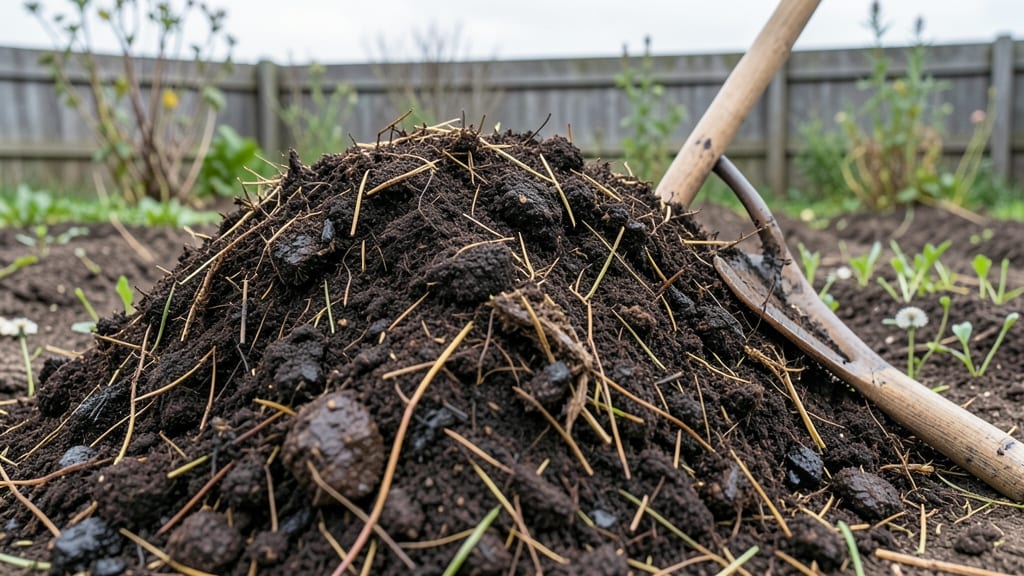
To determine how much cow manure for garden use, apply 1-2 inches of well-aged composted manure spread evenly over the soil, mixing it into the top 6 inches for vegetables or using it as a top dressing for perennials and shrubs. Always compost fresh manure for at least 3-6 months to prevent burning plants.
Cow manure's nutrient richness comes from its high nitrogen content, but raw manure releases ammonia too quickly, which can scorch plant roots. 🌱 The composting process transforms this into stable organic matter, making nutrients like phosphorus and potassium available over time.
For vegetables, I blend it into the soil to avoid surface crusting, while for flowering plants, a light top layer suffices. The key is patience—rushed composting leads to weak growth or even plant death.
Seasonal timing matters too: spring applications boost root development, while fall prep enriches soil for next year's harvest. Overdoing it? Watch for yellowing leaves or a strong ammonia smell—both mean your plants are getting too much at once.
I’ve found that testing soil pH before applying helps fine-tune the amount needed for specific crops.
💡 In This Article
- Cow Manure Composting Science and Plant Nutrition
- Applying Cow Manure by Plant Type: Dosage Guide
Cow manure composting science and plant nutrition
Cow manure has a nitrogen-to-carbon ratio of about 20:1, which is far higher than the ideal 25:1 to 30:1 for composting. This imbalance means fresh manure releases ammonia rapidly, scorching plant roots and killing beneficial soil microbes.
The composting process stabilizes these nutrients by breaking down organic matter through microbial action, reducing ammonia volatility by up to 90% over 3-6 months. 🌱 During this time, microbes convert nitrogen into more stable forms like ammonium and nitrate, making it plant-available without burning.
Microbial activity during composting also transforms the manure’s structure. Initially coarse and fibrous, it becomes a dark, crumbly humus rich in phosphorus (0.4-0.6%) and potassium (0.3-0.5%), essential for root growth and flowering.
For vegetables like tomatoes or peppers, which thrive on nitrogen-heavy soils, mixing composted manure into the top 6 inches ensures nutrients reach roots directly. Ornamentals, however, prefer a lighter touch—a ½-inch top dressing suffices, as their roots are shallower and more sensitive to nutrient overload.
Here’s what’s actually happening under the soil: Composted manure improves soil porosity by 20-30%, allowing better water and oxygen flow. This is critical for vegetables, whose roots need ample aeration to absorb nutrients efficiently.
For ornamentals like roses or lavender, the slower nutrient release from composted manure supports steady blooming without the risk of leaf burn. The key difference? Vegetables demand higher nitrogen for leafy growth, while ornamentals benefit more from balanced phosphorus and potassium for flowering and root strength.
Temperature plays a pivotal role in this process. During active composting, piles reach 130-160°F, killing weed seeds and pathogens while accelerating microbial breakdown.
Cooling to 100°F or below signals stabilization, when the manure is safe to use. 🔥 For gardeners, this means waiting until the pile cools completely before applying—rushing it risks reintroducing harmful bacteria or ammonia spikes. A simple test?
If the manure smells earthy (not pungent) and feels dark and crumbly, it’s ready.
Consider these nutrient shifts during composting:
- Nitrogen: Drops from 1.5-2.5% (fresh) to 0.5-1% (composted), but becomes plant-available over time.
- Phosphorus: Remains stable at 0.4-0.6%, crucial for energy transfer in plants.
- Potassium: Increases slightly to 0.3-0.5%, aiding drought resistance.
For vegetables, the 1:2 ratio (manure to soil) ensures roots access nitrogen without overwhelming them. Ornamentals, however, often fare better with a 1:4 ratio as a top layer, as their delicate root systems can’t handle high concentrations.
The texture of composted manure—light and fluffy—also prevents soil compaction, a common issue in heavy clay or sandy soils. 💫 This dual benefit makes it a cornerstone of sustainable gardening, whether you’re growing leafy greens or prized perennials.