
Tools
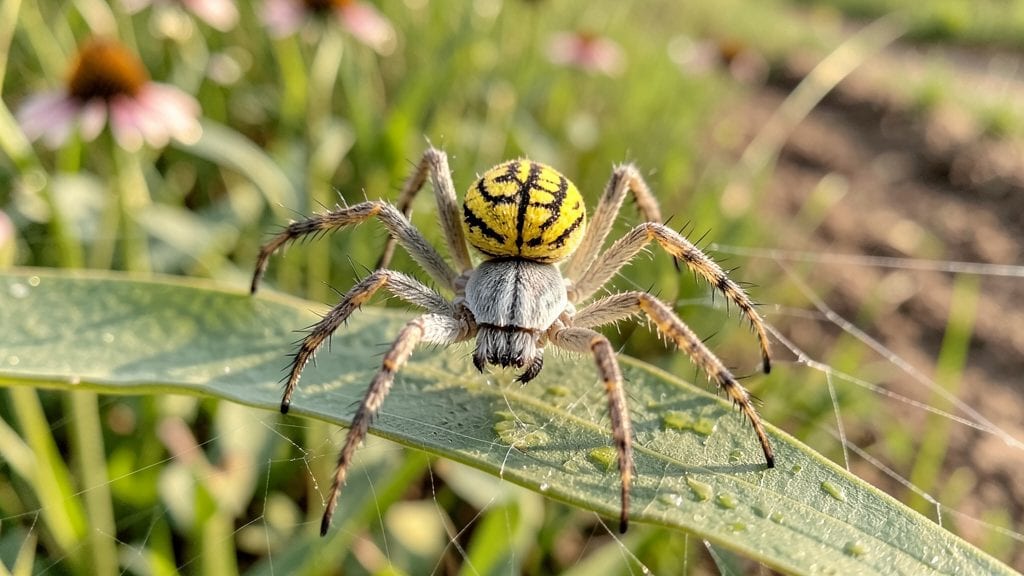
Georgia garden spiders are large, yellow-and-black orb-weavers with distinctive markings and a docile temperament, commonly found in gardens, shrubs, and trees across the state. Their venom is mild, but their size can be intimidating—proper identification helps avoid unnecessary fear or harm.
These striking arachnids, often mistaken for aggressive predators, are actually beneficial garden allies. 🌿 Their impressive leg spans (up to 3 inches!) and bold coloration make them stand out, but their shy nature means they rarely bite humans—even when disturbed.
The key to peaceful coexistence lies in recognizing their harmless habits, like building webs at dawn and retreating at dusk, rather than assuming they're threats lurking in your yard.
Georgia's warm climate creates perfect conditions for their population, with peak activity during late summer when they hunt for insects like moths and flies. Their webs, often found in shrubs or between trees, serve as natural pest control, making them valuable to gardeners who might otherwise fear them.
The real danger comes from misidentification—many people confuse them with black widows or wolf spiders, which have very different behaviors and venom potency.
💡 In This Article
- Distinguishing Georgia Garden Spider Traits
- Safe Encounters: Handling and Prevention Tips
Distinguishing Georgia garden spider traits
Georgia garden spiders (Argiope aurantia) stand out with their 2-3 inch leg spans and striking black-and-yellow striped abdomens, often featuring a distinctive white or yellow hourglass pattern on the underside. Their bodies typically measure 1-1.5 inches long, with females being significantly larger than males.
The key identifying feature is their silvery-white band running along the sides of the abdomen—a trait that sets them apart from black widows, which lack this marking and have a glossy black body with red hourglass markings.
Their web-building behavior is equally distinctive. These spiders construct orb-shaped webs with a stabilimentum (a zigzag pattern of silk) in the center, which scientists believe may help with UV reflection or predator deterrence.
Unlike black widows, which build irregular, tangled webs in dark corners, garden spiders position theirs 3-6 feet above ground in shrubs or between tree branches, often in sunny areas. Their webs are also 3-4 feet wide, making them some of the largest in North America.
Habitat preferences play a crucial role in identification. Garden spiders thrive in open, sunny areas with abundant vegetation, favoring gardens, fields, and wooded edges where they can spot prey from a distance.
They're most active during late summer to early fall, when temperatures range between 75-85°F, and become less visible in cooler months. This contrasts with wolf spiders, which don't build webs and hunt actively on the ground year-round.
Behaviorally, these spiders are nocturnal hunters that vibrate their webs at dawn to attract prey, then retreat to their leaf shelters during the day. Their venom is mild—comparable to a bee sting—and primarily used to subdue insects.
The misconception about their aggression stems from their size and bold coloration, which actually serves as aposematic coloring (a warning to predators) rather than a threat display toward humans.
For comparison, here's how their traits differ from similar species:
- Black Widow: Glossy black body, red hourglass, builds messy webs in dark corners, venom is neurotoxic
- Wolf Spider: No webs, hunts on ground, brown/gray coloration, faster movement
- Golden Silk Orb-Weaver: Golden-yellow body, builds webs in wooded areas, less common in Georgia
Their docile nature becomes evident when observing them—most will simply freeze or slowly retreat when approached, rather than exhibiting defensive postures. This behavior, combined with their ecological benefits (eating thousands of insects annually), makes them valuable garden residents rather than pests. 🌟