
Landscaping
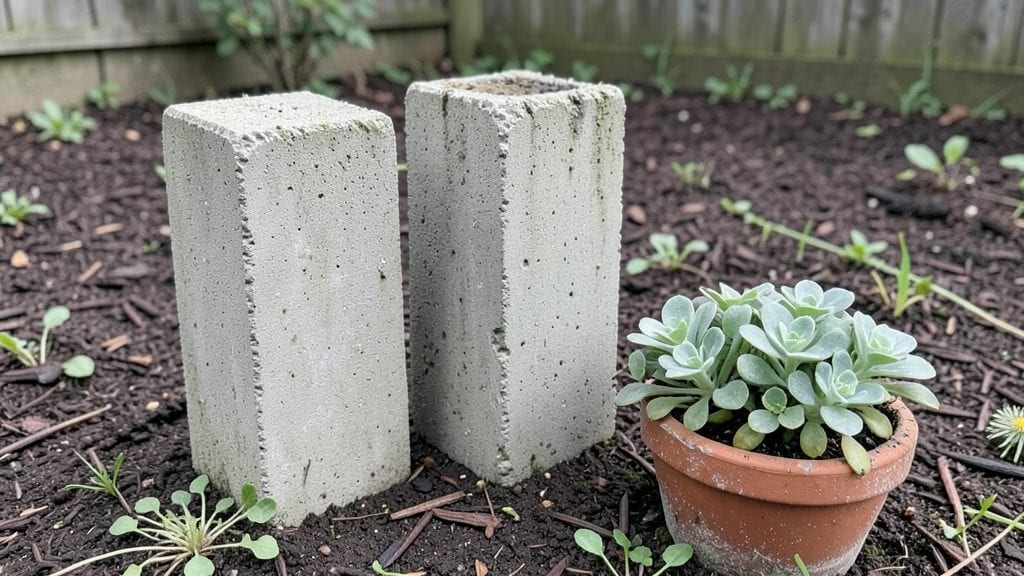
Concrete pillars for garden serve as both sturdy supports and decorative elements, combining functional strength with long-lasting beauty for outdoor spaces. Proper reinforcement and sealing extend their lifespan to decades, while shape choices—rounded or square—align with design preferences.
These versatile structures aren’t just about brute strength—they’re the backbone of your outdoor vision.
Reinforced with rebar or wire mesh, they resist cracking from seasonal soil shifts and freeze-thaw cycles, while a quality sealant keeps moisture at bay. 💫 For height, aim for 6-8 feet under eaves or 4-5 feet for standalone accents, adjusting based on your plants or privacy needs.
The real magic happens in customization: stamp textures, mix in pigment, or embed decorative stones to match your garden’s aesthetic.
Pro tip: Use gravel-filled footings to prevent settling, and let forms cure for at least 7 days before stressing them. Whether you’re framing a pergola or adding a modern border, these pillars blend practicality with personality—no wonder they’re a landscaping staple.
💡 In This Article
- How to Reinforce Concrete Garden Pillars for Longevity
- DIY Concrete Pillar Height and Design Guide
How to reinforce concrete garden pillars for longevity
Here's what's actually happening when you reinforce concrete pillars: the real work happens at the molecular level. Rebar (steel reinforcement bars) creates a composite material where the concrete's compressive strength (up to 4,000 psi) pairs with steel's tensile strength (up to 60,000 psi).
This combination prevents the concrete's natural tendency to crack under tension—like when soil shifts or seasonal freeze-thaw cycles expand moisture in the ground. 🔥 The key factor is the bond between steel and concrete, which develops through the chemical adhesion of hydrated cement paste to the rebar's ribbed surface.
For most garden pillars, #4 rebar (½-inch diameter) spaced 12 inches apart vertically provides optimal reinforcement. Wire mesh (typically 6x6 gauge) works for thinner pillars but lacks the strength for heavy loads.
The science behind this involves concrete's porosity—water in the mix hydrates cement, creating a crystalline structure that hardens over time. However, improper water ratios (too much or too little) create weak zones.
A standard mix for durability is 1 part cement, 2 parts sand, and 3 parts aggregate (gravel) with 0.5 gallons of water per 94-pound bag of cement—this balance maximizes strength while minimizing shrinkage cracks.
What most people don't realize is how climate affects pillar lifespan. In freeze-thaw zones, water seeps into concrete's microscopic pores, expands when freezing (up to 9% volume increase), and creates internal pressure that spalls (flakes) the surface.
This is why sealing with a silicone-based penetrant (like those rated for Type II exposure) is critical—it allows moisture to escape while blocking deeper penetration.
In arid climates, the challenge shifts to erosion from windblown sand, which requires a denser mix with quartzite aggregate for abrasion resistance. 💫 The right sealant can extend a pillar's life by 20-30 years in harsh conditions.
Consider these key factors when choosing reinforcement and sealing:
- Soil type: Clay soils expand when wet (up to 20% volume change), requiring deeper footings (12-18 inches) to prevent lateral pressure on pillars
- Freeze-thaw cycles: Regions with 50+ freeze-thaw days/year need air-entraining admixtures in concrete to create microscopic air bubbles that relieve expansion pressure
- Load requirements: Trellis supports need #5 rebar at 8-inch spacing, while decorative pillars can use #3 rebar at 16-inch spacing
The science behind proper curing is equally important. Concrete gains 70% of its strength in 7 days but continues hardening for years.
During this time, moisture loss causes surface cracks—this is why pillars should be kept damp for 3-7 days post-pour using wet burlap or plastic sheeting. 🌟 In hot climates, evaporative cooling (spraying water) prevents temperature differentials that create stress cracks.
The final touch is sealing after 28 days when the concrete has reached 90% of its designed strength.
For maximum longevity, combine reinforcement with proper footing techniques. Gravel-filled footings (minimum 6 inches deep) provide drainage and prevent hydrostatic pressure, while a 4-inch concrete slab at the base distributes weight evenly.
This layered approach turns a simple pillar into a structure that can withstand 100+ years of seasonal changes—far beyond the 10-20 years of unreinforced concrete. The investment in proper reinforcement isn't just about strength; it's about creating a foundation that ages gracefully with your landscape. ✨