
Planting
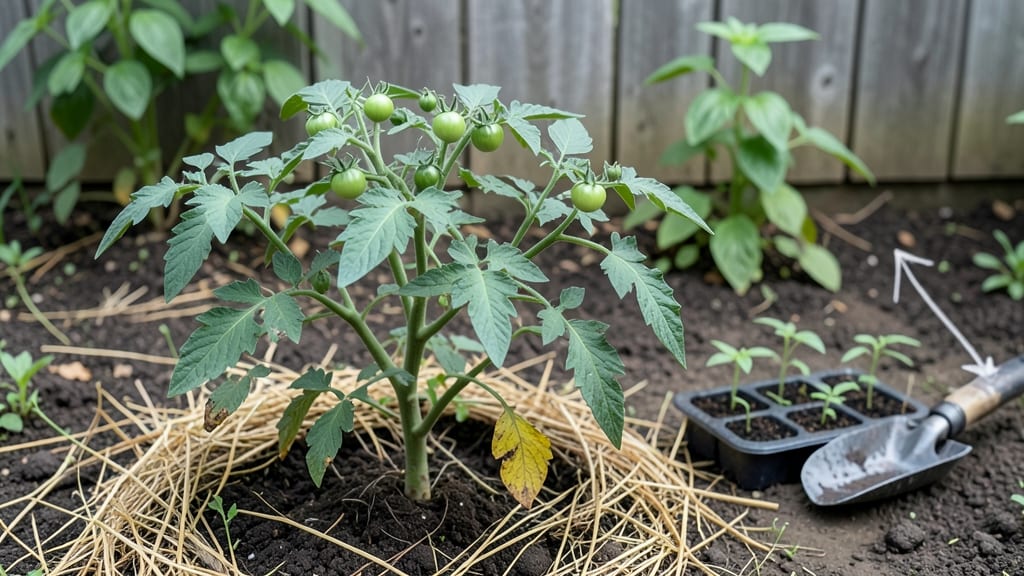
The best direction to plant a garden depends on your climate and sunlight needs: in the Northern Hemisphere, face long rows north-south for even sunlight exposure, while in the Southern Hemisphere, orient them south-north. East-west layouts work for small gardens but may require strategic plant placement to avoid shading issues.
Choosing the right garden orientation isn't just about aesthetics—it directly impacts plant health and yield. In the Northern Hemisphere, north-south rows ensure all plants receive equal sunlight throughout the day, reducing competition for light. 🌱 Meanwhile, south-north rows in the Southern Hemisphere achieve the same balance.
For smaller spaces, east-west layouts can work, but taller plants should face north to prevent shading of shorter varieties. I’ve found that even a 10-degree misalignment can cause uneven growth, so precision matters more than you’d think.
Beyond direction, consider seasonal sun shifts—morning sun in summer becomes afternoon sun in winter. This means your garden’s layout should account for both extremes. For example, delicate greens thrive with morning sunlight, while tomatoes crave afternoon warmth.
Adjusting your design based on these patterns can mean the difference between a thriving garden and one that struggles.
💡 In This Article
- How Sunlight Direction Affects Plant Growth
- Garden Layout Tips for Maximizing Space and Sunlight
How sunlight direction affects plant growth
Sunlight isn't just light—it's energy that plants convert into food through photosynthesis, and its intensity varies dramatically by direction.
Morning sunlight, especially in summer, is softer and less intense than afternoon rays, which can reach 2,000-3,000 foot-candles (a measure of light intensity) at midday compared to 1,000-1,500 foot-candles in the morning.
This difference affects plant health: leafy greens like lettuce prefer morning sun to avoid wilting, while tomatoes thrive with afternoon warmth for fruit development. The angle of the sun also shifts seasonally—winter sunlight hits at a 30-degree angle in temperate zones, spreading light over larger areas and reducing intensity.
Latitude plays a critical role in determining optimal garden orientation. At 40° North (like Denver or Philadelphia), the sun arcs from southeast to southwest, meaning north-south rows ensure all plants receive 6-8 hours of even sunlight daily.
In contrast, at 35° South (like Sydney), the sun moves from northeast to northwest, so south-north rows achieve the same balance. This isn't just theory—studies show that misaligned rows can reduce tomato yields by up to 20% due to uneven light exposure.
Even small adjustments, like rotating rows by 10-15 degrees, can improve airflow and reduce disease risk in dense plantings.
Plant types respond differently to directional light. Sun-loving species like peppers and eggplants need full, direct sunlight (6+ hours/day) and perform best when placed in the southern half of the garden (Northern Hemisphere) or northern half (Southern Hemisphere).
Shade-tolerant plants, such as hostas or ferns, thrive in morning light or dappled shade, making them ideal for the northern or eastern edges. The key is understanding each plant’s light requirements—like how basil wilts in harsh afternoon sun but flourishes with morning warmth.
This precision is why professional growers use light meters to map their gardens.
Seasonal shifts add another layer of complexity. In summer, the sun’s path is higher in the sky, while winter sunlight is lower and weaker. This means a garden designed for summer may leave winter crops starved for light.
For example, spinach planted in late summer might struggle in a south-facing bed (Northern Hemisphere) because the low winter sun casts long shadows. The solution? Plan for these shifts by placing winter crops in the southernmost rows (Northern Hemisphere) or northernmost rows (Southern Hemisphere) to maximize their limited sunlight.
This is why permaculture designers often create "sun catchers"—small, elevated beds for winter crops.
Don’t overlook microclimates created by structures or terrain. A brick wall on the southern side (Northern Hemisphere) can trap heat, creating a 10-15°F warmer zone perfect for heat-loving plants like okra. Conversely, a northern-facing slope stays cooler, ideal for herbs like mint.
Even a 3-foot fence can block 50% of sunlight at noon, so plan your garden’s layout to account for these shadows. This is where sketching your space with a compass and sun path diagram becomes invaluable—it’s the difference between a garden that thrives and one that merely survives.
Here’s what most gardeners miss: the quality of light matters as much as quantity. Morning light is richer in blue wavelengths, which promote leafy growth, while afternoon light contains more red wavelengths, stimulating flowering and fruiting.
This is why basil and cilantro bolt (flower prematurely) in hot afternoon sun—they’re getting too much red light. By strategically placing plants based on their light needs, you’re not just optimizing sunlight—you’re fine-tuning their growth cycles for maximum yield.
Pro tip: Use a simple sun chart for your location (available online) to plot the sun’s path at solstices and equinoxes. This will show you exactly how shadows move across your garden throughout the year.
For example, in June, shadows in the Northern Hemisphere stretch northward, while in December, they stretch southward. Adjusting your layout to account for these extremes ensures your garden works year-round. 🌞