
Advice
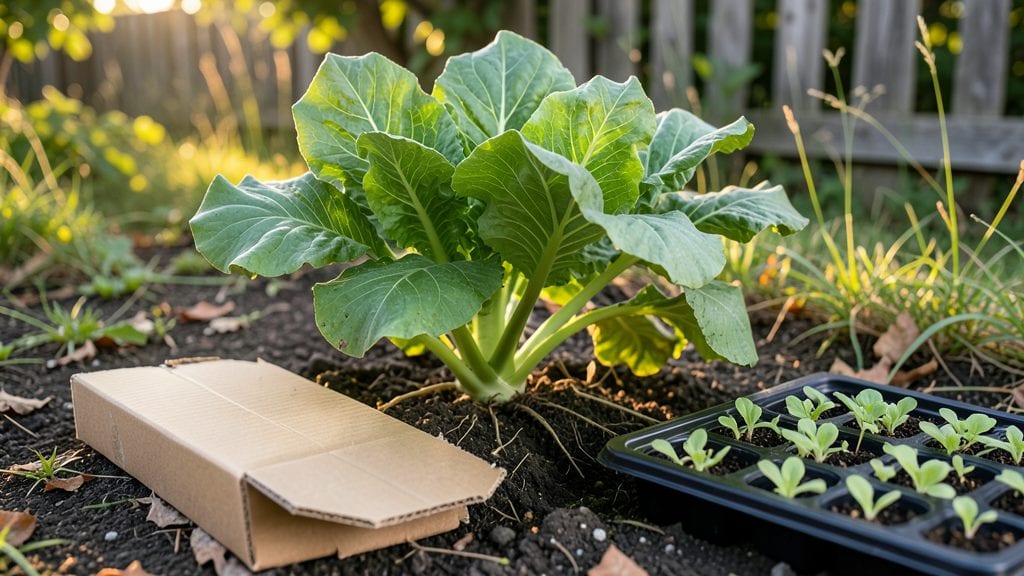
You can use cardboard in your garden safely when it's unbleached and free of tape or staples, as it decomposes into mulch, blocks weeds, and enriches soil without harming plants or ecosystems.
Cardboard transforms into nutrient-rich mulch as microbes break down its cellulose and lignin over 3-6 months, depending on thickness and moisture. 🌱 Unlike plastic, it doesn't leach toxins—just ensure it's plain, uncoated stock.
I've used it under perennials and along pathways, where it stays flat and suppresses grass better than straw. The key is wetting it first to prevent blowing away, then covering with 2-3 inches of compost to speed decomposition.
For best results, place cardboard directly on bare soil before planting, or use it as a weed barrier between plantings. Avoid colored or glossy varieties—they may contain harmful dyes.
In my experience, this method works especially well in spring when weeds are most aggressive, giving young plants a head start while the cardboard disappears into the earth.
💡 In This Article
- How Cardboard Breaks Down in Garden Soil
- Best Practices for Cardboard Mulch in Gardens
How cardboard breaks down in garden soil
Cardboard decomposes through microbial action, primarily targeting its two main components: cellulose (about 70% of its structure) and lignin (15-20%). Soil microbes—especially bacteria and fungi—secrete enzymes like cellulase that break down cellulose into simpler sugars, while lignin-degrading enzymes take longer (weeks to months) to fully process this complex polymer.
The process starts within days when moisture and oxygen are present, with thinner cardboard (like cereal box material) breaking down in 3-6 months, while thick shipping boxes may take 6-12 months.
The decomposition rate accelerates dramatically when cardboard is wet and covered with 2-3 inches of compost or soil. This creates an ideal anaerobic environment where microbes thrive, producing heat as they work—sometimes raising soil temperatures by 5-10°F during peak activity.
Unlike plastic mulches that trap heat, cardboard's breakdown releases carbon dioxide and small amounts of nitrogen, making it a carbon-rich amendment that improves soil structure over time. For comparison, newspaper decomposes similarly but lacks cardboard's structural integrity, while straw breaks down faster but contributes less carbon.
What most gardeners don't realize is how thickness affects decomposition speed. A 1/16-inch thick cereal box might disappear in 3 months under optimal conditions, while a 1/4-inch thick shipping box could take nearly a year.
The key is tearing cardboard into 2-3 inch strips before applying—this increases surface area by up to 40%, exposing more cellulose to microbial attack. I've noticed this makes a huge difference when using cardboard under perennial beds where long-term weed suppression matters more than rapid decomposition.
Cardboard's nutrient contribution comes primarily from its carbon content, which feeds soil microbes and improves aggregation. While it doesn't add significant nitrogen (unlike grass clippings), the microbial activity it stimulates helps create humus over time.
For best results, pair it with nitrogen-rich amendments like coffee grounds or alfalfa meal to balance the carbon-to-nitrogen ratio. The decomposition process also creates microscopic channels that improve water infiltration—similar to how compost tea enhances soil structure but without the need for additional processing.
One common misconception is that all cardboard decomposes equally. Colored or glossy varieties contain plastic coatings and dyes that can inhibit breakdown and potentially harm soil life. Even unbleached cardboard with staples or tape may introduce metals that persist in the soil.
Always choose plain, uncoated cardboard from delivery boxes or cereal packaging—these break down cleanly and safely. The sensory difference is noticeable too: properly decomposed cardboard mulch smells earthy and sweet, while problematic varieties often retain a chemical odor.
Understanding this process helps explain why cardboard works so well as a weed barrier. As it decomposes, it creates a physical mat that blocks light while gradually becoming part of the soil.
This dual action makes it more effective than straw for long-term weed control, while being more sustainable than plastic sheeting. The breakdown also creates microhabitats for beneficial organisms, which is why many organic gardeners prefer it over synthetic alternatives.
For maximum benefit, consider layering cardboard with compost in 1-inch thick sheets rather than single thick layers. This creates a more uniform decomposition rate across your garden bed and prevents air pockets that could slow microbial activity.
The visual transformation is impressive—what starts as stiff brown sheets becomes dark, crumbly mulch within months, proving that even something as simple as cardboard can play a vital role in sustainable gardening practices.