
Fertilization
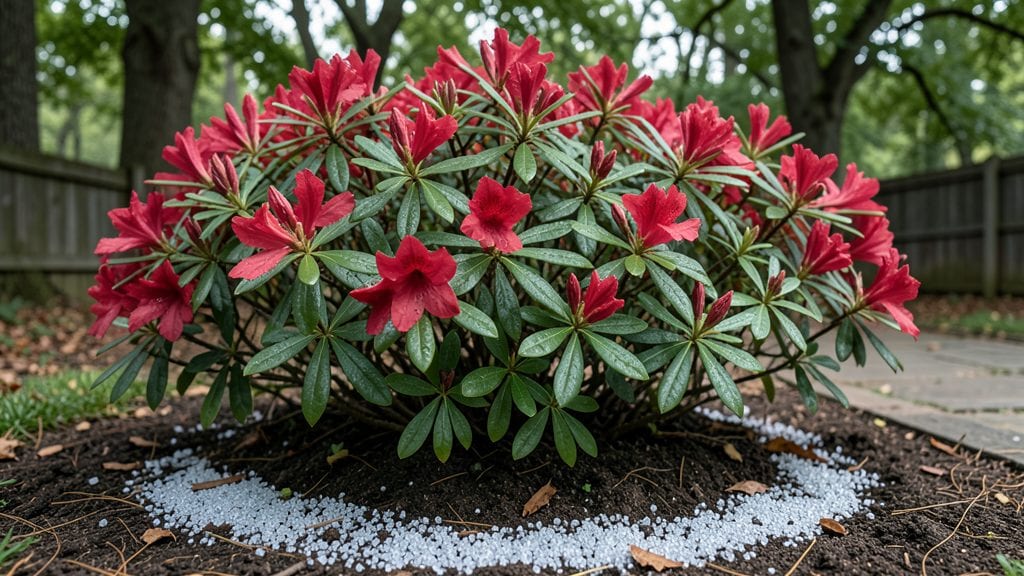
Aluminum sulfate gardening is a proven way to acidify soil for plants like azaleas, blueberries, and rhododendrons. Apply 1–2 pounds per 100 square feet for sandy soil or 2–4 pounds for clay soil, working it into the top 2–3 inches of soil in early spring or fall. Always water thoroughly after application to activate the pH adjustment, and avoid overuse to prevent aluminum buildup in the soil.
Aluminum sulfate works by dissolving in water and releasing hydrogen ions, which directly lower the soil's pH level. 🔥 This makes it one of the fastest-acting acidifiers available, though its effects are temporary compared to organic amendments like peat moss.
For best results, I always test soil pH before applying—aiming for a target range of 4.5–5.5 for most acid-loving plants. The key difference between sandy and clay soils is how quickly they drain; clay holds moisture longer, so it requires a higher dose to achieve the same pH shift.
When applying, I recommend using a broadcast spreader for even distribution, followed by light raking to mix it into the topsoil. Always wear gloves, as aluminum sulfate can irritate skin, and water immediately after application to prevent dust from spreading.
Overapplication shows up as yellowing leaves or stunted growth, while underuse may leave your plants craving more acidity—so start with the lower end of the dosage range and adjust based on your soil tests.
💡 In This Article
- How Aluminum Sulfate Adjusts Soil pH for Acid-Loving Plants
- Step-by-Step Guide: Applying Aluminum Sulfate Safely
How aluminum sulfate adjusts soil pH for acid-loving plants
Aluminum sulfate works through a chemical reaction called hydrolysis, where its molecules break down in water to release hydrogen ions (H+).
These ions displace other positively charged ions in the soil, like calcium and magnesium, effectively lowering the pH. The process starts immediately upon dissolution, making it one of the fastest-acting acidifiers available—unlike organic options like peat moss, which take months to decompose and release acidity. 🔥 The aluminum ions also contribute to the pH shift by forming weak acids in soil solution, creating a double effect on acidification.
Soil type dramatically affects how much you need to apply. Sandy soils drain quickly and have fewer particles to hold the acidifying compounds, so they require 1–2 pounds per 100 square feet to achieve the same pH drop as clay soils.
Clay, with its tight particle structure and higher water retention, demands 2–4 pounds per 100 square feet because the aluminum sulfate stays active longer in the moist environment.
Think of it like comparing a leaky bucket (sandy soil) to a sealed container (clay)—you need more in the sealed version to maintain the effect.
Compared to other acidifiers, aluminum sulfate stands out for its speed but lacks long-term staying power. Elemental sulfur, for example, oxidizes slowly over months, providing gradual acidification without the risk of aluminum toxicity. Peat moss, another organic option, releases acidity as it decomposes but requires regular replenishment.
The trade-off? Aluminum sulfate delivers immediate results—ideal for correcting pH before planting season—while organic methods offer slow, sustained acidification with fewer risks of overcorrection. 💫
Here's what happens chemically: When aluminum sulfate (Al₂(SO₄)₃) dissolves, it splits into aluminum ions (Al³⁺) and sulfate ions (SO₄²⁻).
The aluminum ions then react with water to form aluminum hydroxide (Al(OH)₃) and release hydrogen ions (H⁺), which directly lower pH. This reaction is pH-dependent itself—meaning it works most efficiently in slightly acidic soils (pH 5.5–6.5), where the aluminum ions remain soluble and active.
In highly alkaline soils, the reaction slows because aluminum precipitates out as insoluble compounds.
The key difference between aluminum sulfate and sulfur-based acidifiers lies in their mechanisms. Sulfur must first oxidize to sulfurous acid (H₂SO₃) before lowering pH, a process that takes weeks to months depending on soil microbes and moisture.
Aluminum sulfate, by contrast, begins working within hours of watering, making it perfect for emergency pH adjustments. However, this rapid action means you must monitor soil pH closely—overapplication can lead to aluminum toxicity, where plants show symptoms like brown leaf margins or stunted root growth.
For visual comparison, imagine two paths to lower pH: one is a fast highway (aluminum sulfate) that gets you there quickly but requires careful driving to avoid overshooting, while the other is a scenic country road (sulfur/peat moss) that takes longer but lets you enjoy the journey.
Both have their place—choose based on your timeline and plant needs. 🌱
Pro tip: Always conduct a soil test before applying aluminum sulfate. Most acid-loving plants thrive in the 4.5–5.5 pH range, but some, like blueberries, prefer the lower end (4.5–5.0).
Start with the lower dosage range and retest after 4–6 weeks to gauge the effect—this helps you avoid the guesswork of over- or under-applying. The goal is steady, controlled acidification, not a chemical rollercoaster. ✨