Pests
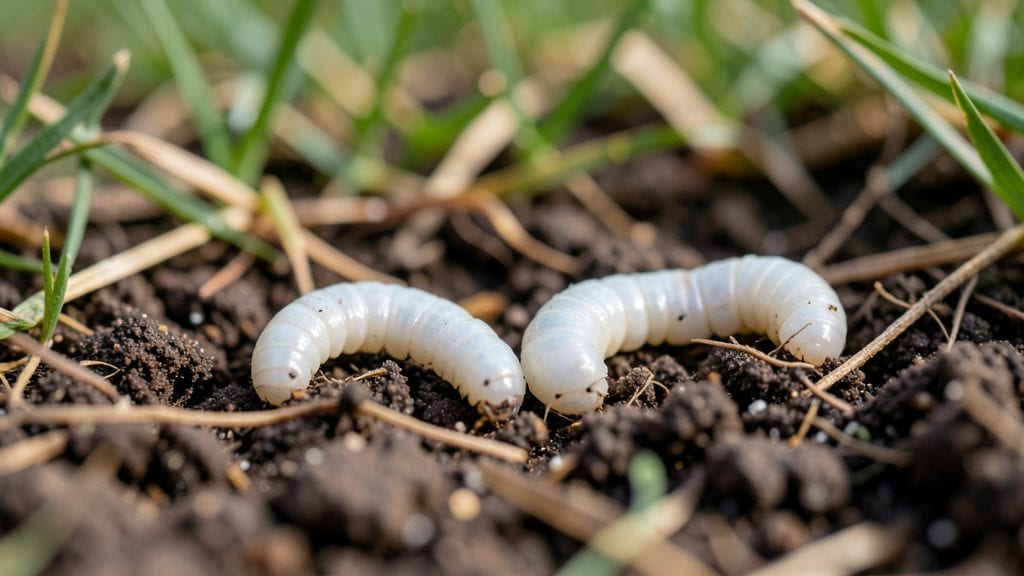
White garden grubs are the sneaky culprits behind those mysterious brown patches in your lawn and wilting vegetable plants. 🌱 I’ve spent years dealing with these C-shaped pests—first by mistaking them for harmless larvae, then learning the hard way how quickly they devour roots.
The good news? You don’t need toxic chemicals to kick them out.
These grubs—offspring of June bugs and beetles—thrive in moist, thatchy soil, munching on grass roots and garden veggies alike. You’ll spot them when you see patches of dead grass, adult beetles buzzing at dusk, or plants that topple like they’ve been starved.
The damage happens underground, so the sooner you act, the better your lawn and garden will bounce back.
Natural solutions like beneficial nematodes or milky spore bacteria target grubs without harming your soil or pollinators. Cultural fixes—like aerating compacted lawns or cutting back on summer watering—make your yard less inviting to their lifecycle. Within weeks, you’ll see healthier grass and stronger plants reclaiming their space.
Prevention is the real game-changer: reduce thatch, overseed bare spots, and time your watering to keep soil just damp enough to deter grubs. It’s not about eradicating them forever—it’s about keeping them from turning your green space into a buffet. Let’s get your garden back in shape.
The Hidden Triggers Behind Grubs
White garden grubs—those pale, C-shaped larvae—don’t just appear out of nowhere. Their presence is a sign of deeper ecological imbalances in your soil and lawn. Understanding why they thrive helps you tackle the problem at its roots (literally).
Below, we break down the key factors that turn your yard into a grub buffet.
Grubs love lush, nutrient-rich grass, and excessive nitrogen fertilization is their favorite invitation. Here’s how it happens:
- Rapid grass growth: High nitrogen levels spur thick, soft grass—perfect for egg-laying female beetles (like Japanese beetles or June bugs).
- Weakened roots: Over-fertilized lawns prioritize top growth over root development, making grass more vulnerable to grub feeding.
- Attracts beetles: Lush lawns signal healthy conditions to adult beetles, which then lay eggs in the soil.
💡 Pro Tip: Test your soil before fertilizing. Aim for a balanced NPK ratio (e.g., 10-10-10) and apply no more than 1 pound of nitrogen per 1,000 sq ft per year.
Grubs are the larvae of beetles like Japanese beetles, June bugs, or chafers. Their lifecycle is the root cause of infestations:
- Adult beetles arrive: In late spring/early summer, they feed on foliage (e.g., roses, grapes) before mating.
- Egg-laying frenzy: Females burrow into soil to deposit 40–60 eggs in clusters, hatching into grubs in 10–14 days.
- Grubs go underground: They feed on roots for 1–2 years before pupating into beetles, restarting the cycle.
Why it’s worse now: Urban sprawl and monoculture lawns provide ideal habitats, while lack of natural predators (like birds or toads) lets populations explode.
Grubs need moisture to survive, and soggy soil creates the perfect environment. Here’s how water retention fuels infestations:
- Compacted soil: Heavy foot traffic or clay soil reduces aeration, trapping water and creating anaerobic zones where grubs thrive.
- Overwatering: Lawns watered daily (especially at night) keep soil saturated, mimicking a grub’s ideal humidity.
- Low-lying areas: Grubs migrate to damp spots, often near sprinkler heads or sloped yards where water pools.
🌡️ Key Stat: Grubs die if soil moisture drops below 15%. Aim for 1 inch of water per week (including rain) and improve drainage with sand or gypsum.
Healthy ecosystems keep grub populations in check. When predators vanish, grubs multiply unchecked:
| Natural Predator | How They Help | Why They’re Disappearing |
|---|---|---|
| Birds (e.g., robins, starlings) | Eat grubs on sight; one robin can consume 50 grubs/day. | Loss of habitat, pesticides killing insects they eat. |
| Toads & Frogs | Ambush grubs at night; their presence deters beetles. | Drying ponds, herbicides reducing ground cover. |
| Ground Beetles | Hunt grubs and beetle eggs; thrive in diverse soil. | Broad-spectrum insecticides wipe them out. |
✨ Actionable Fix: Plant native wildflowers or clover to attract predators. Avoid chemical pesticides—even "safe" ones can harm beneficial insects.
By addressing these root causes—fertilizer habits, beetle lifecycles, soil moisture, and predator support—you disrupt grubs’ survival strategy. The next section covers organic removal methods to reclaim your lawn without harming the environment.
Natural Ways to Remove Grubs
Now that you know why those pesky white grubs are wreaking havoc in your garden, it’s time to tackle them—without resorting to harsh chemicals. The good news? There are plenty of effective, eco-friendly solutions to evict these critters for good.
Below, we’ve mapped out the best fixes based on the root cause of your infestation, along with prevention tips to keep your garden grub-free long-term.
If your lawn looks like a grub buffet with brown, spongy patches, these steps will help revive it while eliminating the pests.
🌱 Step 1: Aerate & Loosen the Soil 👨🍳 Grubs thrive in compacted, moist soil.
To disrupt their habitat: - Rent or borrow a core aerator (or use a garden fork) to poke holes 3–4 inches deep across affected areas. - Focus on high-traffic zones where grubs are most active. - Pro Tip: Do this in early fall or spring when grubs are near the surface.
🐛 Step 2: Handpick & Dispose of Grubs 🔪
Yes, it’s tedious—but highly effective for small infestations:
- Water the lawn lightly the night before to soften the soil.
- Use a garden trowel or spoon to flip over patches of sod (especially near dead spots).
- Scoop out grubs and drop them in soapy water (they’ll drown instantly).
- Replace the sod and water deeply to encourage root growth.
🌿 Step 3: Encourage Beneficial Nematodes ✨
These microscopic predators love eating grubs and are 100% organic.
- Buy heterorhabditis bacteriophora nematodes (available online or at garden centers).
- Apply them in the evening (they’re sensitive to sunlight) by mixing with water and spraying over the lawn.
- Water lightly after application to help them move into the soil.
- Best time: Late summer or early fall when grubs are young and vulnerable.
If your garden soil is too wet, grubs multiply faster. Drainage fixes + natural predators will help.
💧 Step 1: Improve Drainage 🌡️ Standing water = grub paradise.
Fix it with: - Sand or compost mixed into heavy clay soil to improve aeration. - French drains or swales (shallow trenches) to redirect water away from problem areas. - Quick Fix: If you can’t regrade, plant deep-rooted grasses (like tall fescue) to break up compacted soil.
🐝 Step 2
Introduce Grub-Eating Birds & Beasts 🦉 Nature’s pest control is free and fierce. Attract: - Starlings, robins, and skunks (they love grubs).
Leave shallow dishes of mealworms to lure them in. - Ground beetles & soldier beetles—plant dill, fennel, or marigolds to invite them. - Chickens or ducks (if you have space)—they’ll devour grubs while fertilizing your soil.
🌱 Step 3: Use Milky Spore or Beauveria Bassiana 🎯
- Milky spore (Bacillus popilliae) is a long-term biological control that spreads naturally in soil, killing Japanese beetle grubs (common in lawns).
- Apply in early fall when grubs are young.
- Takes 1–2 years to establish but provides decades of protection.
- Beauveria bassiana (a fungal spray) kills grubs on contact.
Spray in late summer when grubs are near the surface.
If grubs are munching on roots, your plants may wilt or die. Act fast with these targeted fixes.
🌳 Step 1: Water & Inspect Roots 💦
- Dig around the base of affected plants (6–12 inches deep).
- Look for white, C-shaped grubs feeding on roots.
- Trim damaged roots with sterilized pruners, then replant with compost.
🐛 Step 2: Apply Diatomaceous Earth (DE) ⏰
- Sprinkle food-grade DE around the drip line of trees/shrubs.
- It dehydrates grubs but is safe for plants and pets once settled.
- Reapply after rain (it loses effectiveness when wet).
🌿 Step 3: Plant Grub-Repellent Ground Covers 🌱
Some plants naturally deter grubs:
- Clover, creeping thyme, or ajuga (they compete with grubs for food).
- Garlic or chives (their scent repels pests).
- Mulch heavily with cedar chips or pine needles (grubs dislike acidic conditions).
Now that you’ve kicked them out, lock them out for good with these low-effort strategies:
✅ Mow High & Leave Clippings – Taller grass (3–4 inches) shades soil, making it less appealing to grubs. Leave clippings as natural mulch.
✅ Avoid Overwatering – Water deeply but infrequently (1–1.5 inches per week). Grubs hate drought-stressed conditions.
✅ Test Soil Before Planting – Use a soil test kit to check pH and nutrients. Healthy soil = fewer pests.
✅ Rotate Crops & Plants – Grubs target young, tender roots. Plant grub-resistant varieties like:
- Grasses: Buffalo grass, zoysia
- Vegetables: Radishes, onions, lettuce (less appealing to grubs)
✅ Fall Is Critical – Late August to October is when grubs are most vulnerable. Apply nematodes, milky spore, or DE during this window.
By combining physical removal, natural predators, and smart gardening habits, you can eliminate white grubs without chemicals—and keep your garden thriving for years. 🚀🌿
Frequently asked questions
What do white garden grubs look like up close?
White garden grubs are pale, legless larvae with a distinctive C-shaped body (about 1 inch long when mature). They have a smooth, slightly translucent skin and a small brown head. Young grubs are tiny and rice-sized, while adults grow up to 1.5 inches before pupating.
How do I know if my lawn has a grub infestation?
Look for these telltale signs: spongy, brown patches that pull up easily (like a carpet), wilted plants with healthy-looking tops but dead roots, or increased mole/skunk activity (they eat grubs too). Dig up a small patch—if you find 5+ grubs per square foot, you’ve got an infestation.
Are white grubs harmful to vegetables or just lawns?
They attack roots of vegetables like corn, beans, and potatoes, causing plants to wilt or topple. Dig around struggling plants—if you spot white, C-shaped larvae, they’re the culprit. Grubs prefer moist soil, so raised beds or containers can help deter them in veggie gardens.
Will milky spore work if my neighbor’s lawn has grubs too?
Milky spore targets Japanese beetle grubs specifically and spreads naturally, but it’s not a quick fix. It takes 1–2 years to establish and may not cover your entire yard if your neighbor’s infestation is severe. For immediate results, combine milky spore with beneficial nematodes or handpicking.
Can I use diatomaceous earth on my lawn for grubs?
Yes, but it’s best for small, targeted areas (like garden beds). Sprinkle food-grade DE lightly over grubs—it dehydrates them but loses effectiveness when wet. For lawns, focus on dry, sunny patches and reapply after rain. Avoid overapplying; it can harm beneficial soil organisms.