
Picking
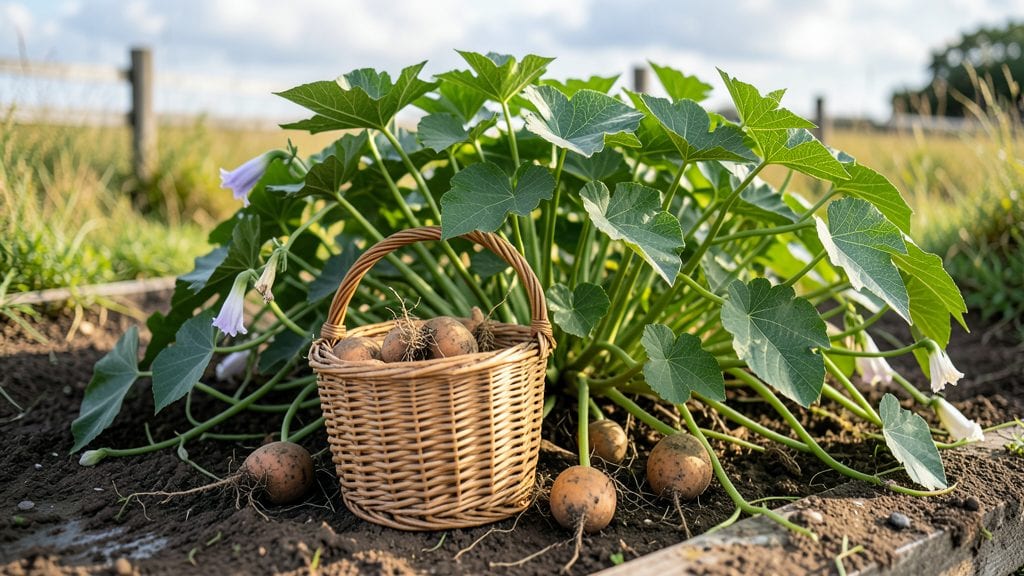
Picking sweet potatoes from the garden at the right time ensures sweet, tender tubers—too soon or late, and you’ll end up with bitter or woody harvests.
Sweet potatoes left too long in the ground turn woody and lose sweetness, while harvesting too early means small, underdeveloped tubers—getting the timing right is everything for a perfect harvest.
You’ll know they’re ready when the leaves start yellowing and the skin slips easily off the tuber. But don’t wait too long—once the first frost hits, your crop is ruined.
Below, I’ll walk you through the skin slip test, seasonal timing by region, and how to store your harvest for maximum sweetness all winter.


How to use the skin slip test for sweet potato harvest timing
Sweet potatoes are ready to harvest when they reach their full size but before the first frost hits your region. The skin slip test is the most reliable way to determine this perfect window.
Unlike regular potatoes, sweet potatoes don't have a uniform harvest time—some varieties mature in 90 days, while others take up to 120 days. Waiting too long means tough, dry tubers, while harvesting too early gives you small, underdeveloped roots.
This simple test involves checking the skin's resistance to gentle pressure. When the skin starts to slip easily between your fingers, it's a clear sign that the sweet potato is ready. This method works because the skin thickens and loosens from the flesh as the tuber matures.
I've used this test for years, and it's saved me from harvesting too early or too late—both of which ruin the flavor and texture.
The skin slip test is especially useful for home gardeners who don't have the luxury of commercial growing schedules. It's a non-invasive way to check readiness without digging up the entire patch.
Plus, it works for all sweet potato varieties, from Beauregard to Jewel and Purple types. Just remember: timing is everything for that perfect sweet, creamy texture we all love.
Before you start testing, make sure your sweet potatoes have had enough time to grow. Most varieties take between 90 to 120 days from planting to harvest, depending on your climate. If you're in a warmer region, you might harvest earlier, while cooler areas may need to wait longer.
Always check your seed packet for specific variety guidelines, but use the skin slip test as your final judge.
Step-by-Step Skin Slip Test
- Step 1: Wait until your sweet potatoes have reached their expected maturity date (check seed packet for 90-120 days).
- Step 2: Choose a sunny, dry day to perform the test—wet soil can make the skin slippery naturally.
- Step 3: Gently dig up one sweet potato per hill using a garden fork or trowel. Be careful not to damage the tubers.
- Step 4: Hold the sweet potato firmly with one hand and try to slide the skin off with your thumb and index finger. If the skin slips easily, it's ready to harvest.
- Step 5: If the skin doesn't slip, wait 3-5 days and test again. Replant the tuber if it's undamaged.
- Step 6: Once the skin slips, harvest the entire patch within 1-2 weeks to avoid overmaturity.
- Step 7: Cure harvested sweet potatoes in a warm, humid space (80-85°F) for 5-10 days to develop flavor and storage life.
If the skin doesn't slip after testing, it's not a failure—it just means your sweet potatoes need more time. I once waited an extra week for my Jewel variety, and the difference in sweetness was incredible.
Patience pays off when it comes to sweet potatoes. Over time, you'll learn to recognize the subtle cues that signal readiness, like slightly wilting leaves or a change in the plant's growth pattern.
One common mistake is confusing the skin slip test with the idea that the sweet potato should be soft. A ready sweet potato should have a slight give when pressed gently, but it shouldn't feel mushy or overly firm.
Think of it like testing a ripe avocado—just enough resistance to know it's not underripe, but not so firm that it's still hard. This balance is key to a perfect harvest.
Regional differences also play a role in harvest timing. In USDA Zones 8-10, sweet potatoes can often be left in the ground longer due to milder winters, while gardeners in Zones 5-7 need to harvest before the first frost, usually by late October.
Always keep an eye on your local frost dates and adjust your testing schedule accordingly. A frost won't kill the vines, but it will damage the tubers, turning them bitter and inedible.
After harvesting, proper curing is just as important as timing. Sweet potatoes need to cure to develop their full sweetness and storage potential. Place them in a warm, humid environment (like a garage or basement) for 5-10 days.
Avoid washing them before curing, as moisture can lead to rot. Once cured, store them in a cool, dark place with good airflow, like a root cellar or a well-ventilated pantry.
Mastering the skin slip test takes practice, but once you get the hang of it, you'll never second-guess your sweet potato harvest again. It's a skill that separates the home gardeners from the experienced growers, and it's one of the best tools in your gardening arsenal.
Happy testing, and here's to a bountiful harvest! 🌱
Sweet potato harvest timing by variety and seasonal conditions
Not all sweet potatoes mature at the same time, and climate conditions play a huge role in determining the perfect harvest window. Beauregard, Jewel, and Purple varieties each have distinct timelines, while day length and temperature shifts trigger their readiness.
For example, shorter days in fall signal sweet potatoes to stop growing and focus on tuber development—this is your cue to watch closely. Understanding these factors helps you avoid woody tubers or underdeveloped harvests, ensuring sweet, flavorful results every time.
In warmer climates like USDA Zones 9-11, sweet potatoes may take 90-120 days to mature, while cooler regions (Zones 7-8) often see harvests in 75-100 days due to slower growth. First frost dates also dictate urgency—if frost is approaching, prioritize harvesting even if tubers aren’t fully mature.
Varieties like Beauregard (a classic orange type) typically mature earliest, while Purple varieties may need an extra 10-15 days to reach peak sweetness. Planning ahead means adjusting your harvest schedule based on both variety traits and local weather patterns.
| Variety | Days to Maturity | Optimal Harvest Window | Climate Notes |
|---|---|---|---|
| Beauregard | 90-100 days | Late summer to early fall | Fastest maturing; ideal in warm climates |
| Jewel | 100-110 days | Mid to late fall | Moderate climate adaptability; needs longer season |
| Purple | 110-120 days | Late fall (before frost) | Slowest; best in long, warm growing seasons |
Temperature is another critical factor—ideal growing temps of 75-85°F speed up maturity, while cooler nights (60°F or below) slow tuber development. If your region experiences early autumn chill, consider using row covers to extend the growing season.
For example, in Zone 7, where first frosts can hit by mid-October, I harvest Beauregard by late September to avoid frost damage, even if tubers aren’t fully sized. In contrast, Zone 10 gardeners can wait until November for a sweeter, larger harvest.
Watch for visual cues like yellowing foliage and drying vines, which indicate the plant is redirecting energy to the tubers.
Combine this with the skin slip test—if the skin peels back easily from the tuber when gently pulled, it’s ready. Purple varieties may show darker skin tones at maturity, while Jewel sweet potatoes develop a rich copper hue.
Ignoring these signs can lead to overmature tubers, which become tough and less flavorful. For instance, I’ve seen Beauregard sweet potatoes left too long develop wooden cores, making them nearly inedible.
Seasonal adjustments are key—early planted crops in spring may harvest earlier, while late plantings in summer could extend into fall. In my garden, I plant three successive batches of Beauregard—one in April, one in June, and one in JulyAugust through October.
This strategy ensures a continuous supply while accounting for variable weather and pest pressures. Always prioritize harvesting before the first frost, as frozen tubers spoil quickly and develop off flavors.
Finally, soil conditions influence timing—well-draining, loose soil allows tubers to grow larger and mature faster than compacted or clay-heavy soil. If your soil is slow to warm in spring, consider planting in raised beds or using black plastic mulch to accelerate growth.
For Purple varieties, which are more sensitive to soil pH, aim for a slightly acidic (6.0-6.5) environment to optimize sweetness. By aligning your harvest with variety-specific timelines, climate cues, and soil prep, you’ll enjoy perfectly sweet, homegrown sweet potatoes every season.