
Picking
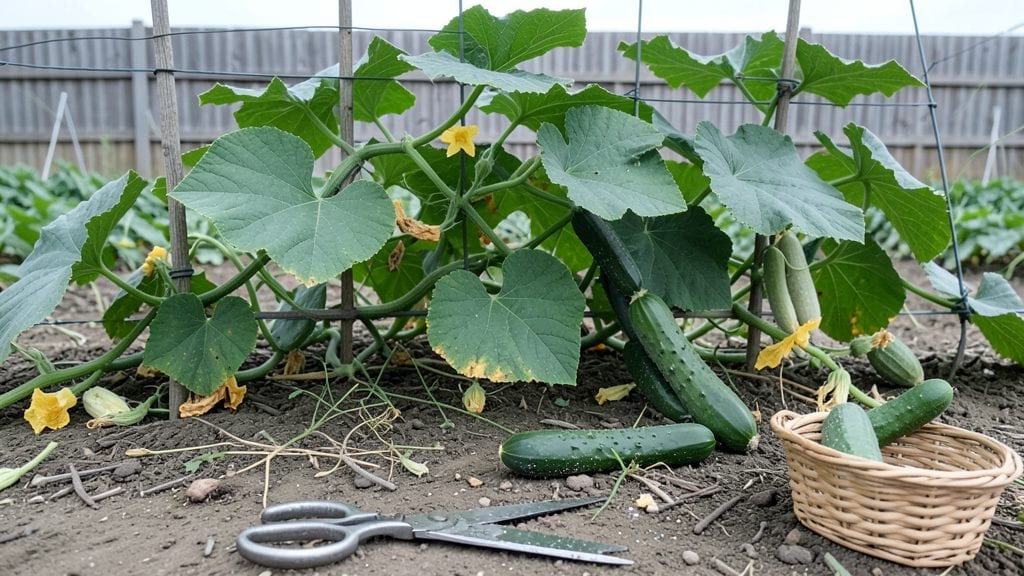
Picking cucumbers from your garden at the right time ensures they’re crisp, flavorful, and free of bitterness—so you never waste a single harvest.
If you’ve ever bitten into a 🥒 that’s gone from crisp and refreshing to seedy and bitter, you know timing is everything—especially when harvesting from your own garden. The difference between a perfect slice for salad and a tough, watery mess often comes down to when you pick them.
Most gardeners focus on size, but color, texture, and even the plant’s signals matter just as much. A 6-inch cucumber might be perfect for slicing, while a 4-inch one could be ideal for pickling.
Below, I’ll break down the exact clues to watch for—so you can harvest at peak flavor every time.
You’ll also learn how to avoid common mistakes, like waiting too long or picking in the heat, and discover pro tips to extend your harvest season from June through September.


How to determine cucumber ripeness by size, color & texture
Knowing when to pick cucumbers from your garden isn’t just about guessing—they send clear visual and tactile signals when they’re ready. Size, color, and texture all play critical roles in determining peak ripeness.
For example, a slicing cucumber like Marketmore should be 6–8 inches long with a deep green hue, while pickling varieties like Boston Pickling are best harvested at just 2–4 inches. Ignoring these cues can mean the difference between a crisp, flavorful bite and a mealy, bitter disappointment.
Start by examining the skin color—it’s one of the most reliable indicators.
A dark green cucumber with no yellowing is ideal for slicing, while pickling cucumbers should have a light green to yellow-green tint. Heirloom varieties, like Lemon cucumbers, often shift to yellow or striped patterns as they mature.
Pay attention to texture too: a ripe cucumber should feel firm but yield slightly when gently pressed, like a ripe avocado. If it’s rock-hard or overly soft, it’s not ready.
Here’s a quick reference to help you spot the perfect moment to harvest:
<summary-table>| Cucumber Type | Ideal Size (Inches) | Color Indicators | Texture Clues | Flavor Profile |
|---|---|---|---|---|
| Slicing (e.g., Marketmore, Straight Eight) | 6–8 inches | Dark green (solid, no yellow) | Firm, slightly waxy skin | Crisp, mild, sweet |
| Pickling (e.g., Boston Pickling, National Pickling) | 2–4 inches | Light green to yellow-green | Firm, glossy skin | Tangy, crunchy |
| Heirloom (e.g., Lemon, Armenian) | 8–12 inches | Yellow, green, or striped | Thick skin, slightly bumpy | Rich, complex, less watery |
Don’t rely solely on size—some cucumbers, like Armenian varieties, can grow much larger but still be underripe. Instead, combine size, color, and texture for the best results.
For instance, a 10-inch Armenian cucumber with thick, bumpy skin and a yellow-green hue is far superior to a 6-inch one that’s still pale and firm. Pro tip: Check the stem end—if it’s starting to yellow or soften, the cucumber is overripe.
Another trick is to look at the seeds. At peak ripeness, they should be visible but not too large—think tiny black specks rather than a dense, mature center. Overripe cucumbers develop large, mature seeds, which turn the flesh seedy and bitter.
This is especially critical for heirloom varieties, where flavor complexity is key. If you’re growing cucumbers for pickling, harvest them smaller and firmer to avoid the woody texture that develops as they age.
Seasonal timing also matters—cucumbers ripen faster in hot summer months (like July and August) than in cooler spring or fall conditions. In Zone 6a, for example, cucumbers typically reach harvest readiness 60–75 days after planting, but extreme heat can speed this up.
If you notice cucumbers ripening too quickly, consider shading the vines with lightweight row covers to slow the process and extend your harvest window.
Pay attention to the plant’s signals too. If cucumbers are left on the vine too long, the plant may stop producing flowers or drop buds entirely. This is a clear sign you’re missing the optimal harvest window.
For indeterminate varieties (like Straight Eight), which produce continuously, harvest every 2–3 days to encourage more fruit. For determinate varieties (like Bush Champion), focus on picking when most cucumbers reach their ideal size at once.
One of the biggest mistakes gardeners make is waiting until cucumbers turn yellow. By then, they’re often overripe, woody, and tough. Instead, aim to harvest when the cucumber is firm, vibrant in color, and still small.
For pickling cucumbers, this might mean harvesting as soon as they’re 2 inches long—any longer, and they’ll lose their crunchy texture. Use a sharp pair of pruning shears or a knife to cut cucumbers from the vine, leaving a small stem attachment to prevent rot.
Finally, store harvested cucumbers properly to maintain their freshness. Keep them in the fridge (not the crisper drawer) for up to 1 week, or wrap them in a damp towel and store in a plastic bag in the fridge for longer storage.
If you’re growing cucumbers for long-term storage, like fermenting or canning, harvest them slightly underripe to ensure the best texture and flavor.
With these cues in mind, you’ll never again wonder when to pick cucumbers from your garden. Whether you’re growing slicing, pickling, or heirloom varieties, mastering the art of harvest timing ensures a bounty of crisp, flavorful cucumbers all season long. Happy gardening! 🥒
5 Common mistakes that make you pick cucumbers too early (or too late)
Even experienced gardeners sometimes struggle with the perfect moment to harvest cucumbers. The difference between a crisp, sweet cucumber and one that’s seedy, bitter, or woody often comes down to timing. I’ve learned the hard way that picking too early wastes potential, while waiting too long ruins flavor and texture.
Let’s break down the five biggest mistakes I’ve seen (and made!) that lead to missed harvest windows.
First, most gardeners focus only on size as the deciding factor. But cucumbers of the same length can vary wildly in ripeness. For example, a 6-inch slicing cucumber might be perfect, while a 6-inch heirloom could still need weeks.
The key? Combine size with color, texture, and even vine signals. Skipping these clues often means harvesting cucumbers that are either underripe (tough, bland) or overripe (soft, spongy).
⚠️ Watch for These Red Flags When Picking Cucumbers
- Size alone isn’t enough: A 6-inch cucumber isn’t always ready—check texture and color first.
- Yellowing or soft spots: These signal overripeness and poor storage potential.
- Large, mature seeds: Visible seeds mean the cucumber is past its prime for fresh eating.
- Wrinkled or dull skin: A sign the cucumber has lost moisture and flavor.
- Vine signals: If flowers stop appearing, the plant may be stressed from over-fruiting.
Pro Tip: Harvest in the morning when cucumbers are cool and firmest.
Another common trap is ignoring the plant’s production rate. Some cucumber varieties produce fruit so quickly that they can overwhelm the vine if you don’t stay on top of harvests.
I once let my Armenian cucumber vine go unchecked for a week, and by the time I noticed, half the cucumbers were overgrown and woody. The vine also stopped flowering because it was putting all its energy into maintaining the existing fruit.
To avoid this, I now check my vines every 2–3 days during peak season.
Waiting until cucumbers turn yellow or develop soft spots is another classic mistake. While some heirloom varieties (like Lemon cucumbers) naturally turn yellow when ripe, most commercial types stay green. Yellowing or spongy texture usually means the cucumber has overstayed its welcome in the garden.
These cucumbers often have bitter, seedy interiors and are best used for compost or fermenting. Always harvest when the skin is firm but yields slightly when gently pressed.
Timing also matters when it comes to harvesting conditions. Picking cucumbers in the midday heat can cause them to wilt or develop sunscald (white, sunken patches). I learned this the hard way when I rushed to harvest a batch during a 95°F (35°C) afternoon.
By evening, they looked sad and rubbery. Instead, harvest in the early morning when temperatures are cooler and cucumbers are at their peak firmness. If you must pick later in the day, do so in the shade and store them in the fridge immediately.
Finally, using the same harvest method for all cucumber types can backfire. Some gardeners twist cucumbers off the vine, while others prefer to cut them with pruners. Twisting can damage the vine and leave stems attached, which speeds up rot.
For slicing cucumbers, I now use clean scissors or pruners to avoid tearing the vine. For pickling varieties, I harvest the entire cluster to prevent disease spread. Always leave a small stem attachment (about 1 inch) to protect the vine from pests and infections.
By avoiding these five mistakes, you’ll transform your cucumber harvest from hit-or-miss to consistently crisp, flavorful, and abundant. The secret? Pay attention to the plant’s signals, harvest at the right time of day, and use the correct technique for each variety.
Your taste buds—and your garden—will thank you! 🥒