
Blooming
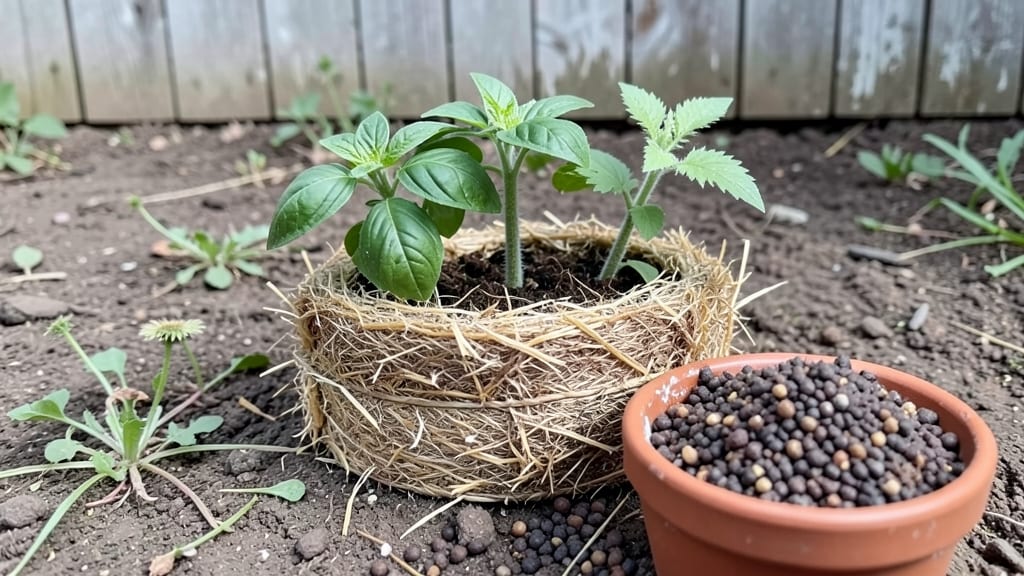
Straw bale gardens thrive when you match the fertilizer to their unique growing environment.
Unlike traditional soil, bales start with minimal nutrients, so organic matter like compost or worm castings kickstart microbial activity that breaks down the bale into fertile growing medium. 🌱 I’ve found that pre-mixing bales with cotton bur and manure creates the perfect foundation—it mimics natural decomposition while preventing nutrient runoff.
The key is balance: too much synthetic fertilizer can burn tender roots, while organic options feed the soil ecosystem over time.
Timing matters just as much as the product. Start with a pre-planting boost of compost or aged manure, then top-dress with liquid feeds like compost tea every 2-4 weeks during active growth. This approach mirrors how nature replenishes nutrients, giving your plants steady access without salt buildup.
For container gardens or small spaces, I swear by fish emulsion—it’s packed with micronutrients and easy to apply with a spray bottle.
💡 In This Article
- Why Organic Fertilizers Work Best in Straw Bale Gardens
- Step-by-Step Fertilizer Application for Straw Bale Gardens
Why organic fertilizers work best in straw bale gardens
Straw bale gardens rely on organic fertilizers because their unique structure mimics natural decomposition processes. When you soak a bale and add organic matter like compost or aged manure, it kickstarts microbial activity that breaks down the straw into a nutrient-rich growing medium.
These microbes create a symbiotic relationship with plant roots, particularly through mycorrhizal fungi, which extend root networks and improve nutrient absorption—especially phosphorus and zinc. Unlike synthetic fertilizers that provide quick but short-lived nutrients, organic options feed the soil ecosystem over time, preventing nutrient spikes that can burn tender roots.
The chemical composition of organic fertilizers also plays a crucial role. For example, compost contains 1-3% nitrogen, 0.5-1% phosphorus, and 0.5-1% potassium, but its real value lies in the secondary nutrients (calcium, magnesium, sulfur) and micronutrients (iron, zinc, copper) that synthetic blends often lack.
When you mix in biochar, it further enhances nutrient retention by increasing the bale's cation exchange capacity—think of it as creating more "parking spots" for nutrients that plants can access gradually.
This slow-release mechanism is especially important in straw bale systems where moisture and nutrient loss occur faster than in traditional soil.
Another key advantage is how organic fertilizers interact with the bale's moisture dynamics. Straw bales have a high porosity, meaning they dry out quickly and can leach nutrients if overwatered.
Organic amendments like worm castings or fish emulsion provide a sticky, gel-like humus that helps retain moisture while releasing nutrients in sync with plant needs.
This prevents the salt buildup common with synthetic fertilizers, which can create osmotic stress in plants by drawing water out of their roots—a particular problem in container or raised-bed systems where drainage is limited.
Consider the microbial ecosystem at work: a single gram of healthy compost can contain 100 million to 1 billion bacteria, 10,000 to 100,000 fungi, and 1,000 to 10,000 protozoa. These organisms break down organic matter into plant-available forms while suppressing harmful pathogens.
In contrast, synthetic fertilizers can disrupt this balance by creating a monoculture of fast-growing, salt-tolerant microbes that outcompete beneficial species. For straw bale gardens, this microbial diversity is non-negotiable—it's what transforms a bale from a temporary growing medium into a self-sustaining ecosystem over 4-6 weeks.
Let's talk about the visual and textural differences you'll notice. A bale treated with organic fertilizers will develop a dark, crumbly texture within weeks, resembling rich topsoil. You'll see fine root hairs spreading through the bale, indicating healthy microbial activity.
The aroma shifts from the initial hay-like scent to an earthy, slightly sweet smell—proof that decomposition is working. This contrasts sharply with synthetic-treated bales, which may show surface crusting or white salt deposits, signaling nutrient imbalances that stunt growth.
For container gardens or small bales, I recommend starting with a 50/50 mix of compost and coconut coir to improve water retention while providing a balanced nutrient profile. Add a handful of kelp meal for micronutrients and trace minerals that support cellular functions.
The key is to think of your bale as a living system where every addition—whether compost, manure, or liquid feed—contributes to the overall health of the microbial community that's doing the heavy lifting for your plants. 🌱