Planting
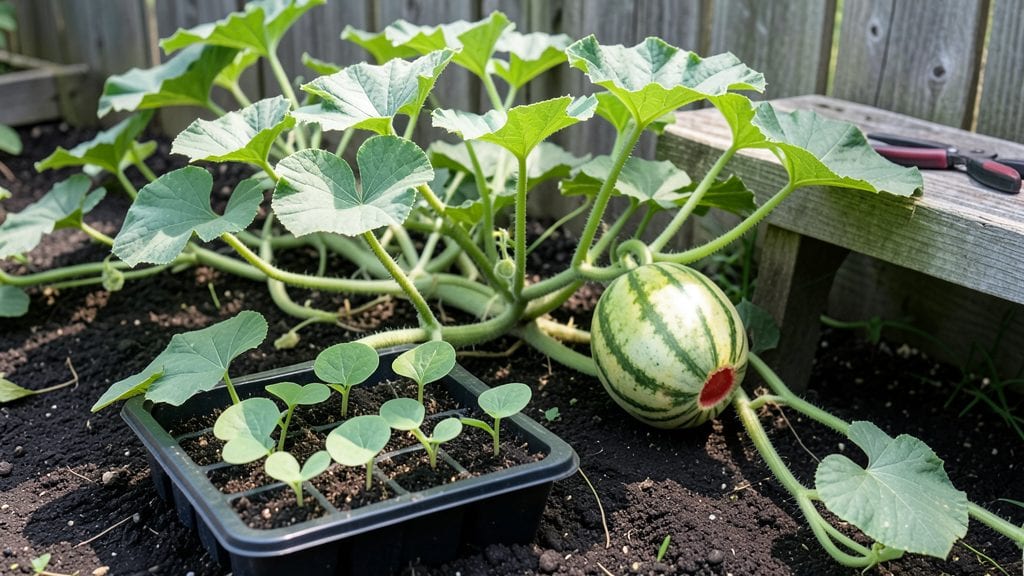
Proper watermelon garden spacing is the foundation of a bountiful 🍉 harvest—because cramming vines together guarantees small fruit and disease.
Struggling to grow juicy, vine-heavy watermelons without them crowding each other out? The secret to a thriving patch lies in spacing that balances airflow, sunlight, and root room—where every inch counts for both yield and plant health.
In Zone 6, planting between April 15 and May 15 gives vines room to sprawl, but too little space means competing for nutrients. I’ll show you the exact distances for rows and plants, plus how to adjust for trellising or compact varieties.
Skip the guesswork: learn the 3 key spacing rules that prevent overcrowding, boost fruit size, and keep your patch productive from July through September.
Optimal watermelon garden spacing by variety: rows, plants, and vine control
Getting your watermelon spacing right is the difference between a bumper crop and a disappointing patch. These sprawling vines need room to breathe—literally. Too close, and you’ll end up with small, bitter fruit or disease-ridden leaves.
Too far apart, and you waste precious garden real estate. The key? Matching your spacing strategy to your watermelon variety, whether it’s a slicing giant, a seedless delicacy, or a mini melon.
Most gardeners focus only on plant spacing, but row spacing and vine management are just as critical. A single watermelon vine can spread 15-20 feet in a season—imagine that tangled mess if you don’t plan ahead!
I’ve grown everything from Crimson Sweet to Sugar Baby, and trust me, the right spacing makes all the difference in yield and ease of care.
Here’s the breakdown you need: row spacing, plant spacing, and whether to trellis or let vines sprawl, tailored to three common watermelon types. Use this as your cheat sheet before you plant.
Let’s start with slicing watermelons, the heavyweights of the patch. Varieties like Crimson Sweet or Charleston Gray need the most room—6-7 feet between rows and 3-4 feet between plants.
These vines can sprawl 15-20 feet, so plan for a huge garden bed or use black plastic mulch to contain them. If your space is limited, consider hill planting: mound soil into 1-foot-high hills and plant one vine per hill, spacing hills 5 feet apart.
For seedless watermelons, like Sugar Baby or Black Diamond, you can cut back slightly. These varieties are more compact, with vines spreading 8-12 feet. Use 5-6 feet between rows and 2-3 feet between plants.
A small trellis (4-5 feet tall) can work here, but only if you’re growing mini varieties—seedless slicers get too heavy for vertical support. Prune side vines to encourage fruit production over vine growth.
Now, if you’re growing mini watermelons like Bush Champion or Tiny Tim, your spacing game changes completely. These are the compact powerhouses of the watermelon world. Plant them 4-5 feet between rows and 1.5-2 feet apart.
Their vines only spread 3-6 feet, making them perfect for containers, trellises, or small gardens. Trellising isn’t just optional—it’s highly recommended
Common watermelon spacing mistakes that kill yields (and how to fix them)
Watermelon vines can spread wider than a small car, yet many gardeners unknowingly stifle their plants by crowding them too closely. Poor spacing leads to stunted growth, smaller fruits, and even disease outbreaks from poor airflow.
I've seen firsthand how a few inches too close can turn a promising patch into a disappointing harvest.
One of the biggest mistakes is treating watermelons like small, compact plants. Their sprawling vines need room to breathe—literally. Overcrowding forces plants to compete for nutrients, water, and sunlight, resulting in underdeveloped fruit that never reaches its full potential. Let's fix these common spacing mistakes before your next planting season.
Watermelons need 6-10 feet between vines (depending on variety) to develop properly. Crowding plants closer than 3 feet reduces fruit size by up to 50% and increases disease risk. Fix it now: Thin seedlings early to prevent root competition.
Another frequent error is planting rows too close together. Row spacing matters just as much as plant spacing—watermelon vines need room to sprawl between rows.
I once planted rows just 2 feet apart, and by midsummer, the vines tangled into an impenetrable jungle. Correct row spacing (typically 5-7 feet) prevents this vine chaos.
Don't forget about soil compaction from heavy foot traffic or machinery. Compacted soil restricts root growth, making it harder for plants to access nutrients and water.
If your soil feels hard when pressed, it's time to aerate. Loosen soil to a depth of 6-8 inches before planting to give roots room to expand.
Orientation matters too! Planting rows north-to-south maximizes sunlight exposure for both sides of the vine. I learned this the hard way when my east-west rows left the northern sides of plants in shade. Adjust your row direction to ensure even sun exposure throughout the day for consistent growth.
For compact varieties, proper spacing still applies—just on a smaller scale. Even dwarf watermelons need 3-4 feet between plants to prevent overcrowding. If you're growing in containers, ensure each plant has its own 5-gallon minimum space to prevent root binding.
Remember: Good spacing today means bigger, healthier watermelons tomorrow. Take the time to measure and plan—your future harvest will thank you! 🍉🌱