
Tools
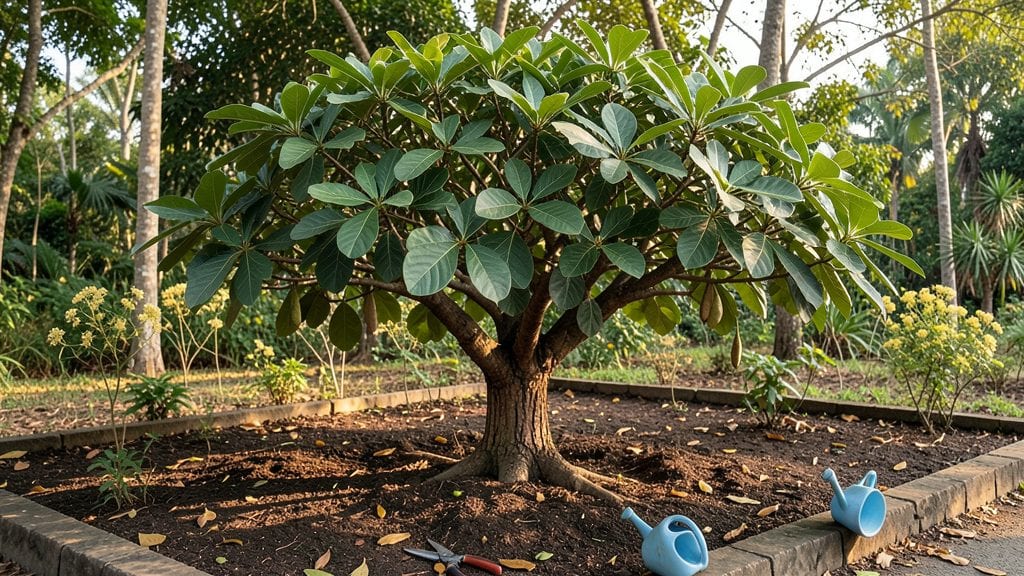
Creating a Singapore tree garden turns even the smallest urban space into a vibrant, private oasis. I’ve designed these gardens in tight city lots where towering palms and flowering trees create instant shade and seclusion—without needing an acre of land.
The key is stacking plants vertically and choosing fast-growing species that thrive in Singapore’s humidity and heat.
You’ll need a mix of native trees like the flame of the forest (Delonix regia) for bold color and the Singapore rosewood (Pterocarpus indicus) for sturdy canopy structure.
Add understory plants like ferns or bromeliads to fill gaps, and use rainwater harvesting systems to keep everything lush without waste. Most setups take 3–6 months to establish that dreamy, jungle-like privacy.
The payoff? A backyard that feels like an escape—where sunlight filters through emerald leaves, birds nest in the branches, and neighbors peek through their own fences, wondering how you fit so much greenery in.
Even in a 500-square-foot space, you can create layers of foliage that block noise and heat while requiring minimal upkeep once established.
This approach works for apartments with balconies, rooftop terraces, or ground-level yards. The same principles apply whether you’re planting in containers or directly in the ground—just adjust the scale. Ready to turn your concrete jungle into a tropical retreat?
📚 In This Guide
- What you need
- Instructions
- Tips and common mistakes
- Wrapping up and next steps
What you need
- ● Native or Adapted Plants: 5–10 Ficus benjamina (Weeping Fig) – 3–6 ft tall
- ● 3–5 Schefflera actinophylla (Umbrella Tree) – 4–5 ft tall
- ● 2–3 Dracaena marginata (Dragon Tree) – 5–7 ft tall (for vertical growth)
- ● 1–2 Nephrolepis exaltata (Boston Fern) – 2–3 ft hanging pots
- ● Growing Containers: 3–5 large ceramic or fabric pots (18–24" diameter) for trees
- ● 2–3 hanging planters (12–16" diameter) for ferns or trailing plants
- ○ 1 raised planter bed (optional, for ground-level planting)
- ● Soil & Fertilizer: 50 lbs well-draining potting mix (e.g., Miracle-Gro Moisture Control)
- ● 10 lbs organic compost or worm castings
- ● Slow-release fertilizer (e.g., Osmocote Smart-Release, 14-14-14 NPK)
- ● Tools: Trowel or small shovel
- ● Pruning shears (bypass type for clean cuts)
- ● Garden gloves (nitrile-coated for durability)
- ● Watering can or hose with adjustable nozzle
- ● Moss or Tillandsia (air plants) for texture and humidity
- ● Decorative rocks or pebbles for drainage and aesthetics
- ● Self-watering planters (for low-maintenance care)
- ● LED grow lights (if indoors or low-light areas)
- ● Trellis or climbing structures (for vines like Pothos or Philodendron)
- ● Mulch (e.g., pine bark) to retain moisture and suppress weeds
Step-by-step instructions for designing a Singapore tree garden
This method transforms small urban spaces into thriving, private sanctuaries using strategic tree placement and layered plantings.
Select Fast-Growing Privacy Trees for Compact Spaces
Choose evergreen species like Emerald Green Arborvitae or Sky Pencil Holly—they grow vertically while maintaining a dense canopy. These varieties thrive in 6-8 feet of mature height, perfect for narrow urban lots. I always prioritize drought-tolerant selections to minimize maintenance once established.
Plant your 4 trees at least 8 feet apart to allow airflow and prevent future crowding. The key is spacing them in a slightly staggered formation—this creates an illusion of density while ensuring each tree has room to develop its full structure. Dig holes twice as wide as the root ball but only as deep as the container they came in.
Layer Understory Plants for Immediate Privacy
Fill the gaps between trees with ornamental grasses like Miscanthus sinensis and Carex oshimensis—they add movement and soften the vertical lines of the trees. These grasses reach 3-5 feet tall and spread 2-3 feet wide, filling space quickly while requiring minimal care.
Add evergreen shrubs such as Dwarf Gardenia or Boxwood at the base of each tree. Their 2-3 foot height creates a natural transition between the ground and the canopy. Plant these 12-18 inches from the tree trunk to avoid root competition while maintaining a cohesive look.
Incorporate Climbing Vines for Quick Canopy Cover
Train climbing roses or Clematis along trellises or tree trunks to fill gaps instantly. These vines grow 6-12 feet per season, providing lush coverage within one growing season. I always install vertical supports near the base of each tree—this ensures the vines have something to latch onto as they grow upward.
Space vine supports 3-4 feet apart along the tree line. Use metal or wooden trellises that won’t rot in humidity. Water newly planted vines deeply twice weekly until they establish roots, which typically takes 4-6 weeks. Mulch around the base with 2-3 inches of shredded bark to retain moisture and suppress weeds.
Add Ground Cover for Year-Round Texture
Spread Ajuga or Creeping Thyme between trees and shrubs to create a living carpet. These ground covers spread aggressively, filling gaps while requiring almost no maintenance. Their 1-2 inch height keeps them unobtrusive while adding color and texture.
Apply a 2-inch layer of mulch over the soil after planting to lock in moisture and regulate temperature. Avoid piling mulch against tree trunks—keep it 3-4 inches away to prevent rot. Water the entire garden deeply once weekly during the first growing season to encourage strong root development.
Prune and Maintain for Long-Term Privacy
Prune trees once yearly in late winter to remove dead branches and shape the canopy. Focus on thinning out crowded areas to improve airflow and prevent disease. I always use clean, sharp shears to make 45-degree cuts just above outward-facing buds.
Fertilize twice annually—once in early spring with a balanced 10-10-10 formula and again in early fall with a slow-release organic option. Monitor for pests like scale or spider mites, treating affected areas immediately with neem oil to avoid chemical damage. With proper care, your garden will achieve full privacy within 2-3 years.
Tips & tricks for perfect Singapore tree garden design
Creating a lush, private urban sanctuary requires thoughtful planning—these insights will help you maximize your space while avoiding common pitfalls.
Tree Selection Wisdom: When choosing your 4 evergreen trees, prioritize species with vertical growth habits like Emerald Green Arborvitae or Sky Pencil Holly. These varieties create natural privacy screens while maintaining their 6-8 foot mature height—ideal for narrow urban lots. I recommend visiting local nurseries to inspect foliage density before purchasing, as some trees may appear fuller in containers than they'll grow in your climate. The staggered formation mentioned in Step 1 isn't just aesthetic—it creates visual depth that makes your garden appear denser than it actually is.
Root System Strategy: The instruction to dig holes twice as wide as the root ball is critical for establishing strong root systems quickly. Loosen the sides of the hole with a garden fork to encourage roots to spread outward rather than circling the root ball. This technique, known as root pruning, helps prevent future transplant shock. For containers, gently tease the roots at the bottom before planting to encourage outward growth into your prepared hole.
Layering for Instant Impact: The combination of ornamental grasses (3-5 feet tall) and evergreen shrubs (2-3 feet) creates immediate visual privacy while allowing light to filter through. I've found that planting Carex oshimensis on the north side of trees provides natural shade for shade-tolerant shrubs like Dwarf Gardenia. This strategic placement reduces competition for sunlight while creating a more natural, layered look. The 12-18 inch spacing from tree trunks prevents root competition while maintaining visual cohesion.
Vine Training Technique: When installing vertical supports for climbing roses or Clematis, use metal trellises> that can be adjusted as vines grow. The 3-4 foot spacing> between supports creates natural growth patterns while preventing overcrowding. I recommend training vines in a spiral pattern up the supports—this creates more surface area for foliage while encouraging upward growth. The 6-12 feet per season> growth rate means you'll see significant coverage within just a few months, especially in warm climates.
Pro Tips for Singapore Tree Garden
- Creating a lush, private urban sanctuary requires thoughtful planning—these insights will help you maximize your space while avoiding common pitfalls.
- Tree Selection Wisdom: When choosing your 4 evergreen trees, prioritize species with vertical growth habits like Emerald Green Arborvitae or Sky Pencil Holly.
- Root System Strategy: The instruction to dig holes twice as wide as the root ball is critical for establishing strong root systems quickly.
Frequently asked questions
Got questions about transforming your compact Singapore space into a lush, private Tree Garden oasis?
Here are answers to the most common queries—from planning to execution!
What’s the best tree species for a Singapore Tree Garden in small spaces?
Opt for fast-growing, compact varieties like Schefflera actinophylla (Umbrella Tree) or Ficus microcarpa (Ginseng Fig). These thrive in Singapore’s climate, tolerate pruning, and provide dense foliage for privacy. Avoid invasive species—check NParks’ approved list for safety.
How long does it take to see noticeable privacy from a Tree Garden?
With proper care, you’ll see significant canopy growth in 6–12 months. Faster results? Use pre-grown saplings (2–3 ft tall) or layer with climbing vines (e.g., Bougainvillea). Patience pays off—mature trees (3+ years) offer year-round seclusion!
Is a Tree Garden more expensive than traditional fencing?
Upfront costs vary, but long-term savings win! A basic 10ft fence costs $1,500–$3,000, while a Tree Garden (3–5 trees + soil prep) runs $2,000–$4,500. However, trees reduce cooling costs (shade = lower AC use) and increase property value—a green investment!
How do I protect my Tree Garden from Singapore’s heavy rains?
Use well-draining soil mixes (add perlite or coconut coir) and elevate root zones with raised beds. For young trees, install drip irrigation to avoid waterlogging. Mulch (wood chips) helps retain moisture while preventing erosion—just keep it 3–4 inches deep!
Can I convert an existing fence into a Tree Garden?
Remove the fence and plant trees in its footprint, spacing them 8–10ft apart for full coverage. Use root barriers if near structures, and pair trees with ground covers (e.g., Creeping Fig) to fill gaps faster. Pro tip: Prune aggressively in the first year to shape growth!
Wrapping up and next steps
Transforming your compact space into a thriving Singapore Tree Garden isn’t just about aesthetics—it’s a game-changer for privacy, air quality, and serenity. 🌿 With the right materials and a touch of creativity, even the smallest balcony or courtyard can become a lush, functional oasis.
Whether you’re a seasoned gardener or a beginner, the key is to start small, stay consistent, and let nature do the rest.
Ready to dive in? Pick one tree or plant this weekend—your future shaded retreat awaits! 🌱 For inspiration, sketch a rough design or browse local nurseries for tropical favorites like the Singapore Cherry or Money Tree.
Every leaf you plant is a step toward a greener, more peaceful home.