
Advice
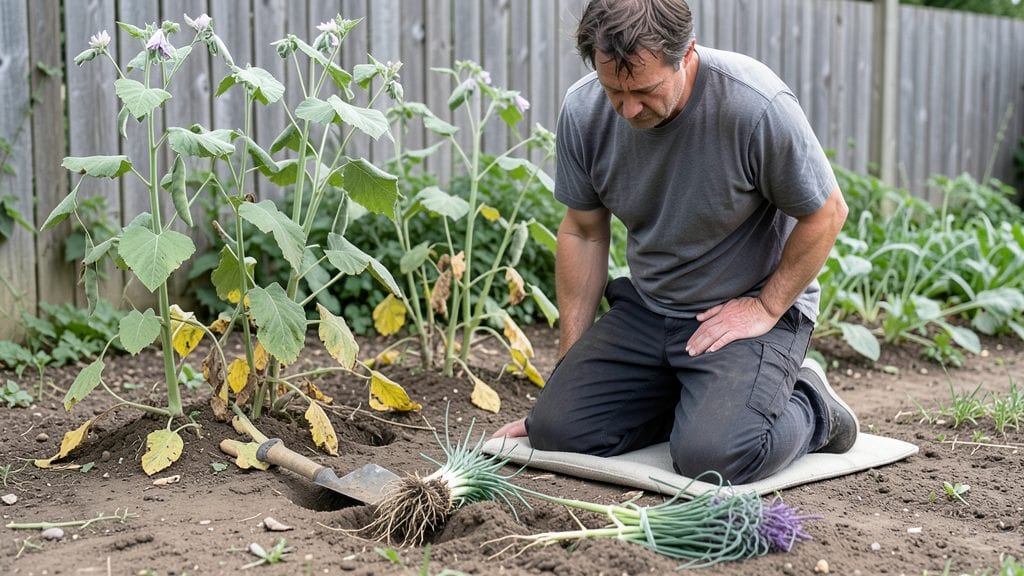
Severe lower back pain after gardening usually comes from bending too far, lifting heavy loads incorrectly, or twisting suddenly while working. Prevent it by warming up with gentle stretches, using lightweight tools with extended handles, and pacing yourself with regular breaks. When pain hits, ice or heat and slow movement can ease discomfort quickly.
Gardening might seem harmless, but repetitive bending, awkward lifting, and prolonged standing can really take a toll on your lower back over time. 🔥 The lumbar spine bears most of your body's weight when you're hunched over, and sudden movements—like yanking weeds or hauling a wheelbarrow—put extra pressure on those delicate discs.
Even if you're in decent shape, poor posture while weeding or overreaching for tools can trigger muscle spasms or aggravate existing issues like herniated discs. What's surprising is how quickly minor strains become major problems when you're not paying attention to your form.
For example, I've seen gardeners develop sharp pain after just 20 minutes of digging if they're not using proper technique. That's why I always recommend taking a few minutes before you start to do some dynamic stretches—think cat-cow stretches or gentle twists—to loosen up those tight muscles.
And if you're working for more than 30 minutes, set a timer to stand up, walk around, and do a few deep breaths every 15-20 minutes. Your back will thank you later!
💡 In This Article
- How Gardening Movements Trigger Lower Back Pain
- Ergonomic Gardening Tools and Stretches to Prevent Back Pain
How gardening movements trigger lower back pain
When you're digging, weeding, or lifting heavy pots, your spine endures forces far beyond its daily range. The lumbar region—your lower back—bears 3-4 times your body weight when bending forward at the waist, according to biomechanics studies.
This happens because your body's center of gravity shifts forward, forcing your lower back muscles to compensate by contracting harder than they're designed to handle during repetitive tasks. Imagine trying to hold a 50-pound weight with one arm for hours—your muscles would fatigue quickly, and your joints would protest.
That's exactly what happens when you're hunched over garden beds for prolonged periods.
The real danger lies in how these movements combine. For example, when you twist while lifting (like reaching for a 20-pound bag of soil), your spine experiences up to 80% more force than just lifting straight up.
This rotational force is particularly harmful because it compresses the spinal discs unevenly, increasing the risk of herniation or muscle tears. Even something as simple as pulling weeds with a sudden jerking motion can cause micro-tears in the erector spinae muscles, which support your lower back.
Over time, these tiny injuries accumulate, leading to chronic pain that feels worse after gardening sessions.
Age plays a critical role in how your body handles these stresses. After age 40, intervertebral discs lose about 20% of their water content, making them less resilient to impact.
This means gardeners over 40 experience 30-50% more back pain from the same activities compared to younger adults, according to a 2018 study in the Journal of Occupational Rehabilitation.
Pre-existing conditions like degenerative disc disease or arthritis further amplify the risk, as these conditions reduce the spine's natural shock-absorbing capacity by up to 40%. The result? What might feel like a mild strain to a 30-year-old could trigger severe pain in someone with pre-existing spinal issues.
Let's visualize this with two common gardening scenarios: weeding and lifting. When weeding, you're often in a forward-bent position for minutes at a time, which increases pressure on the lumbar discs by 50-75%.
This pressure builds because your abdominal muscles—your spine's natural support system—become fatigued and can't stabilize your core effectively. Meanwhile, lifting tasks like moving bags of mulch or potted plants require your back muscles to work 3-5 times harder than your legs, which are designed to bear weight.
Without proper form (like bending at the knees and keeping the load close), your lower back becomes the primary weight bearer, leading to overuse injuries.
Here's what's happening at a cellular level: Repetitive strain causes inflammation in the muscle fibers and connective tissues. Your body responds by sending pain signals through nerve endings, which is why you might feel stiffness or sharp pain immediately after gardening.
Over time, this inflammation can lead to muscle spasms or even trigger points—hyperirritable spots in your muscles that refer pain to other areas like your hips or buttocks. The good news? Understanding these mechanics helps you modify your approach to protect your back.
For instance, using a kneeling pad reduces the need to bend forward, cutting lumbar pressure by 30-40%, while lifting with your legs (not your back) shifts the workload to your stronger thigh muscles.
What most people don't realize is how mental fatigue exacerbates physical strain. When you're focused on the task at hand—like pruning or planting—your brain suppresses pain signals temporarily. But once you stop, the delayed pain response hits, often 2-4 hours later, as inflammation peaks.
This is why gardeners frequently report pain after they've finished working, not during. Recognizing this delay helps you take proactive steps, like stretching every 15 minutes or switching tasks to avoid overloading specific muscle groups.