
Landscaping
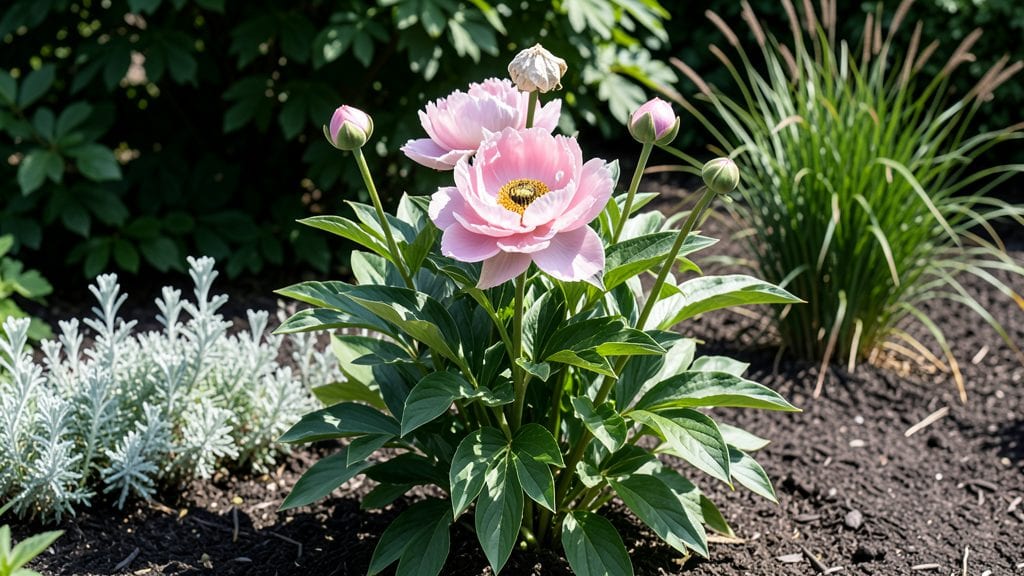
Creating a landscaping peony garden turns your yard into a fragrant, lush paradise that blooms year after year—if you give these divas the right spot: full sun and well-draining soil. 🌸 Trust me, I learned that the hard way! for weeks.
The secret isn’t just planting them; it’s designing around their natural beauty so they become the centerpiece of your outdoor space.
Start with 3-5 peony varieties in complementary colors—soft pinks, creamy whites, and deep reds—to create movement in your garden. Pair them with low-growing perennials like lavender or catmint to frame their dramatic blooms, and add ornamental grasses for texture.
My favorite setup combines peonies with dwarf coneflowers and salvia for a cottage-garden feel that feels effortless yet stunning.
By late spring, your garden will burst with 3-4 inches of show-stopping blooms that perfume the air and attract pollinators. The best part? Peonies multiply over time, giving you more flowers with less work.
With the right companions and a little pruning, they’ll thrive for decades, becoming the heart of your landscape.
Works for formal borders, wildflower meadows, or even container gardens—just adjust spacing and pairing. The key is letting them shine while balancing their boldness with softer textures. Ready to create your own peony paradise?
📚 In This Guide
- What you need
- Instructions
- Tips and common mistakes
- Wrapping up and next steps
What you need
- ● Peony plants: 5–10 Paeonia lactiflora or Paeonia suffruticosa (tree peonies) per 100 sq. ft. (choose early-, mid-, and late-blooming varieties for continuous color).
- ● High-quality garden soil: 2–3 cubic yards (amend with compost or well-rotted manure for drainage and fertility).
- ● Organic mulch: 2–3 inches of wood chips, pine straw, or straw to retain moisture and suppress weeds.
- ● Slow-release fertilizer: 10-10-10 or balanced organic fertilizer (apply at planting and again in early spring).
- ○ Support stakes (optional but helpful): 3–4 ft. bamboo or metal stakes per plant (for heavy blooms).
- ● Garden shovel and trowel (for planting).
- ● Garden fork (to loosen soil).
- ● Wheelbarrow (for transporting soil/mulch).
- ● Pruners (sharp, clean pair for trimming).
- ● Measuring tape and stakes/string (for layout).
- ● Gloves and knee pads (for comfort).
- ● Watering can or hose with gentle spray nozzle (peonies hate soggy roots!).
- ● Decorative rocks or gravel (for pathways or borders).
- ● Trellis or arbor (to pair peonies with climbing roses or vines).
- ● Drip irrigation system (for consistent moisture).
- ● Seasonal plants (e.g., bulbs like daffodils or perennials like lavender for year-round interest).
- ● Frost cloth (for young plants in cold climates).
Step-by-step instructions for designing a stunning peony garden
Peonies thrive with thoughtful placement and proper care—here's how to create a fragrant, long-lasting display.
🌱 Step 1: Select the Perfect Planting Site
Peonies demand full sun—at least 6-8 hours of direct sunlight daily—for robust blooms and strong stems. I always choose a location with morning sun and afternoon shade in hot climates, as this prevents afternoon wilting. The soil should drain well but retain moisture, so avoid low-lying areas where water pools.
Test drainage by digging a 12-inch hole and filling it with water. If it drains within 2 hours, the spot is ideal. Amend heavy clay soil with 2-3 inches of compost or sand to improve aeration. Peonies hate soggy roots, which leads to rot and weak growth. A slight mound in the planting area helps excess water run off naturally.
🪴 Step 2: Plant Bare-Root Peonies at the Right Depth
Peonies ship as bare-root plants in early spring, and proper planting depth is critical. The "eyes" (buds) should sit 1-2 inches below the soil surface—never deeper. If planted too shallow, stems flop; too deep, and blooms fail to emerge. I mark the depth on the planting hole with a stake to avoid mistakes.
Space plants 3-4 feet apart to allow airflow and future growth. Dig a hole twice as wide as the root ball but only as deep as needed to meet the 1-2 inch eye depth. Spread the roots gently without bending them, then backfill with native soil mixed with 1 cup of bone meal per plant. Water deeply to settle the soil and eliminate air pockets.
☀️ Step 3: Mulch and Water for Establishment
Apply 3 inches of organic mulch (like shredded bark or straw) around each plant, keeping it 4 inches away from the stem to prevent rot. Mulch conserves moisture and regulates soil temperature, which peonies appreciate. Water 1-2 inches per week during the first growing season, ensuring the soil stays evenly moist but not soggy. Overwatering is the fastest way to invite fungal diseases.
Peonies establish slowly—2-3 years before reaching peak bloom. You’ll know they’re happy when new foliage emerges bright green and sturdy in early spring. Avoid fertilizing in the first year; peonies thrive in low-nutrient soil and overfeeding leads to lush leaves but fewer blooms. A light application of 5-10-10 fertilizer in early spring of the second year suffices.
✂️ Step 4: Prune and Maintain for Long-Term Beauty
Deadhead spent blooms by cutting stems back to the first set of healthy leaves in late spring or early summer. This redirects energy to next year’s buds. Never remove leaves until they yellow naturally in fall—photosynthesis fuels root growth. In late fall, cut back foliage to 2 inches above ground level to prevent disease overwintering in dead tissue.
Divide mature peony clumps every 5-7 years when blooms decline. Dig up the plant in early fall, separate the roots with a clean knife, and replant the strongest divisions. Peonies spread aggressively, so contain them with edging or barriers if needed. Watch for peony wilt (a fungal disease causing sudden leaf drop)—remove infected plants immediately and treat with copper fungicide to protect the garden.
Tips & tricks for perfect peony garden landscaping
Creating a stunning peony garden requires more than just planting—it's about understanding the subtle details that make all the difference between a good display and a showstopper.
The Sunlight Secret: While peonies need that full sun, I've learned the hard way that afternoon shade in hot climates prevents wilting. Position your garden to catch morning sun and gentle afternoon shade—this balance creates stronger stems that support those glorious blooms. In particularly hot regions, consider a 30% shade cloth during peak summer hours to protect your investment.
Drainage is Non-Negotiable: That 2-hour drainage test in Step 1 is crucial—don't skip it! I've seen peonies rot in as little as 48 hours from poor drainage. If your soil drains too slowly, create a raised bed with the 2-3 inches of compost we mentioned, or plant on a slight mound. The goal is to mimic their natural habitat where water runs away from roots, not pools around them.
Eye Level Precision: When planting those bare-root peonies, take the time to mark that 1-2 inch depth with a stake. I've planted dozens and still catch myself rushing this step—don't make my mistake! The eyes (buds) need this exact positioning. Too shallow and stems flop; too deep and blooms never emerge. Consider using a small ruler or measuring tape for accuracy, especially if you're planting multiple rows.
Mulch Like a Pro: The 3 inches of organic mulch we recommend isn't just for looks—it's a game-changer for moisture retention and temperature regulation. I like to use straw because it breaks down slowly and doesn't compact like wood chips. Keep that mulch 4 inches away from stems to prevent rot, and refresh it annually. This simple step can mean the difference between peonies that struggle and ones that thrive for decades.
Pro Tips for Landscaping Peony Garden
- Creating a stunning peony garden requires more than just planting—it's about understanding the subtle details that make all the difference between a good display and a showstopper.
- The Sunlight Secret: While peonies need that full sun, I've learned the hard way that afternoon shade in hot climates prevents wilting.
- Drainage is Non-Negotiable: That 2-hour drainage test in Step 1 is crucial—don't skip it!
Frequently asked questions
Got questions about crafting your dream landscaping peony garden? You’re not alone! Here are answers to the most common queries to help you grow a stunning, fragrant display with ease.
When is the best time to plant peonies for a thriving garden?
The ideal time to plant peonies is in early fall (4–6 weeks before the ground freezes) or early spring (as soon as the soil is workable). Fall planting gives roots time to establish before winter, while spring planting works well in warmer climates. Avoid planting in extreme heat or cold—peony roots are sensitive to stress!
How much sunlight do peonies need, and what if my yard doesn’t get enough?
Peonies thrive in full sun (6–8 hours daily), but they tolerate partial shade (4–6 hours), especially in hot climates. If your yard is shady, opt for tree peonies (Paeonia suffruticosa), which bloom well in morning sun + afternoon shade. Just avoid deep, dense shade—they’ll produce fewer blooms.
Why aren’t my peonies blooming, even though they look healthy?
Peonies often skip blooming due to over-fertilizing (too much nitrogen), planting too deep (eyes buried >2" under soil), or young plants (wait 2–3 years for full blooms). Try pruning spent blooms (not the foliage!) and using a low-phosphorus fertilizer in early spring. Patience is key—healthy roots = future flowers!
Are peonies prone to pests or diseases, and how can I prevent them?
Peonies are generally low-maintenance, but watch for peony leaf blight (gray spots on foliage) or peony aphids (sticky leaves). Improve airflow by spacing plants 3–4 feet apart, water at the base (not overhead), and remove debris. For aphids, spray with soapy water or introduce ladybugs. Fungal issues? Ditch mulch near the crown to keep it dry.
Can I mix peonies with other perennials, or do they need their own space?
Pair peonies with complementary perennials like lavender, catmint, or daylilies for texture and color. Avoid aggressive spreaders (e.g., mint, creeping Charlie) that compete for nutrients. For a low-maintenance border, try salvia, coneflowers, or ornamental grasses—they’ll highlight peonies without stealing the show!
Do peonies need winter protection in cold climates?
Hardy peonies (USDA zones 3–8) typically don’t need winter protection, but newly planted or container-grown peonies benefit from a 3–4" layer of mulch (straw or shredded leaves). In Zone 2 or below
Wrapping up and next steps
Creating a landscaping peony garden is a rewarding way to add timeless beauty, fragrance, and seasonal interest to your outdoor space. With the right soil prep, plant placement, and ongoing care, you’ll enjoy stunning blooms year after year—and maybe even inspire your neighbors to follow suit! 🌸
Now that you’re armed with tips and tricks, roll up your sleeves and start designing. Begin by sketching your layout, then gather your materials, and soon, you’ll be surrounded by the soft, velvety charm of peonies in full bloom. Happy gardening! 🌱