
Advice
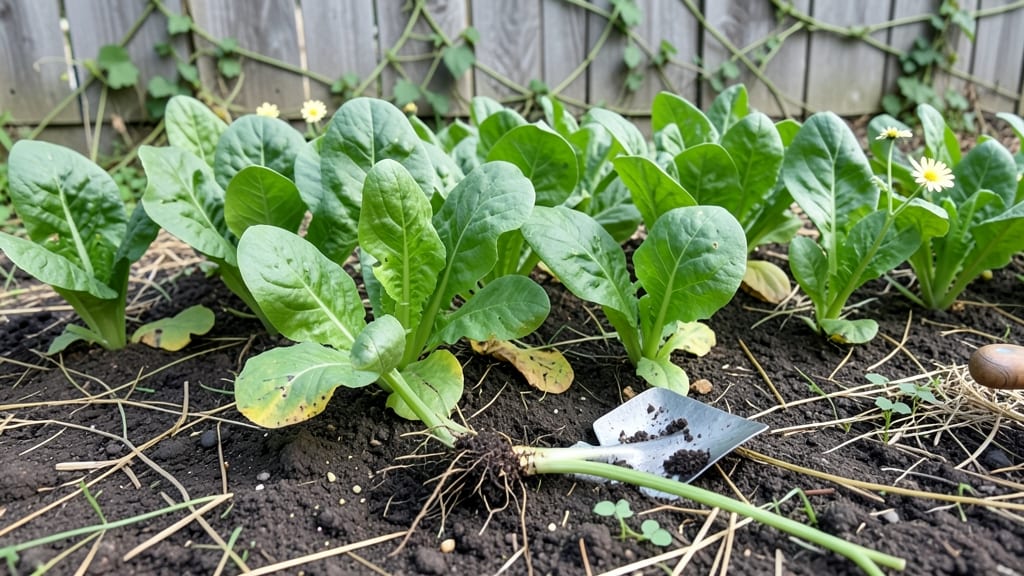
Market gardening can be either commercial or subsistence, depending on scale, intent, and market focus. Commercial market gardening prioritizes profit-driven production for wholesale or direct sales, while subsistence market gardening supplies household needs with surplus occasionally sold locally.
Market gardening isn't one-size-fits-all—it splits into two distinct paths based on your goals.
Commercial operations treat crops like cash crops, investing in irrigation, soil prep, and labor to maximize yields for restaurants, farmers' markets, or grocery stores. 🌱 Meanwhile, subsistence gardening keeps things simple: you grow what your family eats, with maybe a few extras to trade or sell at a roadside stand.
The key difference? One's about profit margins and market demand, while the other's about food security and self-reliance.
What's fascinating is how these approaches often overlap in practice. Many small-scale growers start with subsistence needs but expand into commercial sales as demand grows. For example, a family might grow tomatoes for their kitchen but later sell the surplus at a local market.
The choice between the two isn't always black-and-white—it's about where you are in your gardening journey and what you're trying to achieve.
💡 In This Article
- Defining Commercial vs Subsistence Market Farming
- Choosing a Market Gardening Model for Your Goals
Defining commercial vs subsistence market farming
At its core, the distinction between commercial and subsistence market farming lies in their fundamental objectives and operational scales. Commercial farming treats crops as profit-generating assets, often cultivating high-value vegetables like leafy greens or herbs with yield targets exceeding 50,000 pounds per acre using precision irrigation and soil amendments.
The infrastructure alone tells the story: commercial operations typically require $50,000-$500,000 in startup costs for equipment, storage, and distribution networks, with labor forces ranging from 5-50 full-time workers depending on scale.
Subsistence farming, by contrast, operates on a self-sufficiency model where the primary goal is meeting a household's dietary needs. A typical subsistence plot might yield 500-2,000 pounds of produce annually, with crops selected for nutritional density and storage longevity rather than market appeal.
The labor comes from family members working 10-20 hours per week during growing seasons, and infrastructure stays minimal—think drip irrigation from rainwater collection or compost made from kitchen scraps. 🌱 The key difference?
Commercial farms chase per-unit profitability, while subsistence farms prioritize caloric output per acre with minimal external inputs.
Where things get interesting is in the revenue models. Commercial operations rely on three revenue streams: wholesale contracts (often 60-70% of income), direct-to-consumer sales (like farmers' markets at 25-30% of revenue), and value-added products (such as pre-cut salad mixes or fermented vegetables at 10-15%).
Subsistence gardens, meanwhile, typically generate less than 20% of household income from sales, with the majority of produce consumed on-site. The math reveals why: a commercial tomato farm might sell 10,000 pounds annually at $2.50/lb, while a subsistence garden's 500-pound surplus might fetch just $100 at a local stand.
The infrastructure gap becomes stark when examining water usage. Commercial operations employ automated drip systems delivering 0.5-1 gallon per square foot annually, while subsistence plots often rely on manual watering with 0.1-0.3 gallons per square foot.
Soil management differs too: commercial farms conduct monthly soil tests and apply $300-$1,000 per acre in amendments, whereas subsistence gardens might use free compost and crop rotation as their primary soil-building strategies. These differences aren't just about money—they reflect fundamentally different relationships with land and food systems.
Consider the labor dynamics: commercial farms require specialized roles like harvest crews, irrigation technicians, and sales managers, while subsistence gardens rely on multi-tasking family labor.
A commercial operation might employ seasonal workers during peak harvests (like 20-30 people for 3 months during tomato season), whereas a subsistence garden's workforce never exceeds 5 people year-round.
The time investment tells the tale: commercial growers allocate 15-20 hours per week per acre to management alone, while subsistence gardeners might spend 5-10 hours per week total across their entire plot.
What most people overlook is how these models interact with market volatility. Commercial farms hedge risks through diversified crops (like growing both leafy greens and root vegetables) and contracts with restaurants, while subsistence gardens absorb market fluctuations by adjusting consumption patterns.
The resilience comes from different sources: commercial operations rely on financial buffers, while subsistence systems depend on biological buffers (like seed banks and diverse crop varieties).
This fundamental difference explains why commercial farms can survive droughts through irrigation investments, while subsistence gardens might shift to drought-resistant crops like sweet potatoes.