Tools
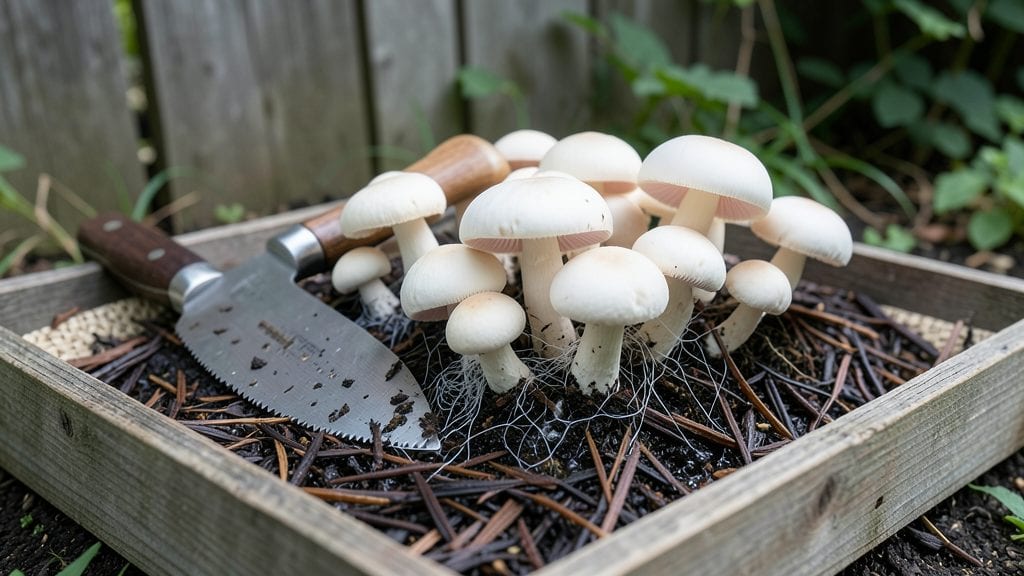
Identifying garden mushrooms can feel like solving a mystery—one wrong move and you're staring at a dangerous look-alike. 🌿 I've spent years distinguishing the safe, earthy oyster mushrooms from the deadly death cap, and I'll walk you through the key features that separate the two without confusing jargon.
The wrong pick isn't just a bad meal; it can be life-threatening.
Start with the basics: cap shape, gill color, and whether the mushroom grows in clusters or alone. A smooth cap with white gills that bruise brown is often safe, while a sticky cap with yellow gills under a volva (that cup-like ring at the base) means walk away.
Habitat matters too—most edible varieties thrive in wood chips or compost piles, while toxic ones pop up in disturbed soil after rain.
When in doubt, don't eat it—and that includes touching it with bare hands. Some toxins absorb through skin. Snap a clear photo of the cap, stem, and gills (including the base where it meets the soil), then compare it to trusted guides like the North American Mycological Association database.
If you're still unsure, consult a local mycologist or remove the mushroom entirely.
This isn't about turning you into a mushroom hunter overnight—it's about recognizing the red flags so you can enjoy the safe harvests, like chicken-of-the-woods or morels, without the risks. We'll cover the most common garden varieties and their dangerous doubles, plus when to call in the experts.
Mistaken Identifications Explained
Garden mushrooms can be a gardener’s delight—or a dangerous mistake. Misidentifying edible fungi as toxic (or vice versa) often boils down to a few key factors. Understanding these causes helps you spot the red flags before you pick. Here’s why confusion happens and how to avoid it.
Many deadly mushrooms mimic their edible counterparts almost perfectly, down to color, shape, and even smell. For example, the Death Cap (Amanita phalloides) and the Destroying Angel (Amanita bisporigera) can resemble the Paddy Straw Mushroom (Volvariella volvacea) at first glance.
Their white gills, stout stems, and volva (cup-like base) create a false sense of safety.
Why it happens:
- Evolutionary mimicry: Toxic mushrooms often evolve to look like safe species to deter predators (including humans) from eating them. This is called Batesian mimicry, where harmless species copy the appearance of toxic ones to survive.
- Seasonal variations: The same mushroom species can change color or size based on weather, soil nutrients, or age. A young Death Cap might look pale and innocent, while an older one develops olive-green hues.
- Poor lighting: Shadows in the garden can distort colors—what looks white in sunlight might be a deadly pale green in shade.
Actionable tip: Never rely on a single feature (like color) for ID. Always check for a combination of traits: spore print, habitat, and microscopic details.
Some mushrooms thrive in specific environments, and picking them out of context is a major red flag. For instance, the Morel (Morchella spp.) grows near dying elm or apple trees, while the False Morel (Gyromitra spp.) appears in similar spots but contains toxic gyromitrin.
Why it happens:
- Soil and decay preferences: Toxic mushrooms often colonize disturbed or contaminated soil (e.g., near roadside runoff or treated wood). Edible species, like Oyster Mushrooms (Pleurotus ostreatus), prefer clean, nutrient-rich substrates.
- Tree associations: Certain mushrooms form mycorrhizal relationships with specific trees. The Chanterelle (Cantharellus cibarius) bonds with oaks, while the Jack-O’-Lantern (Omphalotus illudens) grows at the base of dead trees—and is highly toxic.
- Climate triggers: Heavy rain or drought can spur toxic species to fruit. The Autumn Skullcap (Galerina marginata), a deadly look-alike for Paddy Straws, often pops up after prolonged wet weather.
Actionable tip: Learn the habitat rules of your local mushrooms. If a morel-like cap appears in a grassy lawn (not near trees), it’s likely a False Morel—do not eat it.
Some mushrooms only reveal their danger after cooking or through delayed symptoms. The False Parasol (Chlorophyllum molybdites), for example, looks like a giant puffball but causes violent vomiting hours after ingestion.
Others, like the Deadly Galerina (Galerina marginata), contain amatoxins that damage the liver days after eating.
Why it happens:
- Heat activation of toxins: Some compounds (like monomethylhydrazine in False Morels) only become toxic when heated. Raw False Morels might cause nausea, but cooking them turns them lethal.
- Delayed onset symptoms: Amatoxins (found in Death Caps) take 6–24 hours to trigger symptoms like diarrhea, abdominal pain, and—without treatment—liver failure.
- False positives in tests: Home spore-print kits or smell tests (e.g., anise-like scent in Destroying Angels**) can be misleading if you’re not trained to interpret them.
Actionable tip: If you’re unsure, treat all wild mushrooms as toxic until confirmed by an expert. Never eat a mushroom that causes even mild stomach upset—some reactions (like those from Cortinarius species) can be fatal.
Relying solely on photos or outdated guides is a fast track to disaster. A 10-year-old book might describe a mushroom as "edible" based on old data, while modern research has since classified it as toxic. Apps and social media can also spread misinformation if users lack expertise.
Why it happens:
- Regional variations: A mushroom safe in Europe (like the Liberty Cap (Psilocybe semilanceata)) may have toxic look-alikes in North America.
- Outdated taxonomy: Science reclassifies fungi constantly. The "Little Brown Mushroom" category alone includes dozens of species, some deadly.
- Overgeneralized advice: Statements like "all white mushrooms with gills are poisonous" oversimplify reality—the Shiitake (Lentinula edodes) is edible but fits that description.
Actionable tip: Cross-reference at least three verified sources (e.g., Mushroom Expert, local mycological societies, or university extensions). When in doubt, send a sample to a lab for DNA testing.
Remember: The margin for error with wild mushrooms is zero. When identification is unclear, admire from afar—your life isn’t worth the risk.
Fixing Common Mushroom ID Mistakes
Mistakenly picking the wrong mushroom can turn a thrilling foraging adventure into a dangerous gamble. Whether you’re dealing with misidentifications, confusing look-alikes, or simply unsure about what’s safe, here’s a practical guide to troubleshooting and preventing errors in the field.
If you’ve spotted a mushroom but aren’t confident in your ID, follow this three-step safety check before harvesting:
- 📸 Capture Clear Photos - Take images from multiple angles: top view (cap), side view (stem), and base (where it meets the soil or wood). - Include a reference object (like a coin or ruler) for scale—this helps experts compare sizes accurately. - Pro Tip: 💡 Use natural light and avoid shadows.
Apps like iNaturalist or PictureThis can help cross-reference your find.
- 📚 Cross-Reference with Reliable Sources
- Use field guides (e.g., Mushrooms Demystified by David Arora) or trusted apps like Seek by iNaturalist.
- Look for key distinguishing features (e.g., gill color, spore print, habitat, and whether the cap bruises when touched).
- Warning: ⚠️ Avoid relying solely on social media groups—some "experts" can be misleading.
- 🧪 Conduct a Spore Print Test (For Advanced Foragers) - Gently remove the cap and place it gill-side down on a piece of white paper or aluminum foil. - Cover it with a bowl and let it sit overnight.
The spores will leave a colored print (e.g., black, brown, or white). - Compare the print to a spore print key—this can rule out deadly doppelgängers like the **Death Cap (Amanita phalloides), which has white spores but is lethal.
Some mushrooms are deadly doppelgängers of edible varieties. Here’s how to spot and avoid the most dangerous pairs:
| Edible Mushroom | Deadly Look-Alike | Key Differences |
|---|---|---|
| Morel (Morchella)** | False Morel (Gyromitra) | True morels have a honeycomb cap; false morels have a wrinkled, brain-like cap and can cause severe illness. |
| Chanterelle (Cantharellus) | Jack-O’-Lantern (Omphalotus) | Chanterelles have forked, yellow gills; Omphalotus has true gills and causes stomach upset. |
| Puffball (Calvatia) | Destroying Angel (Amanita bisporigera) | Puffballs are solid inside; destroying angels have a sac-like base (volva) and are deadly. |
Prevention Tip: 🌡️ Never eat a mushroom raw—even if it looks safe. Cooking can sometimes neutralize toxins, but some (like those in Amanita species) remain deadly.
Mistakes happen—here’s how to minimize risk if you’re unsure:
- 🚨 Don’t Eat It (Even a Bite!)
- Some toxins (like those in Amanita) take 6–24 hours to show symptoms, and by then, it may be too late.
- Exception: If you’re 100% certain of the ID (e.g., a well-known morel or chanterelle), proceed with caution.
- 📞 Consult an Expert
- Contact a local mycological society or post photos in verified forums like Reddit’s r/mycology.
- If symptoms appear (vomiting, diarrhea, dizziness), seek emergency medical help immediately and bring the mushroom (in a bag) for ID.
- 🗑️ Dispose of Unknown Mushrooms Safely
- If you’re not confident, don’t compost or discard them near edible plants—some toxins can leach into soil.
- Best Practice: 🔥 Burn them (if safe) or seal in a bag for proper disposal.
Avoid future mistakes with these proactive strategies:
- 🎓 Take a Mycology Class
- Many universities and nature centers offer beginner foraging workshops. Learn from experts who teach safe ID techniques.
- 📅 Forage with a Mentor
- Join a local foraging group—experienced foragers can help you spot subtle differences in the field.
- 📅 Stick to Known Habitats
- Some mushrooms (like chanterelles) grow in specific ecosystems (e.g., near oak or pine trees). Familiarize yourself with their preferred environments.
- 📅 Avoid "First-Time" Picks
- Never eat a mushroom on your first encounter. Wait until you’ve studied it thoroughly or confirmed it with multiple sources.
- 📅 Keep a Foraging Journal
- Record photos, locations, and key features of every mushroom you encounter. Over time, you’ll recognize patterns and build confidence.
Final Reminder: 🚨 When in doubt, throw it out. Your health isn’t worth the risk—even if it looks delicious! With practice and patience, you’ll become a safer, more confident forager in no time.
Frequently asked questions about garden mushrooms
How can I tell if a garden mushroom is safe to eat?
Never eat a wild mushroom unless you're 100% certain of its identity. Look for key features like cap shape, gill color, and habitat—most edible varieties grow in wood chips or compost piles. If it has a volva (cup-like base) or yellowish gills, it's likely toxic. When in doubt, don't eat it—some species cause deadly reactions even hours after ingestion.
What's the fastest way to identify a mushroom in my yard?
Take clear photos from multiple angles (cap, stem, base) and compare them to verified sources like the North American Mycological Association database. Note its habitat—does it grow in clusters near wood or alone in soil? A spore print test (placing the cap gill-side down on paper overnight) can also reveal critical clues about toxicity.
Are all white mushrooms poisonous?
No—many edible mushrooms are white, like shiitakes and oyster mushrooms. However, deadly doppelgängers like the Death Cap (Amanita phalloides) also have white gills. The key difference? Toxic varieties often have a volva (cup-like base) and grow alone, while safe mushrooms typically grow in clusters. Never assume based on color alone.
Can I use a smartphone app to identify mushrooms?
Apps like iNaturalist or PictureThis can help, but they're not foolproof. Always cross-reference with a field guide or consult a local mycologist. Apps lack the nuance of expert knowledge—some deadly mushrooms (like the Autumn Skullcap) can be misidentified even by AI. When in doubt, avoid eating any wild mushroom.
What should I do if I accidentally eat a mushroom and feel sick?
Seek emergency medical help immediately. Bring the mushroom (in a bag) to the hospital for identification. Symptoms like vomiting, diarrhea, or dizziness can appear 6-24 hours after ingestion—don't wait to see if it passes. Some toxins (like those in Amanita species) cause irreversible liver damage.