Pests
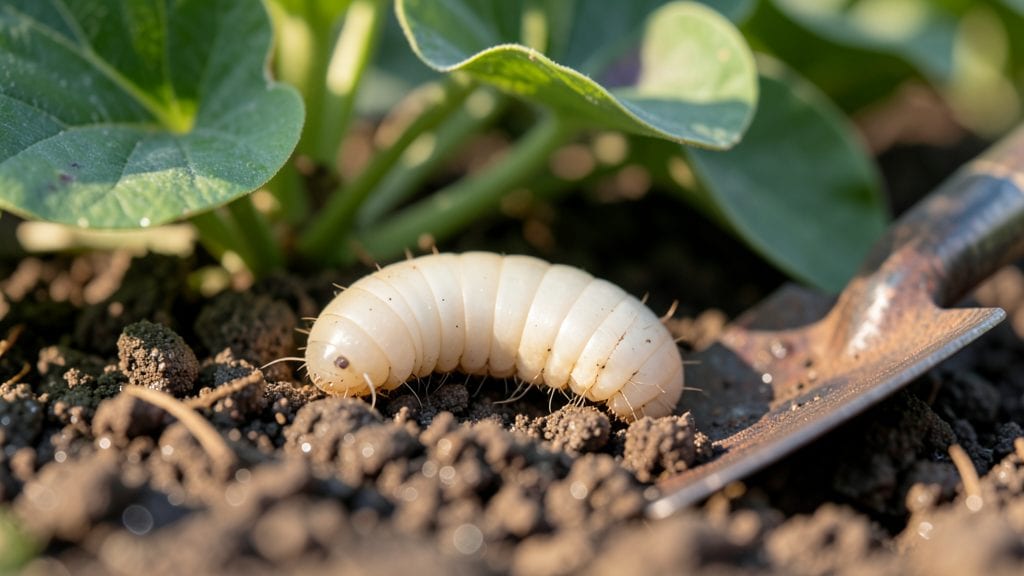
Mastering garden grubs identification early prevents costly damage and keeps your plants thriving without harsh chemicals. I’ve spent years digging through soil, and the difference between a harmless beetle larva and a destructive cutworm often comes down to a few key details—like body shape, color, and where they’re chewing.
The wrong diagnosis leads to treating beneficial insects as pests, which backfires fast.
Most grubs hide underground, so you’ll need a small trowel and a magnifying glass to spot them. Look for chewed stems, wilting seedlings, or tunnels in the soil—those are dead giveaways. Wireworms leave behind jagged holes in roots, while cutworms slice plants cleanly at soil level.
The good news? Once you know what to watch for, identification gets easier, and you’ll avoid unnecessary sprays.
Correct ID means targeting only the real troublemakers—like Japanese beetle grubs or May/June beetle larvae—while leaving ground beetles and soldier beetles alone. These beneficials eat pests naturally.
With the right tools (a field guide or pest ID app helps), you’ll spot the difference in minutes and act fast before damage spreads.
This guide covers the most common grubs in North American gardens, their life cycles, and how to tell friend from foe. No more guessing—just clear visuals and actionable tips to keep your soil healthy and your plants thriving.
Root Causes of Grub Infestations
Grubs aren’t just random pests—they thrive because of specific conditions in your garden. Understanding these triggers helps you stop them before they become a full-blown problem. Below, we break down the science behind why these soil-dwelling larvae show up in your yard, lawn, or garden beds.
💧 Why it happens: Grubs love moisture—too much of it creates the perfect breeding ground. When soil stays soggy for extended periods, it mimics the damp, organic-rich environments grubs prefer. Overwatering (or poor drainage) also weakens grass roots, making them easier targets for grub feeding.
The science:
- Grubs (Phyllophaga spp., Japanese beetle larvae, etc.) require moisture to survive their larval stage.
- Waterlogged soil reduces oxygen levels, stressing plants but making them more attractive to grubs as a food source.
- Organic matter (like decomposed leaves or mulch) in wet soil accelerates microbial activity, which grubs feed on indirectly.
Actionable fix:
- Test your soil’s drainage by digging a 12-inch hole and filling it with water. If it drains in <4 hours, you’re good; if not, amend with sand or gypsum.
- Water deeply but less frequently—aim for 1–1.5 inches per week (including rain) to encourage deep root growth.
🍂 Why it happens: Grubs aren’t picky eaters—they feast on roots, decaying plant material, and even synthetic fertilizers. Over-fertilizing (especially with nitrogen-rich compounds) can attract adult beetles, which lay eggs that hatch into grubs.
The science:
- Grubs metabolize organic matter quickly, and high-nitrogen fertilizers stimulate microbial growth, which they consume.
- Compost or mulch piles near lawns provide ideal egg-laying sites for beetles (e.g., June bugs or chafer beetles).
- Some grubs, like Cyclocephala (May/June beetle larvae), specifically target freshly tilled or fertilized soil.
Actionable fix:
- Spread compost evenly and avoid piling it against grass edges.
- Use slow-release fertilizers and follow label rates—overdoing it is an open invitation to grubs.
- Aerate compacted soil to improve root health, reducing grub appeal.
🌱 Why it happens: Stressed plants release chemical signals that attract grubs. Weakened roots (from fungal diseases, drought, or other pests) are easier to chew through, making your lawn a buffet.
The science:
- Grubs detect volatile organic compounds (VOCs) emitted by stressed plants, homing in on easy meals.
- Fungal pathogens (like Fusarium or Rhizoctonia) damage roots, creating entry points for grubs.
- Other pests (e.g., chinch bugs or sod webworms) weaken grass first, making it more vulnerable to grub attacks.
Actionable fix:
- Treat fungal diseases with fungicides before grub season (late spring/early summer).
- Rotate herbicides to avoid chemical buildup that stresses soil microbes (and indirectly, grubs).
- Overseed bare patches to crowd out grub-friendly weeds like dandelions or clover.
☀️ Why it happens: Grubs are cold-blooded—they thrive in warm, protected soil. Shady areas under trees, thick mulch layers, or south-facing slopes create ideal incubators for egg-laying adults and larval development.
The science:
- Adult beetles seek out warm, moist soil (60–80°F) to lay eggs, which hatch in 2–4 weeks.
- Mulch or thatch insulates soil, keeping it warmer longer and extending the grub’s active season.
- Grubs burrow deeper in winter but return to the surface in spring when temps rise.
Actionable fix:
- Thin mulch layers to 2–3 inches and keep it 6+ inches away from grass edges.
- Mow high (3–4 inches) to reduce heat stress on roots and deter beetle egg-laying.
- Prune tree branches to improve airflow and sunlight penetration to the soil.
Pro Tip: 🌡️ Monitor soil temps—use a soil thermometer to track when it hits 65°F+ (grub egg-laying prime time). Timing treatments (like nematodes or milky spore) before this window can prevent infestations.
How to Fix Garden Grubs
Once you’ve identified the culprits wreaking havoc in your garden—whether it’s Japanese beetles, cutworms, wireworms, or grubs—it’s time to take action! The good news? Most grub problems can be tackled with a mix of natural, organic, and targeted methods.
Below, we’ve matched common causes to effective fixes, plus prevention tips to keep your garden thriving long-term.
Cause: Grubs (like Japanese beetle grubs or June beetle larvae) feast on grass roots, causing brown patches and weak turf.
🍳 Immediate Fixes
- 👨🍳 Apply Beneficial Nematodes – Microscopic worms (Heterorhabditis bacteriophora) that infect and kill grubs naturally. Best used in early evening (they dislike sunlight).
Follow package rates for watering. - **🥘 Use Milky Spore (Bacillus popilliae) – A bacteria that targets Japanese beetle grubs. Takes 1-2 years to establish but provides long-term control.
Mix into soil in spring or fall. - 🔪 Handpick & Destroy – For small lawns, dig up infested areas, scoop out grubs, and drop them in soapy water. Repeat weekly until gone.
⏰ Prevention Tips - 🌱 Overseed & Aerate – Thick, healthy grass outcompetes grubs.
Aerate in fall and overseed with grub-resistant grasses (e.g., tall fescue). - 🌡️ Mow High – Keep grass 3-4 inches tall to shade soil and deter beetles from laying eggs. - 🎯 Limit Nitrogen in Late Summer – Excess fertilizer attracts Japanese beetles.
Switch to slow-release, balanced fertilizers in June-July.
Cause: These green, brown, or black caterpillars chew through stems at soil level, toppling seedlings and young plants.
🍳 Immediate Fixes
- 👨🍳 Collar Young Plants – Wrap cardboard, aluminum foil, or plastic collars around stems to block cutworms from climbing up.
- 🥘 Use Diatomaceous Earth (DE) – Sprinkle food-grade DE around plant bases.
It dehydrates cutworms but is safe for plants (reapply after rain). - 🔪 Nighttime Patrol – Shine a flashlight at dusk—cutworms will curl up when exposed. Pick them off and drop in soapy water.
⏰ Prevention Tips
- 🌱 Plant Trap Crops – Grow marigolds, sunflowers, or alfalfa nearby to distract moths from laying eggs on veggies.
- 💡 Encourage Predators – Birds, toads, and parasitic wasps love cutworms.
Add a birdbath or native plants to attract them. - 🌡️ Avoid Overwatering at Night – Damp soil hides cutworms. Water in the morning instead.
Cause: These hard, wire-like larvae (from click beetles) gnaw through seeds, bulbs, and roots, often in sandy or disturbed soils.
🍳 Immediate Fixes
- 👨🍳 Use Floating Row Covers – For seedlings, cover beds with lightweight fabric to block adult beetles from laying eggs.
- 🥘 Apply Kaolin Clay (Surround WP) – A natural barrier that repels beetles and smothers soil-dwelling larvae.
Reapply after rain. - 🔪 Solarize Infested Soil – In hot climates, cover soil with clear plastic for 4-6 weeks in summer to bake out wireworms.
⏰ Prevention Tips
- 🌱 Rotate Crops – Wireworms target specific plants (e.g., potatoes, corn). Avoid planting susceptible crops in the same spot yearly.
- 💡 Plant Mustard or Rye as a Cover Crop – These smother wireworms and improve soil structure.
Till in spring before planting. - 🎯 Test Soil Before Planting – If wireworms are a recurring issue, send a soil sample to your local extension office for treatment recommendations.
- 🔥 Early Detection = Easier Fixes – Check for damage (wilting, brown patches) and pests at dusk when they’re most active. - 🌡️ Timing Matters – Treat grubs in early fall (before they mature) and cutworms at night. - ✨ Combine Methods – For severe infestations, mix nematodes + milky spore + cultural controls for best results. - 🚫 Avoid Chemical Overuse – Neonicotinoids can harm pollinators.
Opt for targeted, organic solutions first.
Need a quick reference? Bookmark this table for cause-and-effect fixes:
| Pest | Damage Signs | Best Immediate Fix | Prevention Tip |
|---|---|---|---|
| Grubs | Brown patches, weak grass | Beneficial nematodes | Overseed + aerate |
| Cutworms | Stem snapping, nighttime raids | Collars + DE | Plant trap crops |
| Wireworms | Gnawed seeds, stunted plants | Solarization + clay | Crop rotation |
With the right approach, your garden can bounce back stronger**—and stay grub-free for good! 🌱💪
Frequently asked questions
What’s the easiest way to tell if I have grubs in my lawn?
Look for brown patches that pull up easily, revealing white, C-shaped larvae. Dig a small section (about 6x6 inches) in late summer—if you find more than 5-10 grubs per square foot, you’ve got an infestation. Check under wilting plants too; grubs often target stressed roots.
Are all grubs harmful, or are some actually helpful?
Most grubs are pests, but a few are neutral or even beneficial. Ground beetle larvae (long legs, dark brown) eat other grubs, while soldier beetle larvae (smooth, yellowish) feed on aphids. The troublemakers? Japanese beetle grubs (white, curved) and June bug larvae (stout, brown)—these chew roots relentlessly.
How do I know if my garden pests are grubs vs. something else?
Grubs leave underground damage: chewed roots, tunnels, or brown grass that peels back like carpet. If you see holes in leaves (like slugs) or silken tubes (cutworms), it’s not grubs. Use a magnifying glass—grubs are smooth, legless larvae, while caterpillars have prolegs and may be fuzzy or striped.
Can I use vinegar or soapy water to kill grubs?
No—vinegar and soapy water won’t penetrate soil to kill grubs. For spot treatment, use beneficial nematodes (microscopic worms) or milky spore (a bacteria). Water the area first, then apply nematodes in the evening (they hate sunlight). For large lawns, consider grub-specific insecticides labeled for organic use.
When is the best time to treat for grubs?
Act in early fall (September-October) or late spring (April-May) when grubs are young and vulnerable. Avoid treating in summer heat—nematodes and milky spore work best in 55–75°F soil. If you see adult beetles (June bugs, Japanese beetles), they’ve already laid eggs—treat within 2 weeks.