Planting
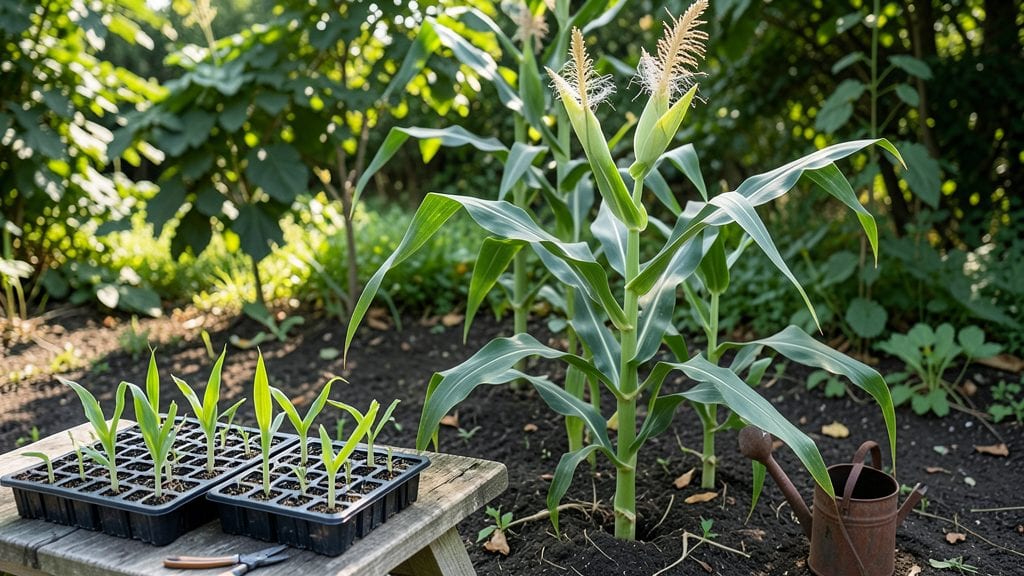
The garden corn spacing that produces ears so plump they practically fall off the stalk starts with rows spaced just right. I remember my first attempt—corn so crowded the ears grew lopsided, and the stalks leaned like drunks at last call.
That year, I lost half my harvest to shady stalks and poor pollination.
Here’s the secret: 12-inch spacing between plants in rows 30 to 36 inches apart works for most sweet corn varieties. If you’re growing flint or dent corn, stretch that to 18 inches between plants—they need room to bulk up.
The key is matching your spacing to the corn’s mature size, not just what the seed packet suggests.
When done right, you’ll end up with ears that shine like polished mahogany, silk plumes turning golden, and cobs so heavy they bow the stalks. Picture it: rows so neat you could lay a ruler along them, every plant getting sunlight and air to thrive.
The difference between good corn and great corn comes down to these few inches.
Fair warning: overcrowding leads to weak stalks, poor pollination, and ears that look like they’ve been through a blender. But get it perfect, and you’ll harvest corn so sweet it’ll make your neighbors ask for secrets. Let’s get those rows straight!
📚 In This Guide
- What you need
- Instructions
- Tips and common mistakes
- Wrapping up and next steps
What you need
- ● Corn seeds: Choose a variety suited to your climate (e.g., Silver Queen or Golden Bantam). Buy enough for your desired yield—typically 1 seed per hill with 12–15 seeds per foot of row.
- ● Garden soil: Well-draining, fertile soil with a pH of 6.0–7.0. Amend with compost if needed.
- ● Fertilizer: A balanced 10-10-10 or 5-10-10 fertilizer (follow package rates for application).
- ● Watering can or hose: With a gentle spray nozzle for even moisture.
- ○ Garden twine or string: For marking rows (optional but helpful for beginners).
- ● Measuring tape or ruler: To ensure accurate spacing.
- ● Garden gloves: To protect your hands while planting.
- ● Row covers: Lightweight fabric to protect seedlings from pests or frost.
- ● Stakes or trellis: If growing pole corn varieties (e.g., Country Gentleman).
- ● Mulch (straw or grass clippings): To retain moisture and suppress weeds.
- ● Planting chart or notebook: To track spacing and growth progress.
How to space garden corn for maximum yield and healthy plants
Get your corn rows just right, and you'll avoid crowded stalks, poor pollination, and wasted effort.
Plan Your Corn Layout Based on Variety
Start by checking your seed packet—different corn varieties need slightly different spacing. Sweet corn typically requires 12-18 inches apart in rows, while field corn can handle 18-24 inches. I always plant my 4 rows of sweet corn in a square pattern (not straight lines) to improve pollination and airflow between plants.
For a 4-row setup, space rows 30-36 inches apart. This gives plants room to grow without competing for sunlight or nutrients. If you're planting in hills (small mounds), arrange 4-6 seeds per hill with hills spaced 24-30 inches apart. This method works especially well in smaller gardens where space is limited.
Prepare the Soil for Even Planting
Before planting, loosen the soil to a depth of 6-8 inches with a garden fork or tiller. Corn roots need deep, aerated soil to support tall stalks. Mix in 2-3 inches of compost (if available) to boost nutrients, but don’t overdo it—too much nitrogen can lead to leafy growth at the expense of ears.
Use a string and stakes method for precise spacing. Drive two stakes at the ends of your row and stretch a string between them. Mark the string every 12-18 inches (depending on your variety) with small flags or sticks. This ensures straight, evenly spaced rows without guesswork. I’ve found that even spacing reduces competition for water and sunlight, leading to stronger stalks.
Plant Seeds at the Correct Depth and Depth
Drop 2-3 seeds per hole at a depth of 1-1.5 inches. Planting too deep slows germination, while shallow planting can dry out seeds. After covering with soil, water gently but thoroughly to settle the soil around the seeds. Avoid overwatering—soggy soil can cause rot before seeds even sprout.
Once seedlings reach 4-6 inches tall, thin them to the strongest 1-2 plants per spot. Use sharp scissors or a knife to avoid disturbing roots when pulling weak seedlings. I always leave the most vigorous plant in each spot—this ensures better ear development later. If you’re planting in hills, thin to 4-6 healthy stalks per hill for optimal yield.
Monitor and Adjust for Optimal Growth
Watch for signs of crowding as plants grow. If leaves begin touching between rows, it’s time to thin further or space plants out slightly. Corn needs good airflow to prevent fungal diseases like rust or blight. If your garden gets windy, consider staking taller varieties to avoid lodging (falling over).
For 4 rows, I recommend staggering plants in a checkerboard pattern if space allows. This creates a more natural windbreak and improves pollination. If you notice tassels (male flowers) drying out before silks (female flowers) appear, hand-pollinate by gently brushing tassels over silks on 2-3 plants per row. This extra step can boost yields in less-than-ideal conditions.
Maintain Spacing Through the Season
As corn grows, keep an eye on row spacing. If weeds start crowding plants, pull them immediately—competition for nutrients will stunt your corn. Mulch rows with 2-3 inches of straw or grass clippings to suppress weeds and retain moisture. Avoid piling mulch against stalks, as it can trap moisture and encourage rot.
By late summer, your 4 rows of corn should produce 150-200 ears if spaced correctly. Harvest when silks turn brown and kernels are milky when pierced. Proper spacing ensures each ear gets enough sunlight and nutrients to reach peak sweetness. With the right layout, you’ll avoid the frustration of small, underdeveloped ears and enjoy a harvest that rivals the grocery store.
Tips & tricks for perfect garden corn spacing
A few simple strategies will help you avoid common mistakes and maximize your corn harvest this season.
Variety Matters: Always double-check your seed packet for specific spacing requirements. Sweet corn needs 12-18 inches apart in rows, while field corn can handle 18-24 inches. I've learned the hard way that crowding sweet corn leads to smaller ears and poor pollination. The square pattern for 4 rows creates better airflow and improves cross-pollination between plants.
Precision Planting: The string and stakes method is worth the extra effort. I've found that marking every 12-18 inches along your string ensures perfect spacing without guesswork. This technique prevents uneven growth and makes thinning easier later. For 4 rows, maintain 30-36 inches between rows to give plants room to develop strong stalks.
Thinning Technique: When seedlings reach 4-6 inches tall, thin carefully to leave the strongest 1-2 plants per spot. Use sharp scissors to avoid damaging roots of remaining plants. This step is crucial—overcrowded corn plants compete for nutrients, resulting in smaller ears. In hills, aim for 4-6 healthy stalks per mound for optimal yield.
Season-Long Maintenance: Mulch with 2-3 inches of straw to suppress weeds and retain moisture, but keep it away from stalks to prevent rot. Regularly check for signs of crowding as plants grow—if leaves begin touching between rows, thin further. This ongoing attention ensures your 4 rows produce the promised 150-200 ears without stunted growth.
Pro Tips for Garden Corn Spacing
- A few simple strategies will help you avoid common mistakes and maximize your corn harvest this season.
- Variety Matters: Always double-check your seed packet for specific spacing requirements. Sweet corn needs 12-18 inche...
- Precision Planting: The string and stakes method is worth the extra effort. I've found that marking every 12-18 inche...
Frequently asked questions
Got questions about spacing your garden corn like a pro?
You’re not alone! Here are answers to the most common concerns—plus a few pro tips to ensure your corn grows tall, sweet, and plentiful.
How close can I plant garden corn together?
For most varieties, space corn 12–18 inches apart in rows spaced 30–36 inches apart. If you’re growing a shorter variety (like popcorn), you can tighten it to 10–12 inches apart. Overcrowding leads to poor air circulation, increasing disease risk and stunted growth.
When is the best time to plant corn for proper spacing?
Plant corn after the last frost when soil temps reach 60°F+. For warmer climates, aim for early spring; in cooler zones, wait until late April or May. Corn is sensitive to cold soil, so rushing can delay germination and mess up your spacing plan.
Can I plant corn in hills instead of rows?
Planting in hills (mounds) is common and can improve drainage. For hills, place 4–6 kernels 12 inches apart in a circle, with hills spaced 3 feet apart. This method mimics natural growth patterns and often yields slightly better ears.
What if my corn plants are already too close together?
Don’t panic! If seedlings are too close, thin them early (when they’re 2–3 inches tall) to maintain spacing. Snip with scissors at soil level to avoid disturbing roots. If plants are mature and crowded, consider transplanting the strongest ones to another spot—though this can stress them.
Does corn spacing change for different varieties?
Most sweet corn and field corn follow the 12–18 inch spacing rule, but flint corn (like some heirloom types) can tolerate slightly tighter spacing (10–12 inches). Always check the seed packet for variety-specific guidelines—some dwarf varieties need less room!
Wrapping up and next steps
Perfecting your garden corn spacing is the secret to a thriving harvest—whether you’re a seasoned gardener or just starting out! 🌽 By following the right guidelines, you’ll ensure strong stalks, plentiful ears, and fewer pest problems.
Now that you’re armed with the best spacing tips, it’s time to roll up your sleeves and plant with confidence!
🌱 Your Next Step:
- Mark your rows with stakes or string for precision.
- Plant your seeds at the ideal depth and spacing (remember: 1 inch deep, 4-6 inches apart for sweet corn).
- Watch your garden transform into a cornfield oasis!
Happy planting—your future harvest is waiting! 🌟