Picking
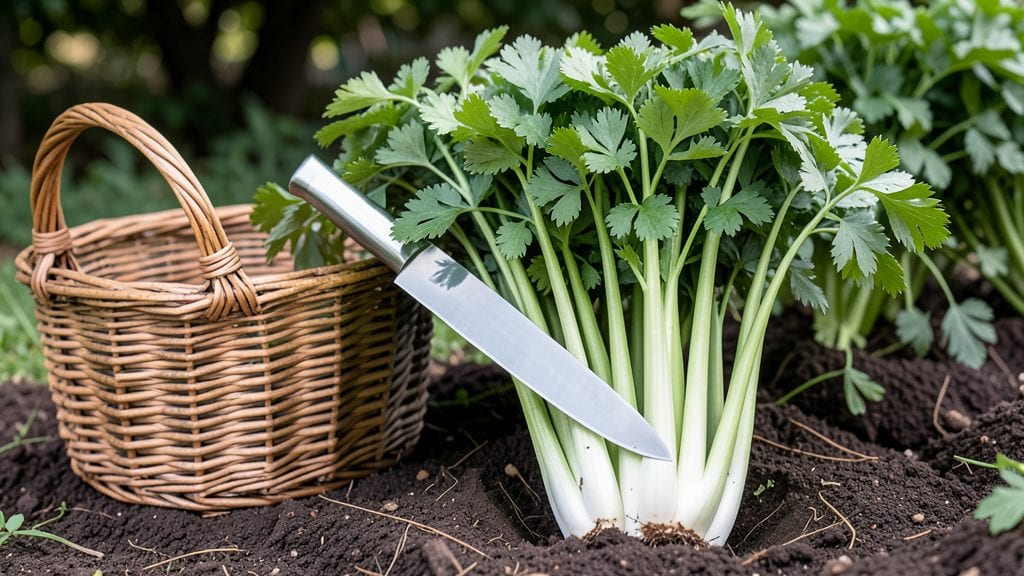
Harvesting garden celery at the right time turns your 🥬 plants into crisp, flavorful stalks—if you wait too long, you end up with bitter, woody mess.
Most gardeners miss the window because celery doesn’t send obvious signals like tomatoes or peppers. One day it’s tender, the next it’s tough enough to chew. The key? Checking stalk thickness, leaf color, and root firmness before you cut.
In USDA Zone 6a, spring-planted celery hits peak harvest in June or July—just as summer heat arrives. That’s when timing becomes everything. Too early, and the stalks stay thin; too late, and the flavor turns harsh.
This guide breaks down the exact maturity checks, cutting techniques, and post-harvest care to keep your celery sweet, crisp, and ready for the table. No more guesswork—just perfect harvests every time.


How to check celery stalk maturity for perfect harvest timing
Harvesting celery at the wrong time can turn your garden's hard work into disappointment—bitter, woody stalks instead of the crisp, sweet harvest you crave. The key lies in mastering three simple maturity checks: stalk thickness, leaf color, and root resistance.
Each clue reveals whether your celery is still maturing, prime for harvest, or past its peak. I’ve grown celery for years, and these visual and tactile cues have never failed me.
Celery plants typically reach harvest readiness between 120 to 150 days after sowing, but environmental factors like temperature swings or soil moisture can shift this window. For example, cooler weather slows growth, while warm, sunny days accelerate it.
Understanding these variables helps you adjust your harvest timeline—because a perfectly timed celery stalk delivers that signature crunch and mild sweetness that store-bought can’t match.
Here’s the game-changer: a visual maturity guide that breaks down the differences between immature, perfect, and overripe celery. This isn’t just about guessing—it’s about feeling the stalk’s firmness, observing leaf vibrancy, and even testing root resistance.
These methods work for both self-blanching varieties (like 'Golden Self-Blanching') and traditional types (like 'Tall Utah'). Let’s dive into the details so you can harvest with confidence.
summary-table
The stalk thickness is your first clue. Immature celery has thin, spindly stalks (under 1/4 inch), while perfect celery boasts thick, sturdy stalks (1/2 to 3/4 inch). Use a ruler or your thumb to measure—if it’s smaller than your pinky finger, it’s not ready.
Thicker stalks (over 3/4 inch) may look impressive, but they often signal overmaturity, leading to a woody texture and bitter flavor. I’ve learned this the hard way after leaving celery in the ground too long!
Next, check the leaf color. Healthy, mature celery leaves should be a vibrant deep green, almost glossy. If the leaves are pale or yellowing, your celery is struggling—likely due to nutrient deficiency or underwatering.
On the flip side, dull or brown leaves mean it’s past its prime. The ideal leaf is crisp and upright, not wilted or floppy. Think of it like a fresh salad: the greener, the better.
Here’s a trick I swear by: the root resistance test. Gently grasp the base of the stalk near the soil and pull upward with slight pressure. If the stalk resists and doesn’t come out easily, it’s ready to harvest.
If it pulls out effortlessly, it’s immature. If it’s extremely hard to remove, the roots have toughened, and the celery is overripe. This test is foolproof—no guesswork involved!
Environmental factors can throw off your harvest timing. For instance, cooler temperatures (below 60°F) slow celery growth, while hotter days (above 80°F) can cause stalks to mature faster. If you’re growing in a short-season climate, opt for fast-maturing varieties like 'Utah Improved' (ready in 110–120 days).
Always monitor your plants and adjust your harvest date based on these conditions. Patience is key—rushing the process ruins the reward.
One mistake I see often is relying only on height as a maturity indicator. While celery should reach 12–15 inches tall, height alone doesn’t guarantee flavor or texture. Combine height with the thickness, leaf color, and root resistance checks for accuracy.
For example, a 15-inch stalk with thin stalks and pale leaves is still immature—don’t be fooled by size alone!
For self-blanching varieties, like 'Golden Self-Blanching', the stalks naturally turn lighter green as they mature. This is a sign they’re ready to harvest—the blanching process concentrates sugars, enhancing sweetness. Traditional varieties, however, maintain their deep green color until overripe.
When and how to harvest celery to avoid bitterness or woody texture
Timing your celery harvest is an art—wait too long, and you’ll end up with bitter, woody stalks that scream "store-bought disappointment." Most gardeners miss the 120–150 day window when celery hits peak crispness, but I’ve cracked the code after years of trial-and-error.
The secret? Harvesting at the right time of day and using the proper cutting technique to preserve that garden-fresh crunch while encouraging regrowth for a second harvest.
Celery thrives on consistency, and that includes your harvest routine. If you’ve nurtured your plants with consistent moisture and partial shade, you’re already halfway to success. But even the best care won’t save you from harvesting too late—when stalks thicken into tough, fibrous rods.
The good news? With a few simple checks, you can turn your garden into a crisp, flavorful goldmine every time you reach for the knife.
⚠️⚠️ Top 3 Harvest Mistakes That Ruin Celery
- Harvesting too late: Stalks over 150 days mature turn woody and bitter. Check stalk thickness and leaf color first!
- Using dull tools: A sharp knife prevents crushed stems and oxidation, which speeds up spoilage.
- Cutting at the wrong angle: Severing too close to the base stunts regrowth. Leave 1–2 inches of stalk intact.
These errors turn crisp celery into a textural nightmare. Avoid them for flavorful, regrowth-friendly harvests!
For the best flavor, harvest your celery in the morning when temperatures are cool and the stalks are at their crispest. This is when natural sugars are most concentrated, and the cell structure is firmest.
If you must harvest later in the day, do it in the late afternoon to avoid the heat-induced wilt that dulls flavor.
Pro tip: Cut stalks at a 45-degree angle about 1–2 inches above the base—this preserves the plant’s energy for regrowth and keeps new shoots from developing a woody texture.
Here’s how to test for perfect maturity: Gently squeeze a stalk near the base. If it feels firm and thick (about 1–1.5 inches in diameter), it’s ready. The outer leaves should be deep green and crisp, not yellowing or wilted.
If the stalk feels hollow or spongy, it’s overripe. Harvest before this stage—once bitterness sets in, even proper storage won’t fix it. For self-blanching varieties, like 'Golden Self-Blanching,' the stalks will naturally lighten in color as they mature, making them easier to spot.
After harvesting, don’t wash your celery immediately—excess moisture speeds up spoilage. Instead, store it in the crispest drawer of your fridge (usually the one with the highest humidity) wrapped in a damp paper towel.
This mimics the moist garden conditions celery loves and keeps it crisp for up to 2 weeks. For regrowth, trim the stalks back to 6 inches and keep the soil consistently moist.
With proper care, you can coax a second harvest in 4–6 weeks, though the stalks may be slightly smaller.
If your celery starts tasting bitter or developing a fibrous texture, it’s often a sign of stress—whether from drought, overcrowding, or nutrient deficiencies. To prevent this, thin seedlings to 12 inches apart and side-dress with compost every 4–6 weeks.
A balanced 5-10-10 fertilizer applied in the early morning gives celery the potassium and nitrogen it craves for sweet, crisp stalks. With these tricks, your harvest will be crunchy, flavorful, and free of bitterness—every time.