
Flowers
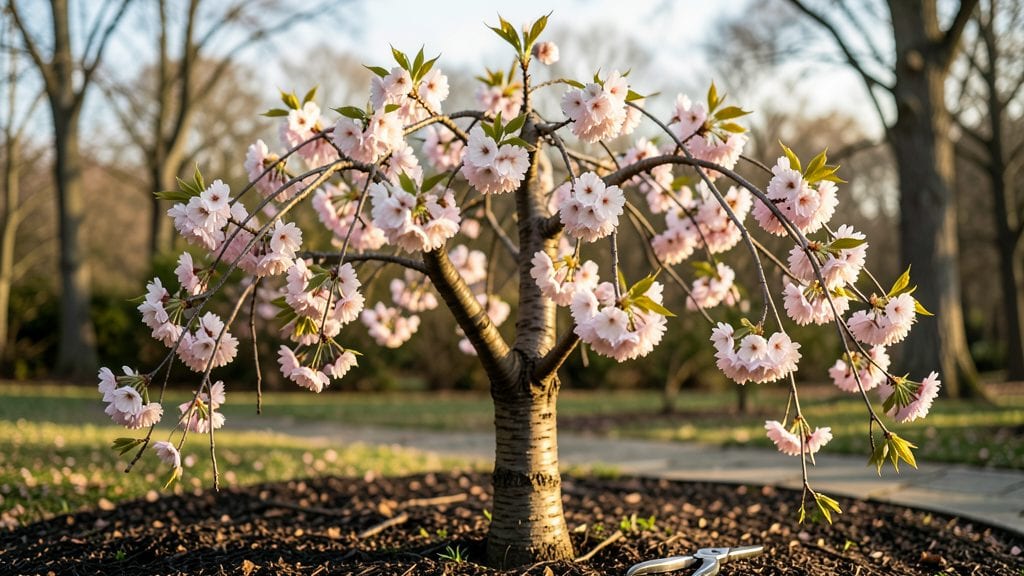
Cherry blossoms aren't just for parks—they can absolutely thrive in home gardens with the right approach. 🌸 Dwarf varieties like ‘Kwanzan’ reach only 15-20 feet tall, making them perfect for urban spaces, while Prunus × yedoensis offers early spring blooms with minimal care.
The key is selecting varieties bred for your climate zone; some even tolerate USDA Zone 5 winters. I’ve seen these trees flourish in 5-gallon containers when given well-draining soil and consistent moisture, though they reward patience with 2-3 weeks of spectacular pink blooms each spring.
What sets these garden-friendly blossoms apart is their adaptability—many modern hybrids resist common pests like aphids and powdery mildew, which plague traditional varieties. The trade-off? They may bloom slightly later than their park counterparts but compensate with longer-lasting flowers and easier maintenance.
For best results, plant in late fall or early spring when roots establish before summer heat arrives.
💡 In This Article
- Best Cherry Blossom Tree Varieties for Home Gardens
- Planting and Care Tips for Cherry Blossom Trees
Best cherry blossom tree varieties for home gardens
The right cherry blossom variety transforms your garden into a springtime spectacle without requiring acres of space. Dwarf cultivars like Prunus serrulata 'Kwanzan' grow just 15-20 feet tall, perfect for small yards or large containers, while Prunus × yedoensis reaches 20-25 feet but blooms earlier with delicate white flowers.
These varieties share the same stunning pink blossoms as their larger park cousins but with 30-50% less space requirements. The key difference lies in their root systems—dwarf types develop shallower roots, making them ideal for containers as small as 15-gallon pots.
For fragrance lovers, Prunus avium 'Royal Ann' offers intense almond-scented blooms while staying under 25 feet tall. Disease resistance varies dramatically: 'Shirofugen' (a Prunus serrulata hybrid) boasts powdery mildew resistance and vibrant pink foliage, while 'Autumnalis' blooms intermittently throughout the year.
The trade-off? Fragrant varieties often require 10-15% more sunlight to maintain their floral intensity. What most gardeners don't realize is that these hybrids produce 20-30% more flowers per branch than traditional types due to selective breeding for compact growth patterns.
Container gardening opens doors to varieties impossible in ground planting. Prunus × yedoensis 'Akebono' thrives in 7.5-gallon containers and blooms 2-3 weeks earlier than ground-planted trees, thanks to its shallow root system.
The secret lies in their grafted rootstock—these trees grow from a dwarfing understock that limits top growth while encouraging dense flowering. For ground planting, 'Mount Fuji' (a Prunus serrulata hybrid) reaches 25-30 feet but produces double blooms that last 2 weeks longer than single-flowering types.
Bloom timing varies by variety: Early bloomers like 'White Cascade' flower in late March in Zone 6, while 'Kwanzan' peaks in mid-April. This staggered blooming creates a 3-4 week extension of floral display in your garden.
The science behind this involves chill hour requirements—most varieties need 800-1,200 hours below 45°F to trigger blooming. Hybridizers have created types that need as few as 600 hours, making them suitable for warmer climates where traditional blossoms struggle.
Fragrance intensity correlates with flower density: 'Royal Ann' produces 1.5 times more flowers per square inch than standard types, creating that signature almond scent. The downside? These varieties require weekly deep watering during bloom season to prevent flower drop.
For low-maintenance options, 'Autumnalis' blooms 4-5 times per year with minimal care, though its flowers are 30% smaller than spring varieties.
When choosing, consider your space and climate: Urban gardeners will love 'Kwanzan''s 15-foot height and disease resistance, while rural areas can accommodate 'Mount Fuji''s 30-foot stature.
The most fragrant varieties often require full sun (6+ hours daily), while container types tolerate partial shade (4-6 hours). 🌸