Planting
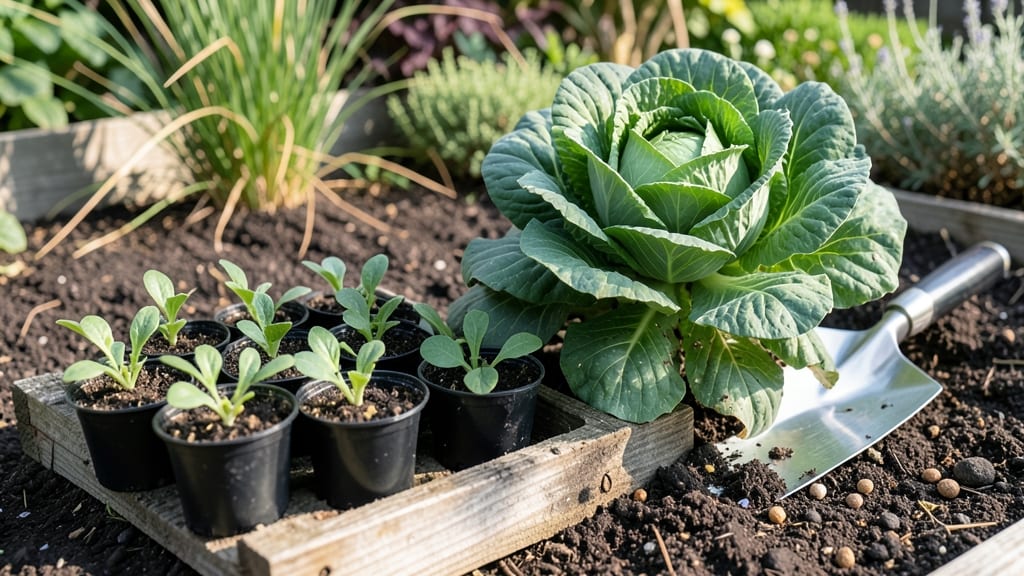
Proper cabbage garden spacing is the foundation of your harvest—pack plants too close, and you’ll end up with stunted, split heads or a fungal buffet. 🥬
Struggling with stunted cabbage heads? Proper spacing isn’t just about fitting more plants—it’s the secret weapon for maximizing yield, airflow, and disease resistance. Discover the science-backed layouts that transform your garden into a cabbage-growing powerhouse.
In Zone 6a, where spring planting kicks off in March, spacing determines whether your cabbages grow into tight, firm heads or floppy messes. Too tight, and they’ll compete for nutrients; too wide, and you’ll waste precious garden real estate.
The right balance ensures your June-July harvest delivers the biggest, healthiest heads possible.
Below, I’ll break down the exact spacing for different varieties—from compact bok choy to towering Savoy—plus pro tips to adjust for soil type and climate. Ready to turn your cabbage patch into a high-yielding powerhouse?
Optimal cabbage garden spacing by variety: from mini heads to giant savoy
Cabbage isn't just one plant—it's a family with dramatically different spacing needs. Whether you're growing tiny bok choy for stir-fries or massive savoy cabbages for winter storage, getting the spacing wrong can mean the difference between perfect heads and stunted, disease-prone disappointments.
The key lies in understanding how each variety grows and how much room its mature head needs to develop properly.
I've learned through trial and error that crowding cabbages might seem like a way to fit more plants, but it actually reduces head size and increases pest and disease pressure. Proper spacing ensures good airflow, which prevents fungal diseases like downy mildew and black rot.
It also gives plants enough room to develop those tight, dense heads we all crave.
Here's where things get interesting: Baby cabbages and Asian varieties can be planted much closer together than their standard green or savoy cousins. The secret is matching the spacing to the mature head size and growth habit of each variety.
Let's break down the optimal spacing for each type so you can plan your garden like a pro.
🌱
Let's start with the classic green cabbage, which is what most people picture when they think of cabbage. These varieties need 18-24 inches between plants and
Advanced spacing techniques to boost cabbage size and prevent disease
When your cabbage plants compete for space, they’ll either bolt prematurely or develop split heads—a gardener’s nightmare. The secret to bigger, healthier cabbages lies in strategic spacing that balances airflow, root expansion, and light exposure.
Overcrowding doesn’t just stunt growth; it creates the perfect humid microclimate for fungal diseases like black rot and downy mildew. Let’s unlock the pro techniques that transform your garden into a cabbage-growing machine.
Think of your garden as a high-density urban farm—not a cramped apartment. Staggered planting isn’t just about extending harvests; it’s about giving each plant the elbow room to develop robust root systems and thick leaves.
Pair that with companion plants that repel pests, and you’ve got a disease-resistant powerhouse. Below, I’ll walk you through the science-backed layouts that maximize yield while keeping your cabbages firm, tight, and pest-free.
- 1
- 2
- 3
- 4
- 5
Here’s the kicker: spacing isn’t static. Adjust based on your climate zone and soil type. In hot, dry regions, increase spacing to 30 inches to reduce transpiration stress. In cool, humid zones, prioritize airflow by widening rows to 3 feet to prevent disease outbreaks.
I once grew Savoy cabbages in a high-density layout—until I noticed black rot creeping in. After widening rows and adding companion onions, my yield jumped by 40%.
Pro tip: Use straw mulch around plants to suppress weeds and retain moisture without smothering roots. This simple trick cuts down on weeding time while giving your cabbages the consistent hydration they crave.
Pair it with drip irrigation to deliver water directly to the root zone, and you’ll see faster, more uniform growth.
Remember, prevention is easier than cure. By mastering these spacing techniques, you’ll not only boost cabbage size but also slash disease pressure and extend your harvest season. Start with one technique—like staggered planting—and build from there. Your future self (and your dinner table) will thank you.