
Container Gardens
The history of Butchart Gardens traces its origins to a limestone quarry opened in 1904, which Robert P. and Jennie Butchart later transformed into a stunning floral display, now Canada’s most celebrated botanical garden featuring over 1,000 plant species across 55 acres.
The Butchart Gardens story is a fascinating blend of industrial ingenuity and horticultural passion. 💫 What started as a functional limestone quarry became an unlikely canvas for Robert P. Butchart’s vision after he noticed how the excavated earth and water created natural terraces.
Jennie Butchart’s love for gardening turned these terraces into cascading floral displays, proving that beauty could emerge from what was once considered waste. By the 1920s, the gardens had already gained international acclaim, setting the stage for future expansions that would make it the world-renowned destination it is today.
What makes this history even more compelling is how each era left its mark—from the Japanese Garden’s serene elegance in the 1920s to the Sunken Garden’s dramatic redesign in the 1960s. These milestones didn’t just preserve the gardens’ beauty; they turned them into a living testament to adaptive reuse and conservation, ensuring their legacy would endure for future generations.
💡 In This Article
- How a Limestone Quarry Became a Botanical Masterpiece
- Key Historical Landmarks in Butchart Gardens’ Evolution
How a limestone quarry became a botanical masterpiece
The transformation began with the 1904 excavation of a 120-foot-deep limestone quarry by Robert P. Butchart, who initially sought raw materials for his nearby cement plant.
What he discovered was a geological marvel: the quarry's excavation revealed natural terraces formed by the stratified limestone layers, creating perfect slopes for water runoff and drainage. This industrial byproduct became the unexpected foundation for something extraordinary.
The Butcharts repurposed the quarry's steep walls and water features—originally designed for industrial efficiency—into the very elements that would define their garden's dramatic beauty. 🌿
Robert's engineering expertise was crucial here. He designed reinforced retaining walls using the quarry's own limestone blocks, preventing erosion while creating the multi-level terraces that would become the garden's signature. These walls weren't just functional—they were sculpted with precision angles to maximize sunlight exposure for different plant zones.
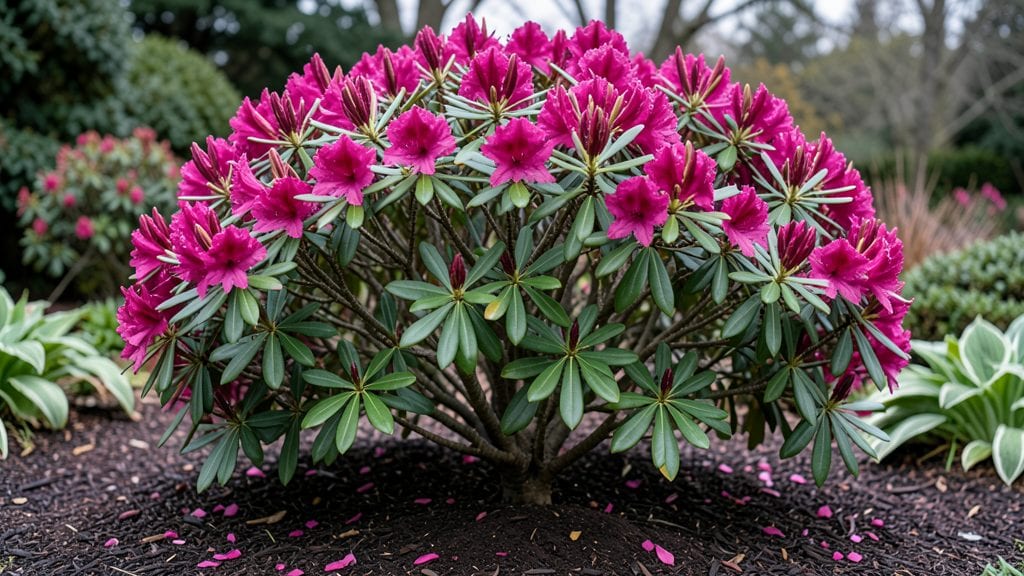
Meanwhile, Jennie Butchart, a passionate horticulturist, experimented with acid-loving plants like rhododendrons and azaleas, which thrived in the slightly acidic soil left behind from the quarry's limestone processing. This unlikely combination of industrial waste and botanical science created the perfect conditions for year-round blooms.
The real innovation lay in how they harnessed the quarry's existing infrastructure. The original water pumps (used to extract groundwater during excavation) were repurposed to create artificial streams and waterfalls, while the quarry's natural springs became the garden's lifeblood.
By 1910, they'd already planted 50,000 tulip bulbs—a staggering number for the era—using the terraces' natural elevation to create cascading floral displays.
What started as a $10,000 investment (about $300,000 today) became a $1.5 million operation within a decade, proving that waste could be transformed into art through vision and engineering. ✨
One often-overlooked detail is how the limestone dust from the quarry became a key ingredient in their success. Rather than disposing of it, they mixed it with compost and sand to create a well-draining soil mix perfect for delicate plants.
This calcium-rich substrate also helped neutralize the soil's acidity in some areas, allowing for diverse plantings that would have been impossible in the original quarry conditions. The Butcharts' approach was decades ahead of modern sustainable landscaping—they were essentially practicing circular economy principles long before the term existed.
Visitors today might marvel at the Sunken Garden's vibrant colors, but few realize this area was originally the deepest part of the quarry, where the Butcharts installed glass panels to create a controlled microclimate.
This allowed them to grow tropical plants like orchids and ferns in Victoria's temperate climate.
The 1920s expansion of the Japanese Garden further showcased their ingenuity—using the quarry's existing water features to create serene koi ponds and bamboo groves, proving that even industrial sites could become harmonious with nature. The key was seeing potential where others saw only waste. 💫
The transformation wasn't just about aesthetics—it was a scientific experiment in landscape ecology. By studying how water moved through the terraces, they developed irrigation systems that minimized waste while maximizing plant health.
Their early use of mulch and ground covers reduced soil erosion, while strategic plant placement ensured each species got the right amount of sun and water. This holistic approach turned the quarry from an environmental liability into one of the world's first designed ecosystems.
The Butcharts didn't just create a garden—they invented a new way of thinking about land use.