
Shrubs
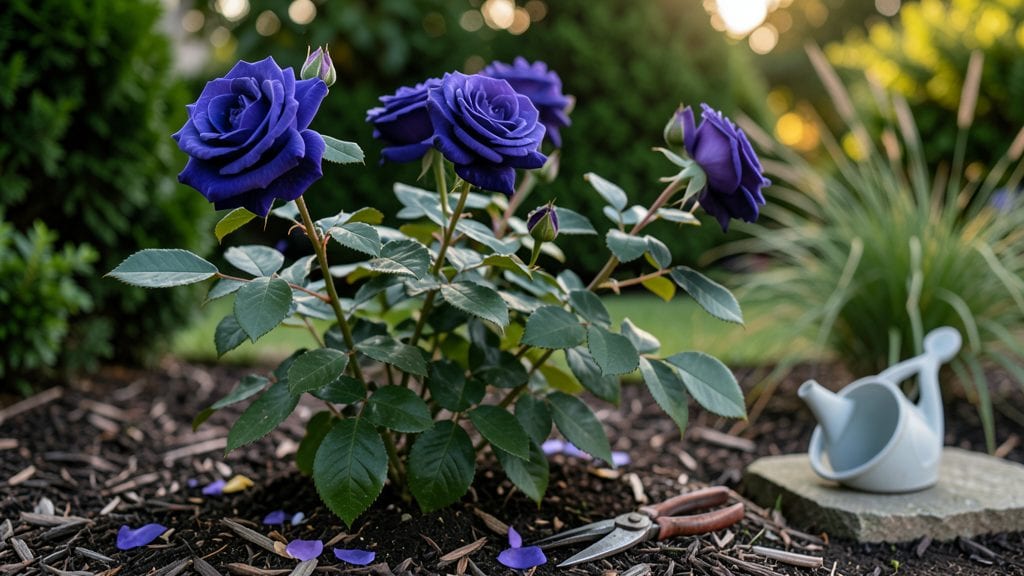
Blue roses aren’t just a dream—they’re a thrilling reality waiting in your garden. 🌸 I’ve grown some of the rarest blue-hued roses, like the striking 'Blue Moon' and the bold 'Blue Paradise,' and the secret to their vibrant color lies in pruning techniques most gardeners miss.
These blooms aren’t just unusual; they’re a statement piece that turns heads and fills the air with a fresh, almost floral perfume.
Start with well-draining soil rich in organic matter and full sun—at least 6 hours daily. Blue roses need consistent moisture but hate soggy roots, so mulch around the base to keep soil even.
The real magic happens in pruning: cut back dead or weak stems in early spring, then shape lightly after blooming to encourage more vivid flowers. Fertilize lightly with rose-specific feed every 4-6 weeks during growing season—too much nitrogen dulls that signature blue hue.
What you’ll end up with is a bush bursting with jewel-toned blooms that last longer and resist fading better than typical roses. The color deepens with proper care, and you’ll enjoy weeks of continuous flowering if you deadhead spent blooms regularly.
These roses even attract pollinators like crazy, making your garden hum with life.
Now, here’s the tricky part: blue roses are more sensitive to powdery mildew, so space plants 3-4 feet apart for airflow. If your blooms start looking dull, a neem oil spray every 2 weeks keeps diseases at bay.
With these tricks, you’ll have blue roses that outshine every other garden—and prove that growing the impossible is just a pruning cut away.
📚 In This Guide
- What you need
- Instructions
- Tips and common mistakes
- Wrapping up and next steps
What you need
- ● Blue Rose Varieties: Start with Blue Babe (a rare, true-blue rose) or Blue Moon (a soft lavender-blue hybrid). Purchase 3-5 bare-root plants from a reputable nursery.
- ● Well-Draining Soil: A mix of 50% garden soil, 30% compost, and 20% perlite or sand (to prevent root rot). pH should be between 6.0–6.5.
- ● Pruning Tools: Sharp bypass pruners (for clean cuts)
- ● Disinfectant (rubbing alcohol or bleach solution) to sterilize tools between cuts
- ● Gloves (to protect from thorns and sap)
- ● Fertilizer: A balanced rose fertilizer (10-10-10 or 20-20-20) applied every 4–6 weeks during growing season.
- ● Mulch: 2–3 inches of organic mulch (e.g., shredded bark or straw) to retain moisture and regulate soil temperature.
- ● Support System: 4–6-foot rose trellis or stakes (for climbing varieties) + soft ties or Velcro strips.
- ● Rose-specific pesticides/fungicides (e.g., neem oil or copper-based sprays for pests/diseases).
- ● Drip irrigation system or soaker hoses (for consistent watering).
- ● Epsom salt (magnesium sulfate) for foliar sprays (1 tbsp per gallon of water, monthly).
- ● Blue rose companion plants (e.g., lavender, catmint, or marigolds) to deter pests and enhance color contrast.
- ● Garden journal to track pruning dates, blooms, and growth patterns.
Step-by-step guide to cultivating blue roses
Here's how to coax those rare blue-tinged blooms with pruning secrets most gardeners miss.
🌱 Step 1: Select and Prepare the Right Varieties
True blue roses don't exist in nature, but some varieties like 'Blue Moon,' 'Blue Yesterday,' and 'Blue Lagoon' develop stunning blue-gray hues when grown under specific conditions. Start with one of these hybrid teas or floribundas from a reputable nursery. I always choose plants with strong stems and healthy foliage—those with yellowing leaves or weak canes rarely adapt to the special care blue roses need.
Plant in well-draining soil with a pH of 6.0-6.5, as slightly acidic conditions enhance the blue pigmentation. Amend heavy clay with 2-3 inches of compost and mix in 1 cup of bone meal per plant to provide phosphorus for vibrant blooms. The key is patience—these varieties take 2-3 years to reach full flowering potential, so give them space in your garden.
☀️ Step 2: Position for Optimal Light and Color Development
Blue roses need full sun (6-8 hours daily) to develop their signature color, but they hate intense afternoon heat. I plant mine where they get morning sun and afternoon shade, like near a north-facing wall or under a deciduous tree that provides shade in summer. In hot climates, use light shade cloth (30-50%) during peak heat to prevent leaf scorch while still allowing enough light for color development.
Watch for color shifts—you'll notice the blue-gray tones deepen as temperatures drop in spring and fall. If your roses stay pale or greenish, they're not getting enough light. Move them gradually over 7-10 days to avoid shocking the plants. Mulch with 2 inches of organic mulch to retain moisture and cool roots during hot days.
✂️ Step 3: Apply the "Blue Rose Pruning Secret"
This is where most gardeners go wrong—they prune blue roses like regular roses. Instead, use light, strategic pruning to encourage more blooms with better blue pigmentation. In early spring, remove only dead or crossing branches, cutting just above an outward-facing bud. Never cut into old wood, as blue roses bloom on new growth.
After the first flush of blooms, give your roses a second light pruning in early summer to promote another round of flowers. I always prune just above a set of 5 healthy leaves—this ensures enough foliage to support the energy demands of blue pigment production. Avoid heavy pruning in fall, as blue roses need their leaves to build energy for next year's blooms.
💧 Step 4: Water and Feed for Vibrant Blue Blooms
Blue roses need consistent moisture—never let them dry out completely, but avoid soggy soil. Water deeply 1-2 times per week, aiming for 1-1.5 inches of water each time. I water in the morning so the foliage dries quickly, reducing disease risk. Use a soaker hose to deliver water at the base without wetting the leaves, which helps prevent fungal issues.
Feed with a balanced rose fertilizer (10-10-10) every 4-6 weeks during the growing season, but reduce nitrogen in late summer to encourage stronger blooms. I also add 1 tablespoon of Epsom salt per plant monthly to boost magnesium, which enhances the blue-gray color intensity. Stop fertilizing 6-8 weeks before your first frost to allow the plant to harden off for winter.
🌿 Step 5: Protect and Maintain for Long-Term Blue Beauty
Blue roses are more sensitive to pests and diseases than traditional roses, so I monitor them closely. Spray with neem oil every 2 weeks during growing season to deter aphids and black spot. If you notice yellowing leaves, it's often a sign of iron deficiency—sprinkle 1 tablespoon of iron chelate around the base and water it in.
In winter, mulch heavily with 4-6 inches of straw or shredded leaves to insulate roots. Blue roses are less cold-hardy than some varieties, so in zones below USDA 5, I wrap the canes with burlap and cover with a frost blanket during extreme cold snaps. With proper care, your blue roses will reward you with stunning, rare blooms for years to come.
Tips & tricks for perfect blue rose cultivation
Here's what I've learned after years of growing these elusive beauties—tricks that make all the difference between pale blooms and stunning blue-gray roses.
The Variety Matters: Not all blue roses are created equal. 'Blue Moon' and 'Blue Yesterday' develop the deepest hues, but they require perfect conditions. I've found that hybrid teas like these produce more consistent color than floribundas. If you're starting with bare-root plants, soak them in water for 24 hours before planting to ensure strong root establishment. This gives them the best chance to adapt to their slightly acidic soil environment.
Lighting Strategy: The 6-8 hours of full sun is non-negotiable for color development, but timing is everything. I've noticed the blue-gray tones deepen most dramatically in morning sun with afternoon shade—almost like they're basking in the cooler light. In hot climates, that 30-50% shade cloth isn't just about preventing leaf scorch; it's about protecting the delicate pigments from fading. I often see gardeners skip this and end up with pale, almost greenish blooms.
Pruning Precision: This is where most people mess up. When you're doing that second light pruning in early summer, look for the 5 healthy leaves—count them! I've seen people prune too close to the base, which removes too much foliage and weakens the plant's ability to produce those vibrant pigments. Always cut just above a leaf bud that's facing outward. And never prune in fall—those leaves are working hard to store energy for next year's blue beauties.
Soil Science: That 6.0-6.5 pH isn't just a number—it's the sweet spot for anthocyanin production, the compound that gives blue roses their signature color. I test my soil every spring and adjust with sulfur if needed. The 1 cup of bone meal per plant isn't just about phosphorus—it's about giving your roses the building blocks for those stunning blooms. And that 2-3 inches of compost? It's not just for drainage—it's creating an environment where beneficial microbes can help your roses thrive.
Pro Tips for Blue Rose Gardening
- Here's what I've learned after years of growing these elusive beauties—tricks that make all the difference between pale blooms and stunning blue-gray roses.
- The Variety Matters: Not all blue roses are created equal.
- Lighting Strategy: The 6-8 hours of full sun is non-negotiable for color development, but timing is everything.
Frequently asked questions
Got questions about cultivating those dreamy blue roses? You’re not alone—this rare beauty comes with its own set of quirks! Below, we tackle the most common curiosities, from timing to troubleshooting, so you can grow with confidence.
Can I really grow a true blue rose?
Nope! True blue roses (like the iconic Blue Moon) don’t exist in nature—they’re often deep purples or blues with a hint of violet. For a "blue" look, try Blue Boy (a deep blue-purple hybrid) or Blue Lagoon, which leans toward indigo. If you’re set on electric blue, consider dyeing white roses with petal-safe food coloring (temporarily!).
When’s the best time to plant blue roses?
Plant in early spring (after the last frost) or fall (6–8 weeks before your first hard freeze). Blue roses thrive in cool weather and need time to establish roots before summer heat. If you’re propagating from cuttings, late spring is ideal—just keep them in shade until they root!
Why aren’t my blue roses blooming?
Common culprits: over-pruning (cut back only after blooms fade), poor sunlight (they need 6+ hours of direct sun), or nutrient deficiencies (feed with rose-specific fertilizer in spring and summer). Check for pests too—aphids and spider mites love sapling roses! Try a light prune in early spring to encourage new growth.
What’s the secret to keeping blue roses blue?
Color intensity fades with age, but you can preserve vibrancy by:
- Deadheading spent blooms to redirect energy.
- Avoiding overwatering (soggy soil = dull petals).
- Using a balanced fertilizer (10-10-10) every 4–6 weeks.
Are blue roses harder to grow than other roses?
Not necessarily! They follow the same care rules as other roses but may need extra attention to soil pH (aim for 6.0–6.5). Blue roses often bloom later in the season, so be patient. If you’ve mastered hybrid teas or floribundas, you’re already halfway there. Start with Blue Boy—it’s one of the hardiest!
Can I propagate blue roses from cuttings?
Take 4–6 inch cuttings from healthy stems in summer, dip in rooting hormone, and plant in moist perlite or sand. Keep them in bright, indirect light (no direct sun!) and mist daily. Roots should form in 4–6 weeks. Pro tip: Use a heat mat to speed up rooting!
Wrapping up and next steps
Blue roses may be rare in nature, but with the right pruning tricks, patience, and care, you can cultivate those dreamy blue-tinged blooms in your garden! 🌸 Whether you’re growing Blue Moon roses or experimenting with dye techniques, the key lies in understanding their unique needs—from soil prep to strategic trimming.
Remember, every gardener starts somewhere, and even the most stunning roses began as a single cutting.
Ready to take the next step? Start small—plant a single blue rose bush or gather a few cuttings to experiment with. Document your progress, tweak your techniques, and soon, you’ll be sharing your secret to blue blooms with fellow gardeners. Happy pruning! ✂️💙