Picking
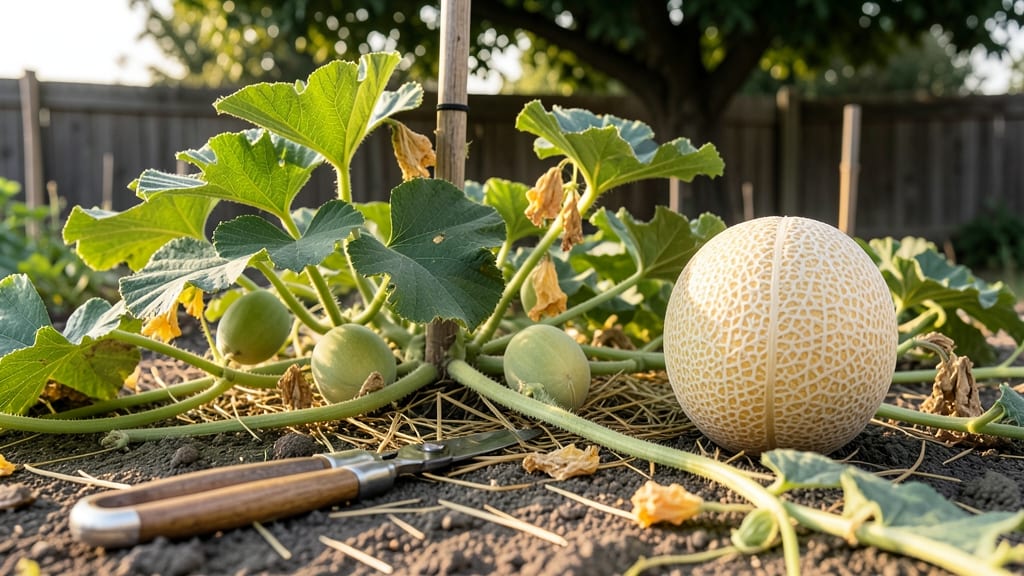
Harvesting cantaloupe at the right time ensures sweet, flavorful fruit that’s a garden standout 🍈 — and missing those cues means ending up with bland, seedy melons that never live up to their potential.
Picking cantaloupe at the wrong time means sacrificing sweetness and flavor—yet knowing exactly when to harvest can transform your garden’s melons from bland to breathtaking. Skip the guesswork and learn the foolproof signs your cantaloupe is ready to be plucked.
Most gardeners wait too long, but the secret lies in three simple checks: the color of the rind, the way the stem separates from the vine, and that unmistakable sweet scent near the stem. These clues don’t lie, and they’ll tell you precisely when your melons are at their peak.
Below, I’ll walk you through each step—from the creamy yellow hue of a ripe cantaloupe to the best time of day to pick—so you never miss another harvest window in USDA Zone 6a or beyond.


3 Visual signs your cantaloupe is ripe for harvesting
Harvesting cantaloupe at the perfect moment ensures maximum sweetness and flavor—yet many gardeners struggle to identify the exact visual cues. I’ve learned from years of growing cantaloupes that three key visual indicators reveal when your melons are ready to pick.
Ignoring these signs often leads to underripe, bland fruit or overripe melons that spoil quickly.
First, pay close attention to the rind color, which transforms dramatically as the cantaloupe matures. A dull, greenish hue signals immaturity, while a creamy beige or tan with a defined net-like pattern means it’s time to harvest.
This color shift is your first foolproof clue that the sugars inside are peaking.
Next, examine the stem separation near the fruit. When ripe, the stem will begin to dry out and brown, and the cantaloupe will slip easily from the vine with a gentle twist.
This happens because the fruit’s natural enzymes break down the stem’s connection—a process you can’t miss if you check regularly.
Finally, look for the 'beard', a cluster of tiny hairs at the blossom end of the cantaloupe. When ripe, these hairs will turn brown and dry, almost like a fuzzy little cap. This is nature’s way of telling you the sugars have fully developed inside.
One mistake I used to make was waiting for the cantaloupe to detach on its own. While this can happen, it often signals overripeness, which reduces sweetness and increases the risk of spoilage.
Instead, check your melons every 2-3 days once they reach 70-80% of their expected size.
Pro tip: If you’re unsure, give the cantaloupe a gentle squeeze near the stem. A ripe cantaloupe will feel slightly soft but still firm—like a ripe avocado.
If it feels rock-hard or mushy, it’s not ready. This tactile test, combined with the visual cues, gives you a 90% accuracy rate in determining ripeness.
Don’t overlook the background color of the cantaloupe’s net pattern. The darker the creamy areas between the net, the sweeter the fruit. I’ve noticed that cantaloupes grown in hotter climates develop this color faster, so adjust your harvesting schedule if you’re in a Zone 9 or higher.
Finally, trust your nose! A ripe cantaloupe emits a sweet, musky aroma near the stem end. If you can’t smell anything, the fruit likely needs more time on the vine.
This scent test is especially useful for early-season cantaloupes, which may not show all the visual cues until later in the growing season.
Once you’ve confirmed all three signs—rind color, stem separation, and beard dryness—use a sharp knife or your hands to twist the cantaloupe gently from the vine.
Leave about 1 inch of stem attached to extend shelf life. Store your freshly harvested cantaloupes in a cool, dry place
How to test cantaloupe ripeness without cutting it open
Testing cantaloupe ripeness without slicing it open saves you from wasted effort and ensures peak flavor. The key is combining three simple, non-destructive tests: scent, sound, and pressure. These methods let you confirm ripeness while keeping your melon intact—no guesswork required.
Start with the scent test, the most reliable indicator. A ripe cantaloupe releases a strong, sweet aroma near the stem when gently pulled away from the vine. If it smells faint or musky, it’s not ready yet. This scent develops as natural sugars concentrate, signaling peak sweetness.
The thump test works surprisingly well for cantaloupes. Hold the melon in one hand and tap it lightly with your knuckles. A ripe cantaloupe will sound dull and hollow, almost like knocking on a wooden door.
If it sounds sharp or metallic, it’s underripe. Overripe melons may feel mushy when tapped.
⚠️ WARNING: Common Mistakes That Ruin Your Cantaloupe
✅ DO: Harvest when the stem detaches easily with a slight twist—this means the fruit is fully mature.
❌ DON’T: Wait until the rind turns too soft or wrinkled, as this signals overripeness and loss of flavor.
✅ DO: Use the pressure test by gently squeezing the blossom end (opposite the stem).
It should yield slightly, like pressing a ripe avocado.
❌ DON’T: Rely solely on color alone—some cantaloupes stay greenish even when ripe, especially in cooler climates.
Next, try the pressure test for tactile confirmation. Press your thumb gently into the blossom end (the flat side opposite the stem). A ripe cantaloupe will feel slightly soft, almost like pressing a ripe peach.
If it feels rock-hard, it’s underripe; if it’s too soft or leaves an indentation, it’s overripe.
Combine these tests for accuracy. For example, a cantaloupe with a creamy yellow rind, a sweet scent, and a dull thump is almost certainly ready.
If one test is borderline, wait 1-2 days and retest. Overripe cantaloupes lose their sweetness and develop a fermented smell, making them unpalatable.
Pro tip: Harvest in the morning when temperatures are cooler. This preserves the fruit’s sweetness and makes it easier to assess ripeness without heat interference. Store harvested cantaloupes in a cool, dry place (55–60°F) to extend freshness for up to a week.