
Shrubs
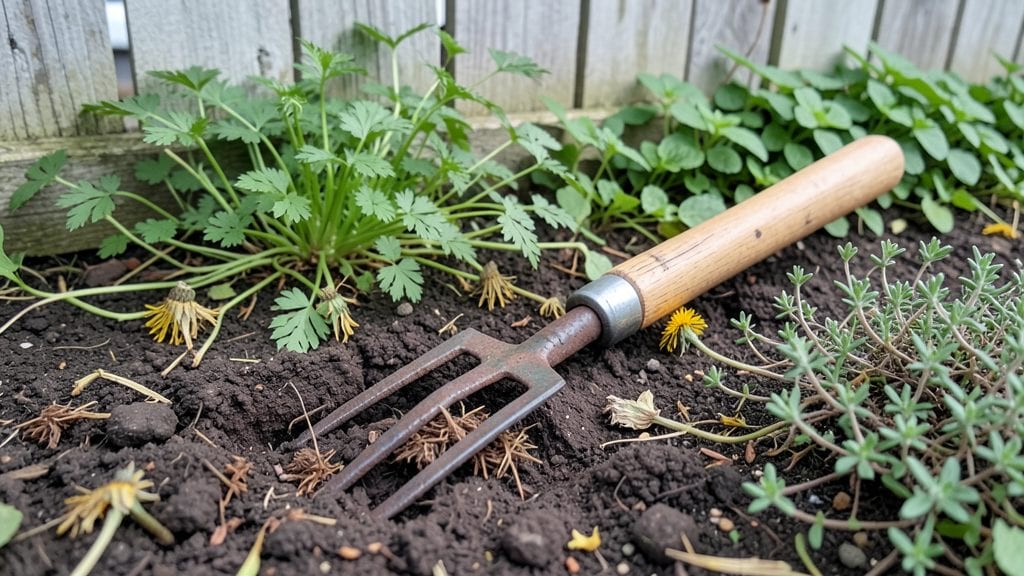
The name "trowel" covers a broad category of handheld gardening tools, but the distinction between a trowel, dibber, and hand fork comes down to blade design and purpose. 🌱 A trowel's flat edge makes it perfect for lifting delicate plants without damaging roots, while a dibber's pointed tip lets you poke precise planting holes for seeds or bulbs.
Hand forks, with their multiple prongs, are built for breaking up compacted soil or removing weeds from tight corners—ideal for container gardening or small flower beds.
What many gardeners don’t realize is how material affects performance. Stainless steel blades resist rust and hold their edge longer, while lightweight aluminum options reduce hand fatigue during extended use.
I always recommend choosing based on your most frequent tasks—if you’re mostly transplanting herbs, a sturdy trowel with a comfortable grip is your best bet, while bulb planters will appreciate a dibber’s precision.
💡 In This Article
- Trowel vs Dibber vs Hand Fork: Blade Designs Explained
- Choosing the Right Mini Shovel for Your Garden Tasks
Trowel vs dibber vs hand fork: blade designs explained
A trowel's blade typically measures between 4-6 inches long with a flat, rectangular shape designed for maximum surface area contact. This broad edge distributes pressure evenly when lifting plants, preventing root damage during transplanting.
The blade's slight angle (about 15-20 degrees) helps slice cleanly through soil while maintaining grip on delicate stems. 🌱 Most gardeners notice how the flat edge also makes trowels ideal for spreading compost or mixing soil amendments in small containers.
Dibbers stand out with their thin, tapered blades (often 3-5 inches long) that end in a sharp point. This design creates precise planting holes—critical when sowing seeds at specific depths (like 1/4 inch for tiny flower seeds).
The pointed tip minimizes soil disturbance, which is essential for bulbs that need undisturbed soil layers. Unlike trowels, dibbers lack a flat surface, making them unsuitable for lifting plants but perfect for creating vertical planting channels in tight spaces.
Hand forks feature 3-4 curved tines spaced about 1/2 inch apart, each 3-5 inches long. These prongs work like miniature pitchforks, breaking up compacted soil without disturbing plant roots. The spacing allows dirt to fall through while catching larger debris.
This design makes them ideal for weeding in rock gardens or loosening soil around established perennials where trowels would struggle to reach without damaging foliage.
The material choice significantly impacts performance. Stainless steel blades (like those on Fiskars trowels) resist rust and maintain sharpness longer, while aluminum versions (common in dibbers) weigh 30-40% less—reducing hand fatigue during repetitive tasks.
Ergonomic handles with non-slip grips (like rubberized coatings) make all three tools more comfortable for extended use, especially when working in damp conditions where metal can become slippery.
Consider the blade's weight distribution: trowels balance 60% blade to 40% handle for leverage, dibbers are 70% blade-heavy for precision, while hand forks distribute weight evenly across tines to prevent tipping. This explains why dibbers feel more delicate despite their sharpness—designed for controlled, gentle insertion rather than heavy digging.
For container gardeners, multi-tool designs combine a trowel blade with a dibber tip, offering versatility in small spaces. The key is matching the tool's design to your soil type: sandy soils need sharper points (dibbers), while clay benefits from trowels' flat edges to slice through compacted layers. 💫