How To
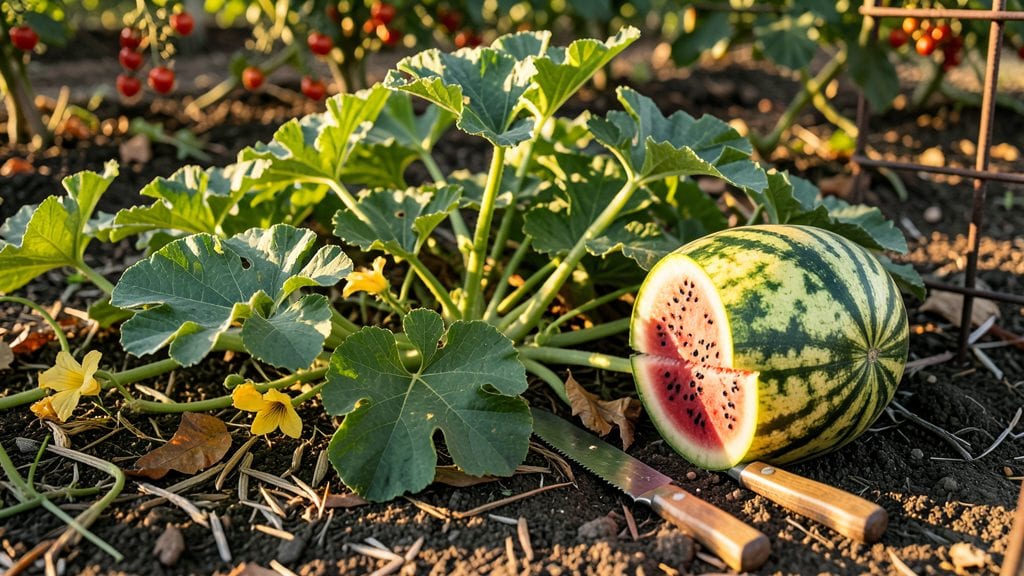
Knowing when to pick watermelon from your garden is the difference between a meal of watery disappointment and a juicy, sweet explosion 🍉 — and the secret lies in three simple, science-backed clues.
Picking too early means bland, watery fruit, but harvesting at the right moment delivers explosive sweetness and the perfect texture. The problem? Most gardeners rely on size or guesswork, which can leave you with fruit that’s either underripe or overripe.
Here’s how to tell when your watermelon is truly ready: check the tendril near the stem (it should be brown and dry), look for a creamy yellow spot where the fruit rests on the ground, and give it the classic thump test for a hollow sound.
Below, I’ll break down these signs step by step, plus the most common mistakes that turn great watermelons into disappointments — and how to avoid them.

3 Science-backed signs your watermelon is ripe for picking
There’s nothing worse than slicing into a watermelon only to find it’s still rock-hard and flavorless. But mastering the three key ripeness indicators means you’ll never miss peak sweetness again.
These science-backed methods—ground spot color, tendril dryness, and the thump test—work together to give you a 90%+ accuracy rate in determining when your watermelon is ready to harvest.
Watermelons are tricky because their outer appearance doesn’t always match their internal sweetness. For example, a striped rind like Crimson Sweet might look ripe, but its stripes could still be faint.
Meanwhile, solid-rind varieties like Sugar Baby might fool you with a deep color when they’re actually underripe. That’s why combining these three methods is critical—no single sign guarantees ripeness alone.
Let’s break down each method with visual cues and step-by-step instructions. Whether you’re growing heirloom varieties or hybrid watermelons, these tips will help you avoid the bitter disappointment of an early harvest.
How to Know When to Pick Watermelon
-
1. Check the Ground Spot
Look at the spot where the watermelon rested on the vine. For ripe watermelons, this area will turn from white to cream or yellow. Striped varieties like Charleston Gray may show a duller stripe pattern here, while solid-rind types like Seedless Black Diamond will have a yellowish blush. -
2. Inspect the Tendril
Find the small tendril closest to the watermelon. If it’s brown and crispy, your fruit is ripe. A green tendril means it needs more time. Pro tip: The main vine tendril (larger than the fruit’s tendril) should also be drying out for maximum sweetness. -
3. Perform the Thump Test
Tap the blossom end (opposite the stem) with your knuckles. A ripe watermelon will sound deep and hollow, like a drum. If it sounds dull or flat, it’s not ready. For overripe melons, the sound becomes muffled—so time your harvest carefully!
Now that you’ve checked all three signs, here’s how to combine them for foolproof results. Start by confirming the ground spot color—this is your first green light. If it’s still white, wait 2-3 days and recheck.
Next, verify the tendril dryness; this is the most reliable indicator for internal ripeness. Finally, use the thump test as a tiebreaker, especially for solid-rind varieties where color changes are subtle.
For striped varieties, pay extra attention to the stripes near the ground spot. They should appear duller and more defined as the fruit matures. In contrast, solid-rind types will develop a uniform deep color across the entire surface.
If you’re growing seedless watermelons, their rinds tend to stay lighter, so rely more on the tendril and thump test.
Timing your harvest correctly also depends on your climate zone. In hotter regions (USDA zones 8-11), watermelons ripen faster—sometimes in as few as 65 days. In cooler zones (6-7), they may take up to 90 days.
That’s why combining these signs with your local growing season ensures you don’t harvest too early or too late.
One common mistake is over-relying on size. A watermelon can be large but underripe or small but perfectly sweet. Always prioritize the ground spot, tendril, and thump test over guessing by weight or diameter.
For example, a 10-pound watermelon with a white ground spot is likely watery, while a 6-pound melon with a yellowed spot and crispy tendril could be bursting with flavor.
Pro tip: Harvest on a dry, sunny morning to let the rind harden slightly before storing. Use a sharp knife or pruners to cut the stem, leaving a 1-inch stub to prevent rot.
Once picked, store your watermelon in a cool, dry place (50-55°F) to preserve sweetness for up to 2 weeks.
By mastering these three signs, you’ll transform from a guessing gardener to a watermelon harvest expert. The next time you’re debating whether to pick that plump, striped beauty, just follow the science—and enjoy the sweetest, juiciest watermelon your garden has ever grown! 🍉
Common mistakes that make watermelons taste watery (and how to avoid them)
Harvesting a watermelon too early is the #1 reason for that disappointing, watery taste—like biting into a bland sponge. The sugar content peaks at full ripeness, but many gardeners pick based on size alone, missing key visual cues. Even overripe melons lose flavor and texture, becoming mushy or fermented.
Regional climate plays a huge role too. In hot climates (USDA zones 8-11), watermelons ripen faster due to intense sunlight, while cooler zones (4-7) may need 2-3 extra weeks. Vine health also matters—nutrient deficiencies or drought stress can stall sweetness development, no matter how long you wait.
🌱
How to Know When to Pick Watermelon from Garden
- Check the ground spot (cream/yellow color)
- Test the tendril near fruit (brown and dry)
- Use the thump test (hollow sound near stem)
- Press skin with thumbnail (slight give, not hard)
- Pick based on size alone (can be deceptive)
- Wait until vine dies back (overripe = poor flavor)
- Ignore green stem ends (still growing)
- Harvest in morning heat (stresses fruit)
Underripe watermelons often have green patches on the rind, a hard skin that resists your thumbnail, and a white stem end. Overripe ones, meanwhile, develop soft spots, a fermented smell, and may even crack open on the vine.
The sugar-to-water ratio drops dramatically in both cases, turning your harvest into a sad, pulpy disappointment.
Climate also shifts ripening timelines. In arid regions like Arizona or California, watermelons may reach peak sweetness in just 65-70 days, while in cooler maritime climates (e.g., Pacific Northwest), they might need 85+ days.
Pay attention to your local first frost date—if harvest season overlaps with cooling temps, prioritize picking ripe melons before the vines slow down.
Healthy vines are non-negotiable for sweetness. If your plants show yellowing leaves or stunted growth, they’re struggling to produce sugar. Boost vine vigor by ensuring consistent moisture (1-2 inches per week) and balanced fertilization (10-10-10 NPK every 4-6 weeks).
A stressed vine will always yield a less flavorful watermelon, no matter how perfect the timing.
For maximum sweetness, harvest in the early morning when temps are cool—this preserves the fruit’s natural sugars. Store picked melons in a shady, dry spot (never in the fridge) and enjoy them within 1-2 weeks for peak flavor.
The difference between a watery and a bursting-with-sweetness watermelon often comes down to these simple checks.
🍉