
Tools
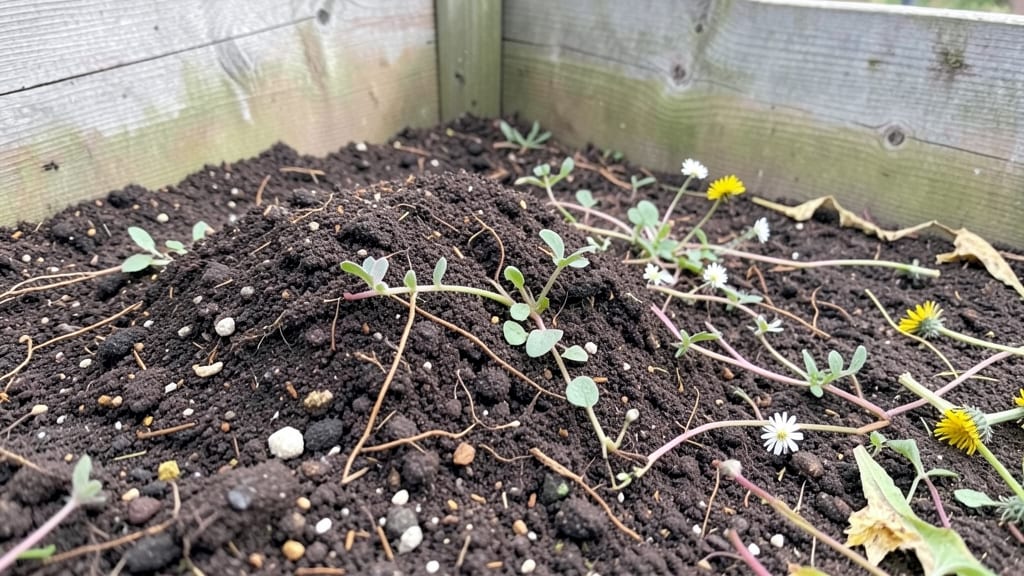
Understanding garden soil layers reveals how decomposition, weathering, and organic buildup create distinct zones—topsoil packed with nutrients, clay-rich subsoil holding moisture, and broken rock parent material anchoring roots. Each zone plays a specialized role in plant health and garden productivity.
These layers don't just happen by chance—they're shaped by centuries of biological activity and environmental forces. 🌱 For example, earthworms and microbes constantly mix organic matter into the topsoil while rainwater slowly leaches minerals downward, creating the clay-heavy subsoil.
The deeper you go, the more you'll find unaltered parent rock breaking down over time. What's fascinating is how climate affects this process: tropical soils develop faster due to high rainfall, while arid regions create thinner, more mineral-rich layers.
Knowing your soil's layer structure helps you make smarter gardening decisions. A quick soil probe test can reveal if your topsoil is too shallow or if the subsoil is compacted—both issues that affect drainage and root growth.
I've found adding compost to topsoil and using deep mulch can bridge gaps between layers, creating a more uniform growing medium for plants.
💡 In This Article
- How Soil Horizons Develop Over Time
- Optimizing Soil Layers for Healthy Gardens
How soil horizons develop over time
The formation of soil layers, or horizons, begins with the breakdown of parent rock through physical and chemical weathering. Rainwater seeps into cracks, freezing and thawing cycles expand fractures, and plant roots exert pressure, gradually shattering rock into finer particles.
This process can take centuries—granite, for example, breaks down at a rate of about 0.001 inches per year—while softer materials like limestone erode much faster. The resulting mineral fragments then mix with organic matter as leaves, twigs, and dead organisms accumulate on the surface.
Microbes and earthworms play a crucial role in accelerating this process. A single earthworm can ingest and process up to 500 pounds of soil per year, breaking down organic material and redistributing nutrients through their castings.
Fungi and bacteria further decompose complex compounds, releasing nitrogen, phosphorus, and potassium in forms plants can absorb. In temperate climates, this biological activity creates the familiar topsoil layer (O and A horizons), typically 6-12 inches deep, where most plant roots thrive.
The darker color comes from high organic content—think of rich forest floor litter transformed into crumbly, nutrient-dense soil.
Below the topsoil, water carries dissolved minerals downward in a process called leaching, creating the subsoil (B horizon). Clay particles and iron oxides accumulate here, giving it a denser, often reddish-brown appearance. In wetter climates, this layer can become waterlogged, while in drier regions, it may remain more porous.
The final layer, parent material (C horizon), consists of partially weathered rock fragments—what remains after centuries of erosion. This layer anchors roots and slowly releases minerals as it continues breaking down.
Climate dramatically alters these processes. Tropical soils develop 5-10 times faster than temperate soils due to intense rainfall and microbial activity, often creating deep, well-defined layers. In contrast, arid regions produce thinner layers with higher mineral concentrations.
Vegetation also influences thickness—grasslands develop deeper topsoil than forests, where leaf litter creates a thick organic mat. Even human activity affects layering: tilling mixes horizons, while heavy machinery can compact subsoil, reducing root penetration.
What most gardeners don't realize is how dynamic these layers remain. A single heavy rain can move clay particles downward, altering drainage patterns. Over time, this creates what soil scientists call "soil creep"—a gradual shift in layer composition.
Testing your soil's horizons with a simple soil probe (a 2-foot metal rod) can reveal whether your garden has ideal layering or needs amendments. For instance, adding compost to shallow topsoil or breaking up compacted subsoil with gypsum can improve plant growth dramatically.
Consider how these processes work in your own backyard. That pile of fallen leaves you rake up? It's the raw material for future topsoil. The clay pan you hit when digging?
That's your subsoil's natural water barrier. Understanding these mechanisms helps you work with nature rather than against it—whether you're planting a vegetable garden or restoring a lawn. 🌱