Companion Plants
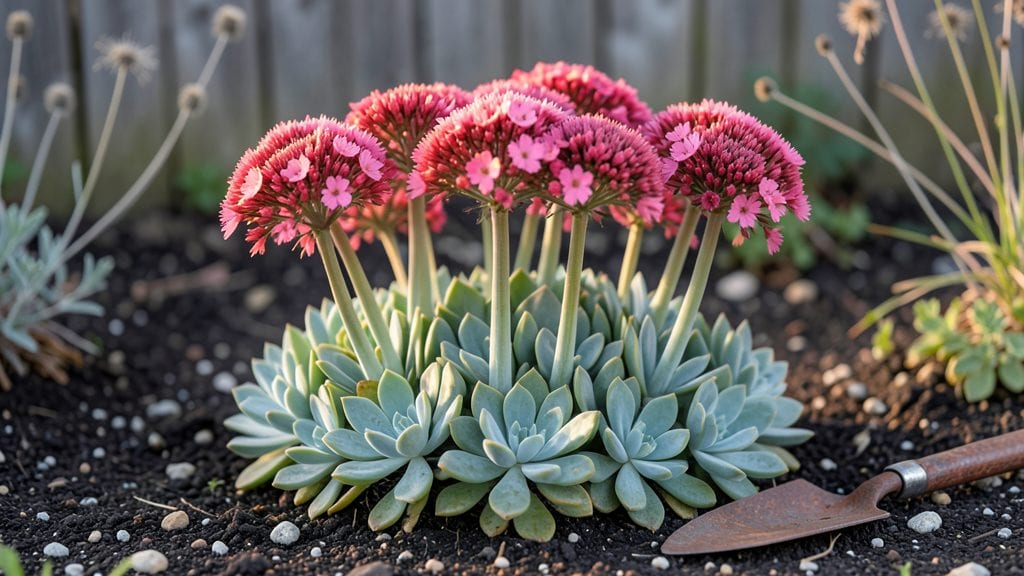
Garden sedum plants turn dry, rocky spots into vibrant, low-maintenance carpets. ✨ I’ve watched mine spread effortlessly across slopes and between stepping stones, outcompeting weeds while needing almost no water once established. The secret lies in their thick, succulent leaves that store moisture like tiny water tanks.
These hardy perennials thrive in full sun to partial shade and tolerate poor, sandy, or rocky soil—no fancy amendments needed. Plant them in spring or early fall when temperatures are mild, spacing them 12–18 inches apart for a lush, continuous mat.
Most varieties spread aggressively, but a few stay compact, making them perfect for containers too.
Once settled, sedum demands little beyond an occasional trim to keep it tidy. In late winter, you’ll see fresh green shoots pushing through, followed by clusters of star-shaped flowers in summer that hum with pollinators.
The best part? They stay green through winter in mild climates, adding texture when other plants fade.
From the ‘Dragon’s Blood’ with its deep red foliage to the ‘Autumn Joy’ with its pink blooms, there’s a sedum for every garden. Whether you’re reviving a neglected slope or adding color to a sunny border, these plants deliver zero-fuss beauty that keeps giving year after year.
📚 In This Guide
- What you need
- Instructions
- Tips and common mistakes
- Wrapping up and next steps
What you need
- ● Sedum plants: 10–20 nursery-grown sedum plants (e.g., Sedum spurium, Sedum acre, or Sedum ‘Dragon’s Blood’) for ground cover
- ● OR 1–2 lbs of sedum seeds (if starting from scratch)
- ● Well-draining soil: 50 lbs of cactus/succulent mix (or amend garden soil with 30% perlite/sand)
- ○ Optional: Compost (10–20 lbs) for nutrient boost (skip if soil is fertile)
- ● Sunlight: Full sun (6+ hours/day) or partial shade (for cooler climates)
- ● Hand trowel (for transplanting seedlings)
- ● Garden gloves (to protect hands from prickly stems)
- ● Watering can or hose with nozzle (gentle watering only!)
- ○ Mulch (optional): 2–3 inches of gravel or pebbles (to retain moisture + prevent weeds)
- ● OR 10 lbs of organic mulch (e.g., straw or bark chips)
- ● 🌡️ Test soil pH: Sedum thrives in neutral (6.0–7.5) soil. Use a soil test kit ($10–$15) if unsure.
- ● ✨ Drought prep: Water deeply once a week after planting (sedum hates soggy roots!).
- ● 🎯 Spacing: Plant sedum 8–12 inches apart for full coverage.
Step-by-Step instructions for planting and maintaining sedum ground cover
Here’s how to establish a lush, drought-resistant sedum carpet that spreads effortlessly with minimal care.
🌱 Step 1: Prepare the Site for Optimal Drainage
Sedum thrives in well-draining soil, so choose a sunny spot with at least 6 hours of direct light daily. Clear away weeds and loosen the top 6 inches of soil with a garden fork to break up compaction. If your soil drains poorly, amend it with 2-3 inches of coarse sand or gravel mixed into the top layer.
This step is critical—sedum roots rot quickly in soggy soil. Test drainage by digging a 6-inch-deep hole, filling it with water, and timing how long it takes to drain. If it holds water for more than 30 minutes, improve drainage before planting. A slight slope helps prevent water pooling, especially in low-lying areas.
🪴 Step 2: Plant Sedum Cuttings or Bare-Root Plants
For fastest results, plant 4-inch bare-root sedum plants spaced 12-18 inches apart in rows 12 inches apart. Dig holes just deep enough to cover the root zone—no deeper, or the plant will suffocate. Gently firm the soil around each plant to eliminate air pockets, then water deeply to settle roots.
If using cuttings, take 3-4 inch tip cuttings in early summer, let them callus for 24 hours, then plant them 1 inch deep in prepared soil. Keep them lightly moist until rooted (2-3 weeks). Avoid overwatering—sedum cuttings rot before they root if soil stays too wet.
☀️ Step 3: Water Sparingly and Encourage Spread
Water newly planted sedum once a week for the first 2 weeks, then taper to every 2-3 weeks once established. Let the soil dry completely between waterings—sedum’s drought tolerance comes from storing water in its thick leaves. Overwatering is the fastest way to kill it.
To speed up ground cover, lightly rake back 1/3 of the plants after 6 weeks to create gaps. Sedum spreads via stolons (creeping stems), and thinning encourages faster fill-in. In 2 growing seasons, you’ll have a nearly seamless mat. Mulch with 1 inch of gravel or bark to suppress weeds and retain moisture.
✂️ Step 4: Prune and Maintain for Year-Round Beauty
Cut back dead foliage in early spring before new growth appears, removing only the browned stems. Sedum rarely needs pruning—its succulent leaves stay vibrant with minimal intervention. If growth gets leggy, trim 1/3 of the longest stems in late summer to encourage bushier habits.
Fertilize lightly in spring with 5-10-10 balanced fertilizer at half strength. Sedum doesn’t need much—too much nitrogen produces weak, floppy growth. Divide clumps every 3-4 years in early spring if they outgrow their space, lifting entire sections and replanting.
⏰ Step 5: Overwinter for Next Year’s Growth
Sedum is hardy in zones 3-9, but a 2-inch layer of mulch protects roots in colder climates. In zone 3 or colder, cover plants with burlap or frost cloth during extreme cold snaps (below 10°F). Remove mulch in early spring once growth resumes.
Spring is the best time to assess gaps. Fill thin spots by transplanting extra divisions or sowing seeds directly into the bed. Sedum self-seeds readily, so you’ll likely have volunteers popping up where you didn’t plant them—just thin to maintain your desired density.
Tips & tricks for perfect sedum ground cover
Transforming your yard into a low-maintenance sedum carpet requires just a few strategic moves—here's what I've learned after years of trial and error.
Soil Preparation Secret: The 6-inch soil loosening in Step 1 isn't just about drainage—it's about creating an oxygen-rich environment for those shallow sedum roots. I like to mix in 1 part compost to that 2-3 inches of sand for extra nutrients without compromising drainage. The drainage test with the 6-inch-deep hole is non-negotiable; if water sits longer than 30 minutes, you're basically creating a swamp where sedum will drown.
Planting Precision: When planting those 4-inch bare-root plants in Step 2, pay attention to the root flare—the point where roots meet stem. This should sit just above soil level. Burying too deep suffocates the plant, while planting too shallow exposes roots to drying. For cuttings, that 24-hour callusing period is crucial—it prevents rot when you plant those 3-4 inch tips 1 inch deep. I've lost entire batches skipping this step.
Spread Strategy: The 6-week thinning in Step 3 is where sedum magic happens. By removing 1/3 of plants, you're creating space for stolons to spread aggressively. Think of it like giving your sedum a spa day—less competition means faster, fuller coverage. And that 1 inch of gravel mulch isn't just for looks; it regulates soil temperature and prevents weed competition that could steal nutrients.
Winter Survival: For zone 3 or colder, that 2-inch mulch layer is your best friend below 10°F. I've seen sedum survive -20°F with proper protection, but the key is timing—apply mulch after first frost when soil temps drop, then remove it in early spring before new growth appears. The burlap or frost cloth acts like a blanket, trapping heat while allowing moisture to escape.
Pro Tips for Garden Sedum Plants
- Transforming your yard into a low-maintenance sedum carpet requires just a few strategic moves—here's what I've learned after years of trial and error.
- Soil Preparation Secret: The 6-inch soil loosening in Step 1 isn't just about drainage—it's about creating an oxygen-rich environment for those shallow sedum roots.
- Planting Precision: When planting those 4-inch bare-root plants in Step 2, pay attention to the root flare—the point where roots meet stem.
Frequently asked questions
How do I know if my sedum is healthy?
Healthy sedum has thick, upright stems and vibrant, fleshy leaves (usually blue-green, gray, or red). Wilting or mushy leaves signal overwatering, while crispy edges mean it’s too dry. Yellowing leaves? Check for pests like aphids or fungal issues—remove affected parts and adjust care.
When is the best time to plant sedum?
Plant sedum in early spring or fall when temperatures are mild (50–75°F). Avoid extreme heat or frost, as roots need time to establish. For ground cover, space plants 12–18 inches apart—they’ll spread quickly! Container gardening? Use well-draining pots and plant anytime the soil isn’t frozen.
How often should I water sedum?
Once established, sedum is drought-tolerant—water only when the top inch of soil is dry. New plants need weekly watering for the first month. Overwatering is the #1 killer! Let soil dry between waterings, and avoid soggy spots to prevent root rot. Mulch lightly to retain moisture.
What pests or diseases should I watch for?
Sedum is pest-resistant, but keep an eye out for aphids, spider mites, or powdery mildew (especially in humid climates). Treat aphids with a strong spray of water or neem oil. For mildew, improve airflow and avoid overhead watering. Yellow leaves or stunted growth? Check for root rot—reduce watering and repot if needed.
Can I grow sedum in shade?
Most sedum varieties thrive in full sun (6+ hours/day), but some, like Sedum ‘Dragon’s Blood’ or ‘Autumn Joy’, tolerate partial shade (3–4 hours of sun). In deep shade, growth may slow, and foliage could lose color. If you must shade it, choose a sunny spot with reflected light (e.g., near a wall or patio).
What’s a good alternative if sedum doesn’t thrive in my climate?
If your climate is too wet or humid, try these drought-tolerant ground covers:
- Ice Plant (Delosperma) – Bright flowers, handles heat and poor soil.
- Creeping Thyme – Fragrant, low-growing, and deer-resistant.
- Hen and Chicks (Sempervivum) – Succulent-like, thrives in rocky soils.
- Russian Sage (Perovskia) – Silvery foliage, drought-proof, and pollinator-friendly.
Wrapping up and next steps
Garden sedum plants are the ultimate low-maintenance, drought-resistant stars of your landscape—offering beauty, versatility, and resilience year-round! 🌿 Whether you're drawn to their vibrant blooms, succulent textures, or pollinator-friendly charm, these plants make ground cover a breeze.
With the right care (and minimal effort), you’ll enjoy a lush, thriving garden that outshines even the toughest conditions.
Ready to transform your space? Start by picking your favorite sedum variety and planting it in well-draining soil—then sit back and admire the results! 🌟 For extra inspiration, explore companion plants like lavender or ornamental grasses to create a stunning, cohesive design.