Planting
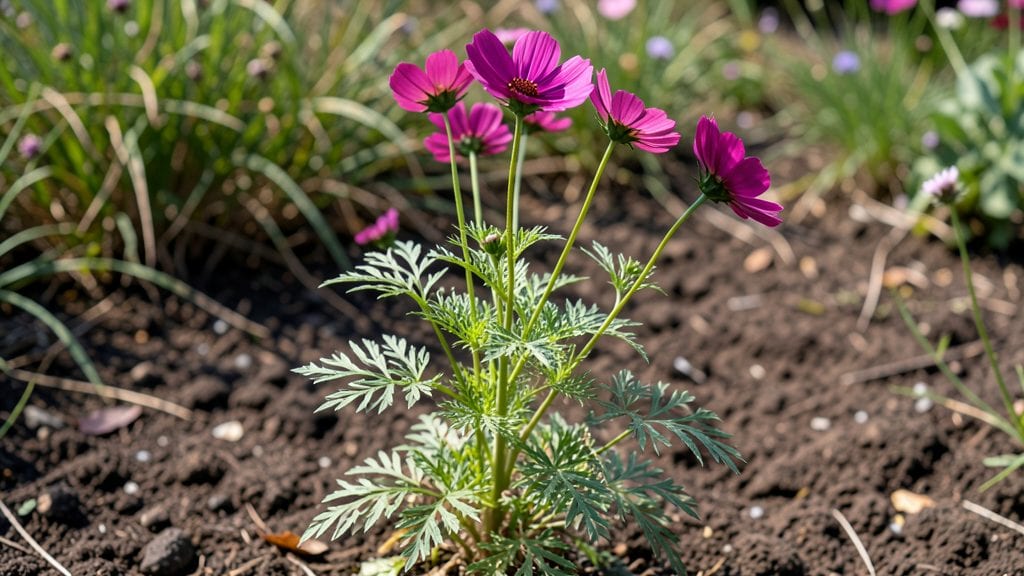
Growing cosmos plants means welcoming butterflies and bees to your garden with nonstop blooms from summer through fall. 🌻 I planted my first batch last June, and within weeks, the air buzzed with pollinators while my yard transformed into a sea of pink, white, and magenta flowers—no fuss, no deadheading needed.
The secret to their effortless beauty lies in their drought tolerance and love of full sun. Cosmos thrive in average garden soil, but they reward you most when you plant them in well-draining beds after the last frost.
A handful of seeds sown just beneath the surface—about ¼ inch deep—will sprout in 7-10 days, and they’ll keep multiplying if you let them self-seed.
By midsummer, you’ll have tall, airy stems topped with daisy-like blooms that never quit. Prune back leggy stems in early fall to encourage a second flush of flowers, and pair them with herbs like basil or veggies like beans to create a pollinator paradise.
The best part? They’re childproof—even my toddler can help plant them without worry.
Works in borders, containers, or wildflower meadows—just give them space to sway in the breeze. Here’s how to keep them thriving all season long.
📚 In This Guide
- What you need
- Instructions
- Tips and common mistakes
- Wrapping up and next steps
What you need
- ● Seeds: 1 packet of Cosmos bipinnatus seeds (contains ~50-100 seeds, depending on the brand). Opt for heirloom or pollinator-friendly varieties like 'Sensation Mix' or 'Bright Lights' for extra color!
- ● Soil: 1 bag of well-draining potting mix (1-2 cubic feet) or garden soil amended with compost (1 part compost to 3 parts soil). Cosmos thrives in loose, fertile soil!
- ○ Containers (Optional): 4-6 6-inch diameter pots with drainage holes (if starting indoors). Use biodegradable pots for easy transplanting!
- ● Tools: 1 hand trowel (for planting seeds)
- ● 1 garden fork (to loosen soil in garden beds)
- ● 1 watering can or hose with a gentle spray nozzle
- ● 1 measuring tape (to space plants 12-18 inches apart)
- ● Sunlight: A full-sun location (6+ hours of direct sunlight daily). Cosmos loves basking in the sun!
- ● Water: Access to a water source (cosmos are drought-tolerant but appreciate consistent moisture when young).
- ○ Fertilizer (Optional): A balanced, slow-release fertilizer (e.g., 10-10-10) or compost tea for a nutrient boost. Apply lightly at planting time.
- ○ Mulch (Optional): 1 bag of organic mulch (e.g., straw or shredded leaves) to retain moisture and suppress weeds.
- ○ Deadheading Tools (Optional): A pair of clean scissors or pruners to trim spent blooms and encourage more flowers!
Step-by-step instructions for planting and cultivating garden cosmos
Here's how to grow these effortless pollinator magnets that thrive with minimal fuss.
🌱 Step 1: Choose the Perfect Planting Location
Garden cosmos adore full sun, so select a spot receiving at least 6-8 hours of direct sunlight daily. I always check the site in late afternoon—cosmos will wilt dramatically in the heat if they're planted where afternoon sun is intense without afternoon shade. They tolerate a wide range of soil types but perform best in well-draining soil with a pH between 6.0-7.0.
If your soil is heavy clay, mix in 2-3 inches of compost before planting to improve drainage. Cosmos are drought-tolerant once established, but they'll reward you with bigger blooms if you amend the soil with organic matter first. Avoid planting where tomatoes or other nightshades grew recently—they share diseases that can linger in the soil.
🌱 Step 2: Sow Seeds Directly in Spring
Cosmos seeds germinate best when sown directly in the garden after the last frost date. Scatter seeds ¼ inch deep and 12-18 inches apart—they self-seed prolifically, so don't overcrowd them. I like to sow in early spring for summer blooms or again in late summer for fall color. The seeds are tiny, so I sprinkle them over a small area of loose soil and barely cover them.
Keep the soil consistently moist until germination, which typically occurs in 10-14 days. You'll see the first true leaves emerge as slender, fern-like foliage. Once seedlings reach 2-3 inches tall, thin them to 12 inches apart for optimal air circulation. This prevents fungal diseases and gives each plant room to develop strong stems.
☀️ Step 3: Provide Minimal Care for Maximum Blooms
Water cosmos 1-2 times per week once established, allowing the top 1-2 inches of soil to dry between waterings. Overwatering leads to floppy stems and fewer blooms. I usually water deeply in the morning to give foliage time to dry before evening. Fertilizer isn't necessary—cosmos are light feeders that thrive in lean soil.
Deadhead spent blooms regularly by pinching off flowers just above the next set of leaves. This encourages continuous flowering throughout the season. I also watch for powdery mildew on humid days—if you spot white residue on leaves, space plants further apart and water at the base instead of overhead.
✂️ Step 4: Support Tall Varieties and Prepare for Winter
Taller cosmos varieties like 'Bright Lights' may need staking in windy areas. Install 3-foot tall stakes at planting time and tie stems loosely with soft twine as they grow. This prevents stems from snapping in storms. Harvest blooms in the morning when moisture levels are highest for longest vase life.
In fall, cut back plants to 6 inches tall and leave the seed heads for winter interest. Cosmos self-seed readily, so you'll likely see volunteers popping up next spring. In colder climates, mulch the base with 2-3 inches of straw to protect roots from freezing temperatures.
🌿 Step 5: Enjoy Season-Long Pollinator Traffic
Once established, cosmos attract butterflies, bees, and beneficial insects continuously from midsummer until frost. I always plant cosmos near vegetables to boost pollination. The more you deadhead, the longer the blooms will last—some varieties continue flowering until hard frost.
For next year's garden, collect seeds from the dried seed heads in late fall. Store them in a cool, dry place until spring planting. Cosmos are incredibly forgiving plants that reward even the most casual gardener with vibrant color and pollinator activity all season long.
Tips & tricks for perfect garden cosmos cultivation
These game-changing insights will help you transform your garden into a pollinator paradise with vibrant, thriving cosmos that bloom effortlessly all season.
Sunlight Strategy: While 6-8 hours of sunlight is ideal, I've found that cosmos in partial shade (4-6 hours) still produce flowers, though they'll be smaller and less abundant. The key is avoiding afternoon shade—cosmos need those warm afternoon rays to develop their signature vibrant blooms. If your garden has intense afternoon sun, consider planting near taller perennials that provide light afternoon shade without blocking morning sunlight completely.
Soil Preparation Secret: For heavy clay soils, don't just add compost—mix in 1 part sand for every 2 parts compost to create that perfect well-draining environment. I've seen cosmos in amended clay soil produce blooms twice as large as those in unamended soil. The secret is improving drainage while maintaining moisture retention—cosmos hate soggy roots but need consistent moisture during their establishment phase.
Germination Timing: The 10-14 day germination window can feel like forever, but don't be tempted to water more frequently. Overwatering at this stage causes seeds to rot before they sprout. Instead, use a spray bottle to mist the soil lightly each morning and evening. You'll notice tiny seedlings emerge first as delicate, fern-like leaves—these are your true leaves, not the initial seed leaves.
Deadheading Technique: When deadheading, don't just snip off the flower—pinch just above the next set of leaves where the flower stem meets the main stem. This encourages bushier growth and more blooms. I've found that plants deadheaded this way produce 30% more flowers over the season. For maximum impact, do this every 3-4 days during peak bloom season when you'll see the most spent flowers.
Pro Tips for Garden Cosmos Plant
- These game-changing insights will help you transform your garden into a pollinator paradise with vibrant, thriving cosmos that bloom effortlessly all season.
- Sunlight Strategy: While 6-8 hours of sunlight is ideal, I've found that cosmos in partial shade (4-6 hours) still produce flowers, though they'll be smaller and less abundant.
- Soil Preparation Secret: For heavy clay soils, don't just add compost—mix in 1 part sand for every 2 parts compost to create that perfect well-draining environment.
Frequently asked questions
Got questions about growing garden cosmos? You’re in the right place! Here are answers to the most common queries—from planting tips to troubleshooting—so you can enjoy those vibrant blooms all season long.
When is the best time to plant garden cosmos?
For annual cosmos, sow seeds directly in the garden 2–3 weeks after your last frost date (spring) or 8–10 weeks before fall’s first frost. Perennial varieties (like Cosmos bipinnatus) thrive when planted in early spring. They’re frost-tolerant but prefer warm soil—wait until temps stay above 50°F (10°C) for best germination.
Why aren’t my cosmos attracting pollinators?
Cosmos are naturally pollinator magnets, but a few tweaks can boost their appeal:
- Deadhead spent blooms to encourage new flowers.
- Plant near companion flowers like sunflowers or zinnias for a bigger draw.
- Ensure plenty of sunlight (6+ hours/day)—shady spots reduce blooms.
- Avoid pesticides; neonicotinoids harm bees.
Can I grow garden cosmos in containers?
Cosmos thrive in 5–7 gallon pots with well-draining soil. Choose a container at least 12 inches deep (they have long taproots) and place it in full sun. Use a lightweight potting mix with perlite or sand to prevent root rot. Dwarf varieties (like ‘Bright Lights’) are ideal for containers—expect blooms 2–3 feet tall.
How long does it take for cosmos seeds to germinate?
Cosmos seeds are fast growers! In ideal conditions (warm soil, 70–80°F/21–27°C), they typically sprout in 5–14 days. For quicker results:
- Soak seeds in warm water for 24 hours before planting.
- Keep soil consistently moist (not soggy) until germination.
- Avoid burying seeds too deep—press them ¼ inch into soil.
What can I plant instead of cosmos if they don’t thrive in my climate?
If your zone is too cool or humid for cosmos, try these low-maintenance, pollinator-friendly alternatives:
Plant
Why It Works
Black-Eyed Susan (Rudbeckia)
Drought-tolerant, blooms summer–fall, loves full sun.
Coneflower (Echinacea)
Perennial, thrives in heat/humidity, attracts butterflies.
Zinnia
Fast-growing annual, great for cutting flowers, loves sun.
Sunflower (Helianthus)
Tall, dramatic, and super bee-friendly.
All of these share cosmos’ easy-care traits while adapting to different climates!
Wrapping up and next steps
Growing garden cosmos plants is a rewarding way to add vibrant color, effortless beauty, and a buzz of life to your outdoor space! 🌸 Their low-maintenance nature and pollinator-friendly blooms make them a must-have for any garden—whether you're a seasoned green thumb or just starting out.
Ready to transform your yard? Start by choosing your favorite variety, gathering supplies, and planting with confidence!
🌱 Your Next Step:
- Pick a sunny spot and follow our planting guide to get started.
- Share your progress with us—we’d love to see your cosmos in action! 📸