Landscaping
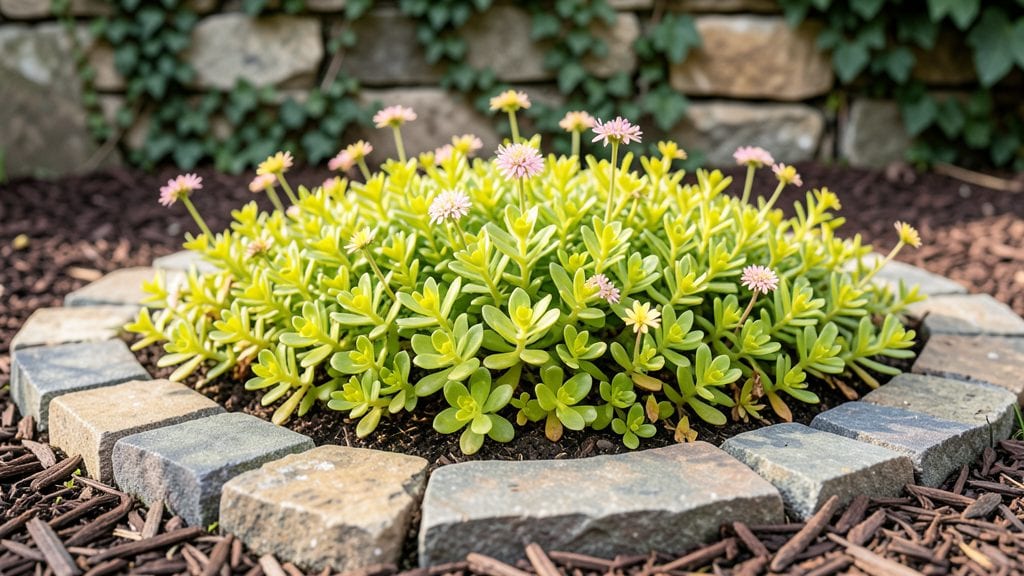
Cobble garden edging creates defined, low-maintenance borders that resist weeds and soil erosion while adding timeless appeal to any yard. Opt for smooth, uniform stones like river rocks or pavers, arranged in curves or straight lines, then lock them in place with fabric or sand for lasting stability.
This classic landscaping technique isn't just about looks—it's a functional solution for gardens prone to erosion or weed growth. 🌿 The right cobble material can last decades, especially when paired with proper base prep like compacted gravel or landscape fabric.
I’ve seen bluestone and granite hold up best in high-traffic areas, while river rocks offer a more natural, budget-friendly option for casual borders.
What sets cobble edging apart is its versatility: you can create everything from sharp geometric lines to organic, winding paths. The key is starting with a level base and spacing stones evenly—uneven gaps will let weeds sneak through over time.
For extra durability, I recommend adding a layer of landscape fabric beneath the stones before securing them with polymeric sand or mortar, depending on your material.
💡 In This Article
- Best Cobble Materials for Long-Lasting Garden Borders
- Step-by-Step Cobble Edging Installation Guide
Best cobble materials for long-lasting garden borders
When selecting materials for garden borders, the weight and texture of the stones play a crucial role in how effectively they control erosion and suppress weeds. River rocks (typically weighing 2-5 pounds each) offer a natural look while their irregular shapes create tight fits that block light, preventing weed growth.
Their porous surface also allows water to drain through, reducing soil erosion during heavy rains. In contrast, bluestone (weighing 8-15 pounds per slab) provides unmatched durability but requires precise cutting for clean edges.
The density of the material directly impacts its ability to stay in place. Granite (with a density of 2.65-2.75 g/cm³) resists shifting even in high-traffic areas, while concrete pavers (typically 3-6 pounds each) offer a uniform, modern look but may crack under freeze-thaw cycles unless reinforced.
For erosion control, heavier stones like bluestone or granite create a more stable barrier because their mass resists displacement from water flow or foot traffic. 💫
Cost considerations vary widely: river rocks average $3-$8 per square foot installed, while bluestone can reach $15-$30 per square foot due to its premium quality. Concrete pavers fall in the mid-range at $8-$15 per square foot, offering a balance between affordability and durability.
The rough texture of natural stones also provides better traction for barefoot gardeners compared to smooth pavers, which can become slippery when wet.
For weed suppression, the key is minimizing gaps between stones. River rocks with their irregular shapes naturally interlock when packed tightly, while pavers require polymeric sand (applied at 1/4-inch depth) to fill joints.
Bluestone's flat surfaces allow for precise spacing, but its higher cost makes it better suited for high-end landscapes. The texture of each material also affects maintenance: smoother stones like pavers show dirt less visibly than rough river rocks.
Consider your climate when choosing materials. In freeze-thaw zones, granite or concrete pavers with freeze-resistant additives perform best, while river rocks may shift slightly over time. For arid regions, bluestone's natural resistance to heat expansion makes it ideal.
The weight of the material also affects installation difficulty—heavier stones require proper equipment and may need professional help for large projects.
Here's a quick comparison to help decide:
- River rocks: Best for natural looks, budget-friendly ($3-$8/sq ft), but may require more frequent adjustments
- Bluestone: Premium durability ($15-$30/sq ft), excellent for erosion control, but higher maintenance
- Granite: Heavy and stable ($10-$20/sq ft), ideal for high-traffic areas
- Concrete pavers: Affordable ($8-$15/sq ft), uniform appearance, but may need sealing
The right choice depends on your garden's specific needs—whether it's erosion control, weed suppression, or aesthetic appeal that matters most. 🌿