Advice
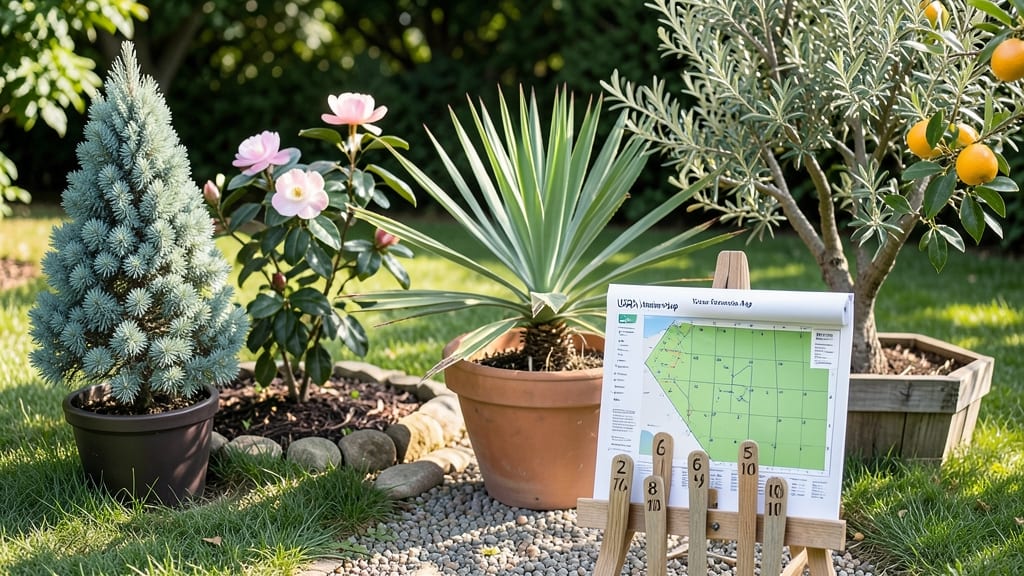
Climate zones gardening relies on USDA hardiness zones to determine which plants thrive in your region, ensuring proper growth by matching frost tolerance, temperature ranges, and seasonal patterns to specific flora. Start by identifying your zone number, then select plants rated for that range.
Understanding your USDA hardiness zone is the foundation of successful gardening—it tells you which plants can survive your area's coldest winters. 🌱 For example, a Zone 5 gardener can grow hardy perennials like coneflowers, while Zone 10 gardeners might focus on citrus trees.
Microclimates (like sunny south-facing walls) can even shift your effective zone by a level or two, giving you extra growing flexibility. The USDA map divides North America into 13 zones based on average annual minimum temperatures, helping you avoid costly trial-and-error with frost-sensitive plants.
💡 In This Article
- Understanding USDA Plant Hardiness Zones
- Selecting Plants for Your Climate Zone
Understanding USDA plant hardiness zones
The USDA Plant Hardiness Zone Map divides North America into 13 zones based on the average annual minimum winter temperature—the coldest temperatures plants must survive.
Each zone represents a 10°F difference, with Zone 1 experiencing temperatures as low as -60°F and Zone 13 rarely dropping below 60°F. This system helps gardeners predict which plants will thrive in their area by matching their frost tolerance to local climate extremes.
Here's how it works: The map uses 30-year climate data to calculate the lowest winter temperatures in each region. For example, Zone 5 (common in the Midwest) has average minimum temperatures of -20°F to -10°F, while Zone 10 (Southern California, Florida) stays above 30°F.
The key factor is the coldest winter, not summer heat—because that's when most plants face their biggest survival challenge.
Why does this matter? Plants have genetic limits to how cold they can tolerate. A Zone 5 perennial like Russian sage (Perovskia atriplicifolia) will die if planted in Zone 10, where winters are too mild for its winter dormancy needs.
Conversely, a Zone 10 citrus tree (Citrus × aurantium) would freeze solid in Zone 5's -20°F winters. The map prevents costly mistakes by giving you a scientific baseline for plant selection.
Microclimates add another layer of complexity. A south-facing wall can create a Zone 8 microclimate in an otherwise Zone 6 area, allowing you to grow plants one zone warmer.
Similarly, low-lying areas often experience colder temperatures due to cold air settling, while urban heat islands can push zones up by 1-2 levels. These local variations mean your actual growing conditions might differ from the official zone map.
Let's look at real-world examples: In Zone 5, you'd choose hardy perennials like black-eyed Susans (Rudbeckia hirta) or daylilies (Hemerocallis), which survive -20°F winters. In Zone 10, you'd focus on tropical plants like bougainvillea (Bougainvillea spp.) or hibiscus (Hibiscus rosa-sinensis), which thrive in 30°F+ winters.
The zone system ensures you're not battling frost damage from day one.
What most gardeners don't realize is that summer heat can be just as limiting as winter cold. For example, Zone 10 areas with 100°F+ summers can't grow cool-season crops like lettuce without shade or irrigation.
Meanwhile, Zone 5 gardeners might struggle with heat-loving plants like okra (Abelmoschus esculentus) unless they extend the season with row covers. The zone map gives you a starting point, but local conditions always require adjustments.
The science behind this involves plant physiology: Cold-hardy plants produce antifreeze proteins and osmoprotectants to survive freezing temperatures, while tropical plants lack these adaptations. Matching plants to zones maximizes their natural survival mechanisms, reducing stress and increasing yields. 🌿